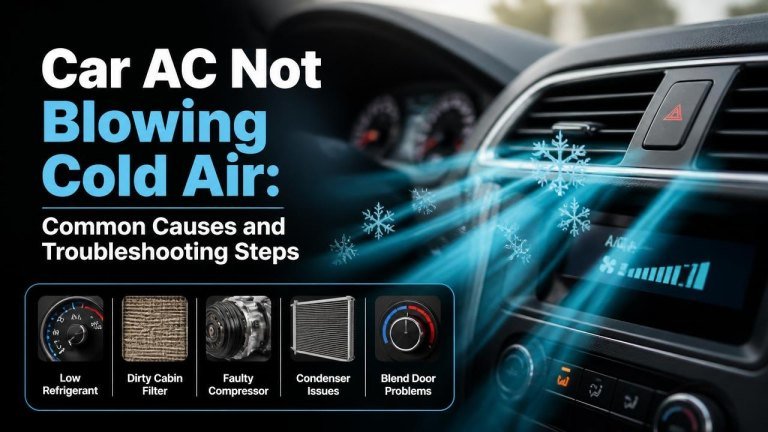
Car AC Not Blowing Cold Air: Common Causes and Troubleshooting Steps
When your car’s air conditioner is not blowing cold air, the problem may be simple, such as an incorrect setting, or it may involve a refrigerant leak, compressor fault, or electrical issue. A few careful checks can help you identify the likely cause before arranging car AC troubleshooting steps.
Start With the Basic AC Settings
Before inspecting components, confirm that the system is set up correctly. Select the coldest temperature, choose recirculated air, and set the blower to an appropriate speed. Make sure the air is directed through the front vents rather than the defroster or floor outlets.
Also check whether the climate control system has an economy or eco mode that may reduce compressor operation. If the cabin filter is severely restricted, airflow can feel weak even when the air itself is cool.
Common Reasons Your Car AC Blows Warm Air
Several problems can prevent an air conditioner from cooling properly. The most common possibilities include low refrigerant, a blocked cabin air filter, and a malfunctioning compressor. Other causes include electrical faults, damaged condenser components, and problems with the cooling fans.

Low Refrigerant or a Refrigerant Leak
Air conditioning systems are sealed, so refrigerant should not normally disappear during ordinary use. A low level usually indicates a refrigerant leak somewhere in the system. You may notice weak cooling, intermittent cold air, or hissing sounds near AC components.
Adding refrigerant without finding the leak may provide only temporary relief and can damage the system if it is overfilled. Leak testing and recharging should be performed with the correct equipment.
Dirty Cabin Air Filter
A clogged cabin filter restricts the amount of air reaching the interior. Look for reduced airflow, unusual odors, or a blower that sounds strained. Replacing the filter is often a straightforward maintenance task, although the filter location varies by vehicle.
A dirty filter may not be the reason the air is warm, but it can make the AC seem ineffective by limiting ventilation through the cabin.
Compressor or Clutch Problems
The compressor circulates refrigerant through the system. If the compressor clutch does not engage, the compressor may be faulty, or the system may be preventing engagement because of low refrigerant or an electrical problem.
Grinding, rattling, or squealing noises can indicate mechanical wear. Because compressor replacement can involve several related parts, diagnosis is best left to a qualified technician.

Condenser, Fan, or Airflow Issues
The condenser releases heat from the refrigerant and is usually located near the front of the vehicle. Dirt, road debris, or physical damage can reduce its performance. A failed cooling fan may also cause poor cooling, especially while the vehicle is stopped or moving slowly.
Inspect the visible area around the condenser for heavy blockage, but avoid bending delicate fins or reaching near moving fans. A professional can test fan operation and system pressures safely.
Simple Troubleshooting Steps
Use this basic process to narrow down the issue:
- Confirm the AC button is switched on and the temperature is set to cold.
- Test both recirculation mode and fresh-air mode.
- Check whether airflow is strong from the vents.
- Listen for the compressor engaging when the AC is turned on.
- Inspect the cabin filter if airflow is weak or odors are present.
- Look for visible leaks, oily residue, or damaged hoses under the hood.
- Notice whether cooling improves while driving or worsens when stopped.
These checks can provide useful clues, but they cannot replace pressure testing or electrical diagnosis when the cause is not obvious.
When to Stop Troubleshooting and Seek Service
Arrange professional inspection if the system remains warm after basic checks, if the compressor makes unusual noises, or if you suspect a refrigerant leak. You should also seek help when there is electrical damage, repeated fuse failure, or visible damage to hoses and fittings.
Air conditioning refrigerant requires proper handling, and incorrect service can harm the compressor or release refrigerant improperly. A technician can check system pressures, test for leaks, inspect electrical controls, and confirm that the repair has restored normal operation. This approach is especially important when addressing common automobile malfunctions.
How to Help Prevent Future AC Problems
Run the air conditioner periodically, even during cooler weather, to help keep system components lubricated. Replace the cabin filter according to the vehicle manufacturer’s recommendations and keep leaves or debris away from the area where outside air enters.
Regular maintenance, clean filters, and early attention to unusual noises can help prevent a minor issue from becoming a major repair. If cooling performance gradually declines, have the system inspected rather than repeatedly adding refrigerant.
Final Takeaway
A car AC system that is not blowing cold air may have a simple setting or airflow problem, but warm air can also signal low refrigerant, a leak, compressor trouble, or a cooling fan fault. Start with the basic checks, note the symptoms, and use a qualified professional for refrigerant handling and complex repairs. Careful diagnosis is the best way to restore reliable cooling without replacing parts unnecessarily.