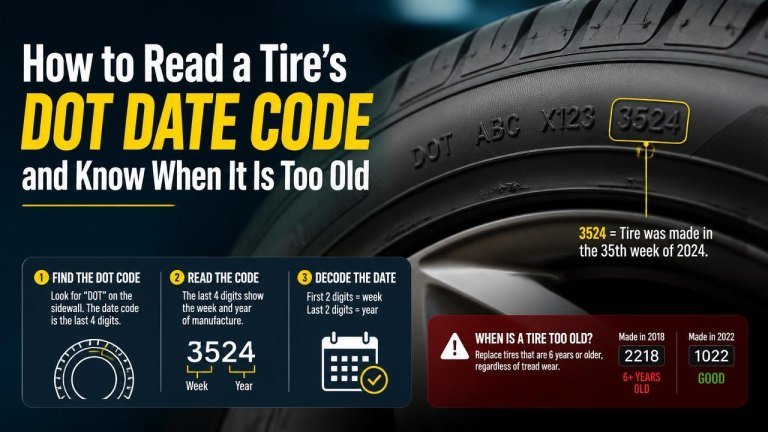
A tire can look acceptable on the outside while its rubber has gradually aged from heat, sunlight, storage conditions, and normal use. That is why checking the DOT date code, along with tire pressure and tread, is an important part of routine vehicle maintenance.
The code can tell you when the tire was manufactured, but age is only one part of the safety picture. Tread wear, cracks, damage, inflation, and the tire’s overall condition also matter.
What Is a Tire DOT Date Code?
The DOT marking identifies a tire as meeting applicable U.S. Department of Transportation requirements and includes information about its manufacture. The final four digits of the full code show the week of manufacture and the year of manufacture.
For example, a date code ending in 3522 means the tire was made during the 35th week of 2022. This is a production date, not the date the tire was purchased, installed, or first used.

Where to Find the DOT Date Code
Look for the letters DOT molded into the tire sidewall. The marking is usually followed by a series of letters and numbers. The date code appears at the end of that sequence and consists of four digits on tires made in 2000 or later.
Check both sides of the tire if necessary. Some tires display the complete code on only one sidewall, while the opposite side may show a partial DOT marking without the date. You may need to turn the steering wheel or inspect the inner sidewall carefully.
How to Read the Four-Digit Date Code
The first two digits represent the production week, from 01 through 52 or, in some cases, 53. The last two digits represent the production year.
- 0719 means the seventh week of 2019.
- 4021 means the 40th week of 2021.
- 1224 means the 12th week of 2024.
Do not confuse the date code with other markings, such as the tire size, load index, speed rating, or manufacturer’s internal identification codes. Only the final four digits of the DOT sequence provide the manufacturing date for modern tires.
What If the Tire Has a Three-Digit Date Code?
A three-digit date code indicates that the tire was made before 2000. These tires are extremely old, even if they have visible tread remaining, and their age cannot be interpreted as reliably as a modern four-digit code.
If you find a three-digit code, treat the tire as past its practical service life. Do not rely on appearance alone. Have it inspected by a qualified tire professional and plan for replacement before driving on it.
When Is a Tire Too Old?
There is no single age that overrides every other consideration, because tire life depends on climate, storage, vehicle use, maintenance, and the tire’s condition. However, manufacturers and tire organizations commonly advise increased inspection as tires age and recommend replacing tires when they reach the manufacturer’s specified age limit.
Many tire makers advise replacing tires around six years after installation or no later than ten years from the manufacturing date, whichever comes first. Recommendations differ, so check the tire manufacturer’s guidance and your vehicle owner’s manual.
Age Is Not the Only Replacement Warning
A tire may need replacement before its age becomes the main concern. Look for sidewall cracks, bulges or blisters, unusual vibration, repeated air loss, puncture damage, exposed cords, or irregular wear.

Replace a tire promptly if it has structural damage or if a professional determines that an internal repair is unsafe. A tire with plenty of tread can still be compromised by impact damage, underinflation, overheating, or deterioration of the rubber.
How to Inspect an Aging Tire
Inspect the tread and both sidewalls in good light. Search for fine cracks between tread blocks and in the sidewall, cuts, bulges, embedded objects, and signs that the rubber has become unusually hard or brittle.
Also check for uneven tread wear, which may indicate incorrect inflation, worn suspension components, wheel alignment problems, or another vehicle problem. Measure tread depth when appropriate, but remember that legal minimums do not necessarily represent ideal wet-weather performance.
Finally, check the tire pressure when the tires are cold and compare it with the vehicle manufacturer’s recommended pressure. Correct inflation supports handling, tire longevity, and fuel efficiency.
Should You Replace All Four Tires?
Replacing one tire is sometimes appropriate, but the correct approach depends on tread depth, tire type, drivetrain, and the recommendations for your vehicle. On many all-wheel-drive vehicles, significant differences in tire circumference can place extra strain on the drivetrain, while suspension problems can also affect tire wear.
Ask a tire professional whether the replacement should be matched to the existing tires or whether replacing an axle pair or all four tires is safer. The decision should consider tread-depth differences, drivetrain requirements, and the tire manufacturer’s instructions.
Can Proper Storage Stop Tires From Aging?
Proper storage can slow deterioration, but it cannot stop the aging process. Keep unused tires in a cool, dry, dark location, away from direct sunlight, heat sources, ozone-producing equipment, chemicals, and electric motors.
Storage conditions matter because heat, ultraviolet exposure, and ozone can affect rubber. Even a spare tire that has rarely touched the road should be checked by its date code and condition before use.
When to Ask a Tire Professional for Help
Have a professional inspect the tire if the DOT code is difficult to read, only a partial code is visible, or you notice damage that may extend below the surface. A trained technician can assess internal damage, sidewall condition, and whether a tire is suitable for continued service.
Do not drive on a tire with a bulge, exposed cords, severe cracking, or a suspected separation. If you are unsure, use the vehicle manufacturer’s guidance and arrange a safe inspection rather than relying on visual tread depth alone.
Quick Tire Age Checklist
- Find the DOT marking on the tire sidewall.
- Read the final four date-code digits.
- Identify the manufacturing week and year.
- Compare the age with the tire maker’s replacement guidance.
- Inspect for cracks, bulges, cuts, air loss, and irregular wear.
- Confirm the tire pressure and check the spare as well.
- Replace or professionally inspect any tire with serious damage or excessive age.
Bottom Line
Reading a tire’s DOT date code takes only a moment: the final four digits show the manufacturing week and year. Use that information together with the tire’s condition, service history, and manufacturer recommendations to decide whether it remains safe.
When a tire is old, damaged, repeatedly losing pressure, or showing signs of deterioration, replacement is usually the safer choice. If there is any doubt, a qualified tire professional can provide an inspection before you continue driving.