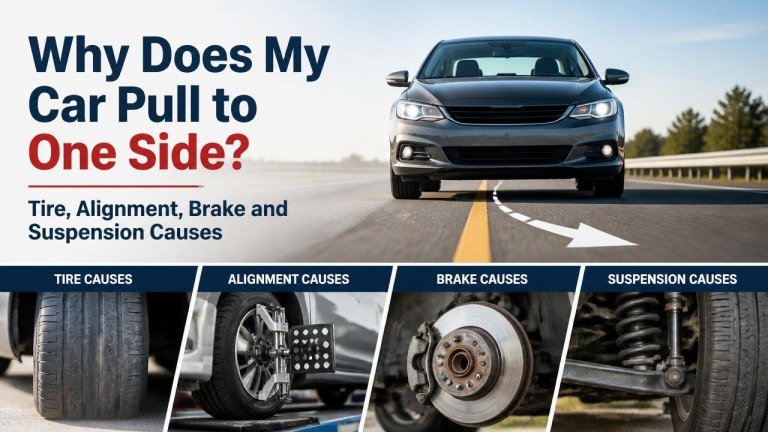
A car that consistently drifts or pulls to one side can make every trip feel uncomfortable—and sometimes unsafe. The cause may be something simple, such as incorrect tire pressure, but it can also point to worn suspension parts, a brake problem, or incorrect wheel alignment.
Understanding the common causes can help you identify warning signs and decide whether you need a quick check or immediate professional attention.
What Does It Mean When a Car Pulls to One Side?
A vehicle pulls when it does not maintain a straight path on a reasonably level road unless you keep correcting the steering. A slight movement on a road with a pronounced crown may be normal, because many roads slope toward the edge for water drainage. However, a strong or sudden pull is not something to ignore.
Pay attention to whether the car pulls during acceleration, braking, or ordinary cruising. The timing of the symptom can provide an important clue about its source.
Common Tire-Related Causes
Tires are among the first things to inspect because they directly affect how the vehicle contacts the road. Uneven tires can create a pull even when the steering and suspension appear normal.
Unequal Tire Pressure
Different air pressures from side to side can change the rolling resistance and shape of the tires. The vehicle may pull toward the side with the lower pressure. Check all four tires when they are cold and compare them with the pressure listed on the vehicle’s door-jamb label, not the maximum pressure printed on the tire.
Do not forget the spare if it is part of the vehicle’s monitoring system. A recurring pressure loss may indicate a puncture, damaged valve, or wheel problem.
Uneven Tire Wear or a Defective Tire
A tire with irregular wear, internal damage, or a separated belt can cause the car to drift, vibrate, or feel unstable. Look for cupping, bald patches, bulges, cracks, or tread that is worn more heavily on one edge. These are also important tire replacement warning signs.
Sometimes two tires with similar tread depth can still produce different handling characteristics. A technician may need to inspect the tires closely or temporarily swap them to confirm whether one tire is causing the pull.
Wheel Alignment Problems
Incorrect alignment is one of the most common reasons a car does not track straight. Alignment involves the angles of the wheels relative to the road and the vehicle. A hard impact with a pothole, curb, or road debris can change these angles.
Alignment problems may also cause an off-center steering wheel, rapid tire wear, or a vehicle that wanders. The affected angles can include camber, toe, and caster. Because these measurements interact, a proper wheel alignment and balancing check is more reliable than trying to judge the issue by sight.
Brake Problems That Cause Pulling
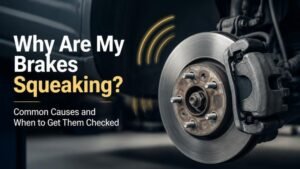
If the car pulls mainly when you press the brake pedal, the braking system deserves immediate attention. A sticking caliper, restricted brake hose, or uneven friction can cause one wheel to slow more than the others.
A brake-related pull may come with heat from one wheel, a burning smell, unusual noise, or a steering wheel that shakes during braking. These symptoms can indicate a dragging brake or uneven rotor and pad contact, including signs of worn brake pads.
A car that pulls strongly during braking should not be driven unnecessarily. Have the brake system inspected, especially if the pedal feels abnormal or the vehicle becomes difficult to control.
Suspension and Steering Causes
Worn or damaged suspension and steering components can alter the wheel position while the car is moving. Parts such as control-arm bushings, ball joints, tie-rod ends, struts, and springs all influence stability and alignment.
Watch for clunking sounds, excessive bouncing, uneven ride height, loose steering, or a vehicle that feels unstable over bumps. A damaged component may make an alignment impossible to maintain, so replacing tires or adjusting alignment alone may not solve the problem.
Uneven Ride Height
A broken spring, sagging spring, or overloaded side of the vehicle can change suspension geometry. If one corner sits noticeably lower, the difference may affect handling, alignment, and tire wear.
Do not attempt to correct ride height by simply adjusting tire pressure. The underlying suspension issue should be diagnosed first.
Other Possible Reasons for a Pull
Not every steering complaint is caused by a mechanical fault. Strong crosswinds, road grooves, uneven pavement, or a heavily unbalanced load can make the car feel as though it is drifting.
Electronic steering or stability systems can also influence vehicle behavior when a warning light is active. If the pull appears after a tire replacement, suspension repair, or collision, mention that history to the technician. The timing can help identify a recent change or unresolved repair issue.
How to Check the Problem Safely
Begin with simple checks only when the vehicle is parked safely. Inspect the tires for visible damage, compare the cold pressures, and confirm that the steering wheel is not obviously off-center.
If you test the vehicle, choose a quiet, level road and keep both hands on the wheel. Notice whether the pull occurs during cruising, acceleration, or braking. Stop testing if the car becomes difficult to control, makes severe noises, or shows signs of overheating.
When to See a Mechanic
Arrange an inspection if the pull continues after correcting tire pressure or if you notice uneven tread wear. A professional can check the tires, measure alignment, inspect steering and suspension parts, and test the brakes.
Seek prompt help for a sudden pull, strong vibration, burning odor, visible tire damage, brake warning signs, or a loose steering feel. These symptoms may indicate a safety-critical problem rather than a minor alignment adjustment.
How to Prevent Pulling Problems
Regular maintenance can reduce the chance of uneven handling. Check tire pressure periodically, rotate tires according to the vehicle manufacturer’s guidance, and have alignment checked after a significant impact or suspension repair.
Responding early to uneven wear, unusual noises, or changes in steering feel can prevent additional tire and suspension damage. Keeping the vehicle properly loaded and avoiding severe impacts also helps preserve its alignment.
Final Takeaway
A car pulling to one side can result from tire pressure, tire damage, wheel alignment, brake faults, or worn suspension and steering components. The most useful clue is when the pulling occurs and whether it is accompanied by noise, vibration, heat, or warning lights.
Because several problems can produce similar symptoms, do not rely on guesswork when the pull is strong or persistent. A timely inspection can identify the underlying cause, restore predictable handling, and help keep every journey safer.