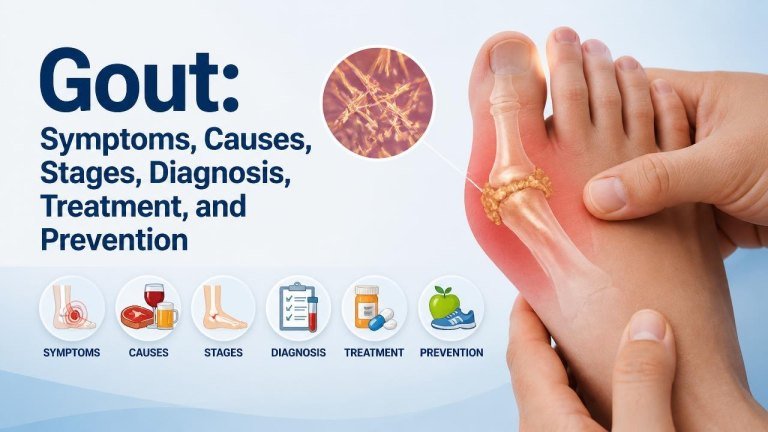
Gout is a form of inflammatory arthritis caused by a buildup of uric acid crystals in and around a joint. It often begins suddenly, causing intense pain, swelling, warmth, and tenderness. With the right diagnosis and long-term plan, gout can usually be managed effectively.
What Is Gout?
Gout develops when the body has too much uric acid, a waste product formed when it breaks down purines. Excess uric acid can form sharp crystals that collect in a joint and trigger inflammation. The big toe is commonly affected, but gout can also involve the ankles, knees, feet, wrists, fingers, or elbows.
A gout attack may improve on its own, but untreated disease can return and gradually damage joints. Repeated attacks may also lead to tophi, which are firm deposits of urate crystals under the skin.
Gout Symptoms
Gout symptoms often appear quickly, sometimes overnight. The affected joint may become severely painful, swollen, red, and warm. Even light pressure from clothing or bedding can feel uncomfortable.

- Sudden, intense joint pain
- Swelling and tenderness
- Red or shiny skin over the joint
- Limited movement
- Peeling or itching skin as swelling improves
Attacks commonly last several days to a couple of weeks without treatment. A fever or feeling generally unwell can occur, but these symptoms may also indicate an infection. Seek urgent medical care for a hot, swollen joint with fever, especially if this is your first attack.
Causes and Risk Factors
The main cause of gout is hyperuricemia, meaning uric acid levels remain too high. This may happen because the kidneys do not remove enough uric acid or because the body produces too much.
Factors That Can Increase Risk
Several factors can raise the likelihood of gout, including family history, kidney disease, obesity, high blood pressure, diabetes, and certain heart conditions. Risk may also increase with alcohol, sugary drinks containing fructose, and frequent intake of purine-rich foods such as organ meats and some seafood.
Some medicines, including certain diuretics, can affect uric acid levels. Never stop a prescribed medicine without discussing alternatives with a healthcare professional.
Stages of Gout
Gout can progress through several stages, although not everyone experiences every stage.
Asymptomatic Hyperuricemia
In this stage, uric acid is elevated but there are no noticeable joint symptoms. Crystals may still begin forming. Treatment is not automatically needed for everyone, so a clinician should consider the person’s overall risk.
Acute Gout Attack
An acute attack causes sudden pain, swelling, heat, and tenderness in one or more joints. Prompt treatment can shorten the attack and reduce inflammation.
Interval Gout
Between attacks, symptoms may disappear. This quiet period does not necessarily mean the condition is gone: crystal deposits can remain in the joints and tissues.
Chronic Tophaceous Gout
Without effective long-term control, repeated attacks may lead to chronic inflammation, joint damage, and tophi. These deposits can affect movement and may appear around the toes, fingers, ears, or elbows.
How Gout Is Diagnosed
A healthcare professional will ask about the attack, examine the joint, and review medical conditions and medicines. A blood test can measure serum urate, but a normal result during an attack does not always rule out gout.

The most reliable test is often joint-fluid analysis. A clinician uses a needle to remove a small sample, which can be examined for urate crystals and signs of infection. Ultrasound or specialized imaging may also help identify crystal deposits or joint changes.
Because a joint infection can look similar to gout and may be an emergency, do not self-diagnose a first or unusually severe attack.
Gout Treatment
Treatment has two goals: controlling the immediate attack and lowering uric acid over time to prevent future attacks.
Managing an Acute Attack
Doctors may recommend an anti-inflammatory medicine such as an NSAID, colchicine, or a corticosteroid, depending on kidney function, stomach health, other medicines, and overall medical history. Starting treatment early may help. Resting the joint, raising it, and applying a wrapped cold pack can provide additional comfort.
Use over-the-counter pain medicines only as directed. Some are unsafe for people with kidney disease, ulcers, blood-thinning treatment, or certain cardiovascular conditions.
Long-Term Uric Acid Control
People with frequent attacks, tophi, kidney stones, or gout-related joint damage may need urate-lowering therapy. Medicines such as allopurinol or febuxostat reduce uric acid production; other treatments may help the body remove uric acid.
These medicines are taken regularly, not just when pain occurs. A clinician may monitor blood tests and adjust the dose toward an individualized target uric acid level. Attacks can temporarily become more common after starting therapy, so preventive anti-inflammatory treatment may be prescribed.
Gout Diet and Lifestyle Changes
Lifestyle changes can support medical treatment, although diet alone may not lower uric acid enough for people with established gout.
- Drink water regularly unless a clinician has advised fluid restriction.
- Limit alcohol, especially beer and spirits.
- Reduce sugary drinks and foods high in added fructose.
- Limit organ meats and moderate portions of certain seafood and red meat.
- Choose balanced meals with vegetables, whole grains, low-fat dairy, and suitable protein sources.
- Work toward a healthy weight gradually; avoid crash diets and fasting.
- Manage blood pressure, blood sugar, cholesterol, and kidney health.
Healthy habits can reduce risk, but they should complement—not replace—prescribed uric acid treatment.
Preventing Future Gout Attacks
Prevention depends on keeping uric acid controlled and taking medicines consistently. Regular follow-up helps your clinician check urate levels, review side effects, and adjust treatment when needed.
Keep a record of possible triggers, symptoms, and medicines. Contact a healthcare professional if attacks become more frequent, treatment stops working, or you develop new lumps near a joint.
When to Seek Medical Care
Arrange medical evaluation for a first episode of sudden joint pain or any recurring symptoms. Seek urgent care for a hot, swollen joint with fever, chills, rapidly worsening pain, or feeling very unwell, because infection requires prompt treatment.
With an accurate diagnosis and a personalized plan, many people can prevent attacks, protect their joints, and maintain an active life.