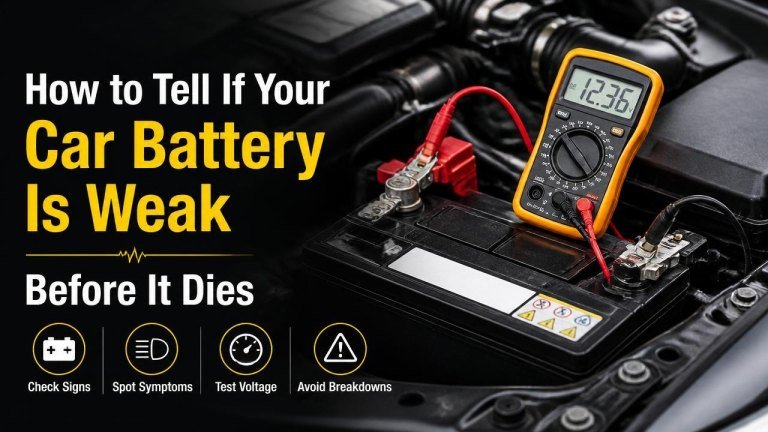
A weak car battery rarely fails without warning. In many cases, your car gives you warning light clues days or weeks before the battery can no longer start the engine. Recognizing those signs can help you avoid being stranded and give you time to test or replace the battery.
Common Signs of a Weak Car Battery
1. The Engine Cranks Slowly
One of the clearest warning signs is slow engine cranking. When you turn the key or press the start button, the engine may sound sluggish instead of turning over quickly. You might hear a repeated “click” or notice that the starter takes longer than usual to engage.
A slow crank often means the battery is struggling to provide enough power. However, damaged cables, a failing starter, or very low temperatures can cause similar symptoms, so further testing is helpful.
2. The Lights Are Dimmer Than Usual
Dim headlights, interior lights, or dashboard illumination can indicate low battery voltage. You may notice the lights become brighter when the engine is running or grow noticeably weaker when using electrical accessories with the engine off.

Check that the lights are not simply affected by a faulty bulb or electrical connection. If several lights appear dim at the same time, the battery or charging system deserves attention.
3. Electrical Accessories Work Slowly
Power windows that move more slowly than normal, a weak blower fan, or intermittent dashboard electronics may point to low voltage. These symptoms are especially noticeable when the engine is off, because the battery is supplying power without assistance from the alternator.
4. The Battery Case Looks Swollen or Damaged
Inspect the battery visually if it is easy and safe to access. A case that appears swollen, cracked, leaking, or badly corroded may indicate internal damage or excessive heat exposure.
Do not touch leaking battery fluid or attempt to use a visibly damaged battery. Arrange for professional inspection and replacement instead.
5. There Is Heavy Corrosion on the Terminals
White, blue, or green buildup around the battery terminals can interfere with the flow of electricity. Corrosion does not always mean the battery itself has failed, but it can cause hard starting and charging problems.
Before cleaning the terminals, follow the vehicle and battery manufacturer’s safety instructions. Wear eye protection, keep sparks away, and make sure the ignition is off.
6. The Battery Is Getting Older
Car batteries gradually lose their ability to hold a charge. If your battery has been in the vehicle for several years, it may be more likely to weaken, particularly after repeated short trips, long periods of inactivity, or exposure to extreme temperatures.
The exact service life varies with climate, driving habits, vehicle design, and battery quality. Age alone does not prove that a battery is failing, but it is a good reason to test it regularly.
How to Test a Car Battery
Use a Battery Tester or Multimeter
A digital multimeter can provide a basic voltage check. With the engine off and the vehicle having rested for a while, connect the meter according to its instructions and observe the reading. A fully charged battery will generally show a voltage in the low 12-volt range, while a noticeably lower reading may suggest that it needs charging or testing.
Voltage alone does not reveal the battery’s complete condition. A battery can show an acceptable resting voltage and still fail under the heavy load required to start the engine.
Request a Load Test
A load test measures how well the battery performs when asked to deliver starting power. Many automotive repair shops and parts stores can perform this type of test, although availability varies.
A professional test can also help separate a weak battery from problems with the alternator, starter, cables, or vehicle charging system.
Check for Charging System Problems
If a battery repeatedly loses power, replacing it may not solve the problem. The alternator may not be recharging the battery properly, or an electrical drain may be using power while the car is parked.
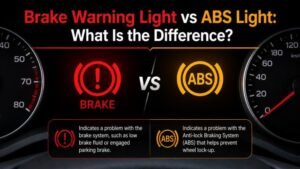
Warning signs of a charging issue can include a battery-shaped warning light, flickering lights, repeated dead batteries, or electrical problems that appear while driving. Have the charging system inspected if these symptoms occur, and learn what vehicle warning lights may indicate.
What to Do If the Battery Is Weak
- Have the battery and charging system tested.
- Inspect the terminals and cables for looseness, corrosion, or damage.
- Avoid relying on repeated jump-starts as a permanent solution.
- Replace the battery if it fails a proper test or has visible damage.
- Choose a replacement that matches the vehicle manufacturer’s specifications.
How to Reduce Battery Problems
Turn off lights, climate controls, and accessories before leaving the vehicle. Avoid leaving the ignition in an accessory position for long periods, especially when the engine is not running.
If the car is stored or driven infrequently, consider having the battery maintained with an appropriate charger. Regular longer drives may help the charging system replenish energy used during starting, but they cannot repair a battery that is already failing.
When to Get Professional Help
Seek professional assistance if the car will not start, the battery is leaking or swollen, the battery warning light stays on, or the vehicle repeatedly needs a jump-start. Battery work involves acid, electrical current, and potentially explosive gases, so use caution and follow the manufacturer’s instructions.
Final Thoughts
Slow cranking, dim lights, sluggish accessories, terminal corrosion, and a visibly damaged or aging battery are all reasons to investigate. Testing the battery before it fails completely is the best way to distinguish a weak battery from a charging or starting-system problem—and to avoid an unexpected breakdown.