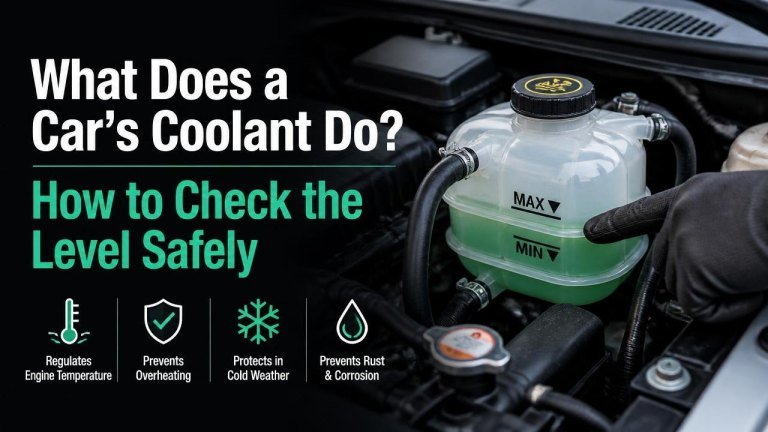
Coolant is one of the most important fluids in your car. It helps control engine temperature, protects the cooling system, and allows the engine to operate reliably in both hot and cold conditions. Checking the level is simple, but it must be done safely.
What Does Engine Coolant Do?
Engine coolant, also called antifreeze when it is in concentrated form, circulates through the engine and radiator. It absorbs excess heat from the engine and carries it to the radiator, where the heat is released into the air. This helps prevent engine overheating, supports stable engine temperatures, and protects against freezing in cold weather.
Coolant also contains additives that help reduce corrosion inside the cooling system. These additives protect components such as the radiator, water pump, thermostat, hoses, and engine passages. Using the correct coolant helps maintain corrosion protection and supports the proper operation of the entire system.
Why Is the Coolant Level Important?
The cooling system needs enough fluid to circulate efficiently. If the level is too low, the engine may not receive adequate cooling, which can lead to rising temperature, poor heater performance, or serious engine damage. A low level may also indicate a coolant leak that needs attention.

Do not assume that adding coolant solves the problem permanently. If the reservoir repeatedly becomes low, arrange an inspection to identify the cause.
How to Check the Coolant Level Safely
Always check coolant with the car parked on a level surface and the engine completely cool. A hot cooling system can be under pressure, and removing the cap may release scalding coolant or steam. Safe checking requires a cold engine, a level parking position, and careful attention to the reservoir markings.
1. Park and Let the Engine Cool
Park the car safely, switch off the engine, and allow it to cool fully. Do not remove the radiator cap or coolant reservoir cap while the engine is hot. If the engine has recently been running, wait until the temperature has dropped and the surrounding components are no longer hot.
2. Locate the Coolant Expansion Tank
Open the bonnet and look for the translucent plastic coolant reservoir. It is usually marked with minimum and maximum lines, often labelled MIN and MAX. The location and appearance can vary, so consult the owner’s manual if you are unsure. Avoid confusing it with the windscreen washer-fluid container.
3. Read the Level Against the Marks
With the engine cold, check whether the coolant sits between the marked lines. The level should generally be near the cold fill marking, without exceeding the maximum line. Look for visible fluid, clear level markings, and signs of leakage around the tank or nearby hoses.

4. Top Up Only With the Correct Fluid
If the level is low, use the coolant specified by the vehicle manufacturer. Different coolant types and formulations are not always compatible, so check the owner’s manual or ask a qualified technician before mixing products. If the correct premixed coolant is unavailable, follow the manufacturer’s guidance on dilution and emergency alternatives.
Pour slowly and stop at the appropriate cold fill mark. Do not overfill the reservoir, and clean up any spilled coolant because it is harmful if swallowed by people or animals.
Can You Check the Radiator Directly?
Most modern vehicles are designed to be checked through the expansion tank rather than by removing the radiator cap. Never open a radiator cap on a hot engine. Direct inspection should only be carried out when the system is completely cold and when the vehicle manufacturer’s instructions call for it. The radiator cap, coolant pressure, and hot engine risk make this a job requiring caution.
Signs of a Coolant Problem
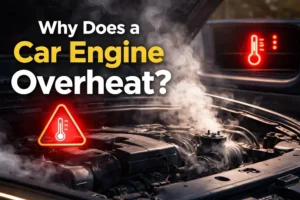
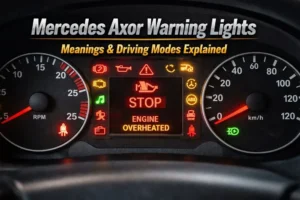
Pay attention to warning signs that may indicate low coolant, a leak, or another cooling-system fault. These can include an illuminated temperature warning, a temperature gauge reading higher than normal, steam from under the bonnet, or a sweet smell around the engine bay. Other clues include coolant puddles, repeatedly low levels, and weak cabin heating.
If the temperature warning appears or the engine begins to overheat, stop in a safe location as soon as possible. Switch off the engine and allow it to cool. Do not remove the coolant cap while it is hot.
When Should You Get Professional Help?
Contact a qualified mechanic if the coolant level drops again soon after topping up, if you see a leak, or if the engine overheats. Professional diagnosis may be needed to check the hoses and connections, water pump, thermostat, or other parts of the cooling system.
It is also wise to seek advice if the coolant looks oily, rusty, unusually cloudy, or contaminated. Always follow the service schedule and use the coolant type recommended for your vehicle.
Final Safety Reminder
Checking the coolant level is a straightforward maintenance task when performed correctly. Work only with a fully cooled engine, use the correct coolant specification, and treat any repeated loss as a possible fault rather than a normal condition. These simple precautions can help protect the engine and keep the cooling system working properly.