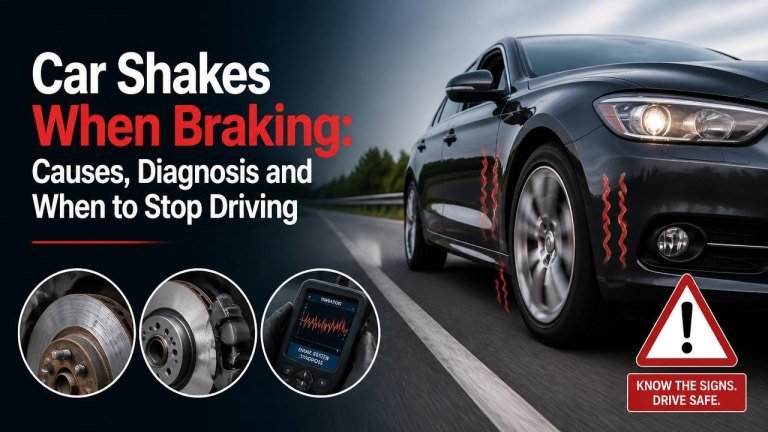
A car that shakes when braking should not be ignored. The sensation may be a mild vibration through the steering wheel, a pulsing brake pedal, or a more serious shaking throughout the vehicle. Some causes are relatively simple, while others can affect your ability to stop safely.
Understanding when the shaking occurs and how it feels can help narrow down the problem. However, a proper inspection is the safest way to identify the failed or worn component.
What Does It Mean When a Car Shakes While Braking?
Brake-related shaking usually indicates that one or more parts in the braking system, wheel assembly, or suspension are not operating evenly. When the brake pads clamp the rotors, uneven contact or movement can create vibration.
The location and timing of the vibration provide useful clues. Shaking mainly through the steering wheel often points toward the front brakes or front suspension. A pulsing brake pedal may indicate inconsistent rotor thickness or another braking-system issue. Vibration through the seat or floor can involve the rear brakes, wheels, or tires.
Common Causes of Shaking During Braking
Several problems can produce similar symptoms. The most likely cause depends on the vehicle, driving conditions, maintenance history, and whether the vibration occurs only during braking.
Warped or Uneven Brake Rotors
Brake rotors can develop uneven thickness or surface variation after repeated heat cycles, heavy braking, corrosion, or improper installation. As the brake pads pass over the inconsistent surface, the caliper may move slightly, creating a noticeable vibration.
Many drivers describe this as a pulsing brake pedal or a steering wheel that shakes more strongly during braking from higher speeds. A technician should measure rotor thickness and runout rather than relying only on visual inspection.
Worn or Contaminated Brake Pads
Brake pads with uneven wear, glazing, contamination, or damage may not grip the rotor consistently. A sticking caliper can also keep a pad in contact with the rotor, causing heat buildup and irregular braking.
Additional warning signs may include squealing noises, a burning smell, reduced braking performance, or the vehicle pulling to one side. Brake pads and related hardware should be inspected together, since replacing only one worn component may not solve the underlying problem.
Worn Suspension or Steering Components
Braking transfers weight toward the front of the vehicle. Loose or worn control-arm bushings, ball joints, tie rods, wheel bearings, or strut components may allow the wheel to move when that load changes.
This can cause steering-wheel shake, clunking sounds, uneven tire wear, or a feeling that the vehicle wanders. Suspension faults can affect stability even when the brake parts themselves appear to be in good condition.
Tire, Wheel, or Alignment Problems
A damaged tire, bent wheel, loose lug nuts, or incorrect wheel balance can create vibration that becomes more noticeable when braking. A tire with a broken internal belt may develop a bulge or irregular tread shape and requires immediate attention.
Incorrect alignment usually does not cause braking vibration by itself, but it can contribute to uneven tire wear and unstable handling. Inspect the tires for damage and confirm that the wheel fasteners are properly secured.
Brake Caliper or Hydraulic Problems
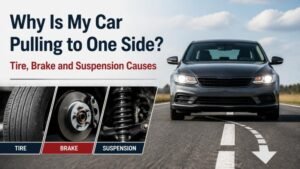
A sticking caliper, seized slide pin, or uneven hydraulic pressure can make one wheel brake harder than the others. This may produce pulling to one side, excessive heat at one wheel, or a strong odor after driving.
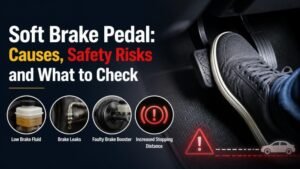
Hydraulic issues may also cause a soft brake pedal or inconsistent stopping. Because these symptoms can worsen quickly, they should be assessed by a qualified technician rather than treated as a minor vibration.
How to Diagnose the Problem Safely
Begin by noting exactly when the shaking occurs. Pay attention to vehicle speed, braking pressure, and whether the vibration is felt through the wheel, pedal, seat, or entire body.
- Does the car shake only when braking, or also while cruising?
- Does the steering wheel move from side to side?
- Does the brake pedal pulse under your foot?
- Does the vehicle pull left or right?
- Are there grinding sounds, warning lights, smoke, or unusual odors?
A visual check can reveal low brake-pad material, damaged tires, fluid leaks, or loose-looking components, but many faults require professional equipment. A shop may inspect the rotor runout, brake-pad condition, caliper operation, wheel bearings, tire balance, and suspension joints.
When Is It Unsafe to Keep Driving?
Stop driving and arrange professional assistance if the car has severely reduced braking power, a brake warning light, grinding, smoke, or a soft or sinking pedal. Do not continue if the vehicle pulls sharply, the steering becomes difficult to control, or a wheel appears damaged.
Driving may also be unsafe when the vibration is sudden, rapidly worsening, or accompanied by burning smells or unusual heat from one wheel. In these situations, a tow is safer than attempting to reach a repair shop under your own power.
A mild vibration does not automatically mean immediate brake failure, but it still deserves prompt inspection. Braking problems can progress, and the cost or complexity of repair may increase if related components are damaged.
Can You Prevent Brake-Related Vibration?
Regular maintenance can reduce the risk of uneven braking and catch problems early. Have the brakes inspected during routine service and replace worn parts according to the vehicle manufacturer’s recommendations.
- Use properly matched, quality brake pads and rotors.
- Keep wheel fasteners tightened to the correct specification.
- Check tire pressure and inspect tread for damage.
- Avoid repeated heavy braking when conditions do not require it.
- Address pulling, noises, or pedal pulsation promptly.
After brake work, allow the components to settle according to the service provider’s instructions and report any continuing vibration. Early attention helps protect stopping performance, tire condition, and overall vehicle control.
Final Takeaway
When a car shakes while braking, the cause may be uneven rotors, worn pads, suspension wear, tire damage, or a caliper problem. The most useful clues are where you feel the vibration and whether it comes with pulling, noise, or reduced braking.
Because braking is a critical safety system, do not ignore persistent or worsening symptoms. If stopping performance is compromised or serious warning signs appear, stop driving and have the vehicle inspected or towed.