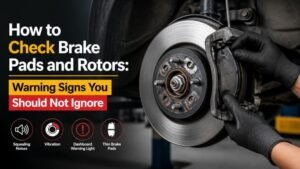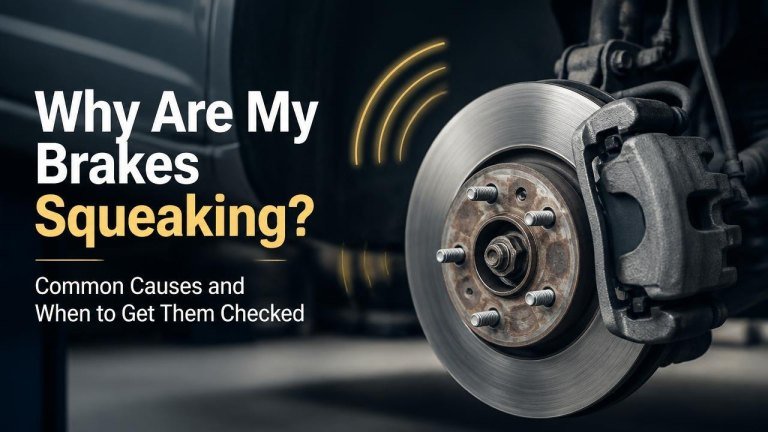
A squeak from your brakes is easy to notice—and difficult to ignore. Sometimes it is caused by surface moisture or temporary dust. In other cases, it can signal worn brake pads, damaged components, or a problem that affects stopping performance.
Understanding when brake noise is normal and when it needs attention can help you avoid unnecessary repairs and, more importantly, keep your vehicle safe.
Common reasons your brakes squeak
Brake noise can come from several sources. The most common causes include pad wear, brake dust, and changing road conditions. The sound’s timing, volume, and frequency can offer useful clues, but only an inspection can confirm the cause.
Moisture, rust, and overnight condensation
Light surface rust can form on brake rotors when a vehicle sits in rainy weather, high humidity, or overnight condensation. This thin layer may create a brief squeak or scraping sound during the first few stops.
In many cases, the noise disappears once the brakes clean the rotor surface. However, persistent grinding, brake vibration, or reduced braking should not be dismissed as ordinary moisture.
Worn brake pads
Many brake pads include a small metal wear indicator. When the friction material becomes thin, the indicator can contact the rotor and create a sharp, repeated squeal. This is an important warning of low pad material and may mean replacement is due.
Driving too long with worn pads can allow the backing plate to contact the rotor. That may cause rotor damage, increase repair costs, and reduce braking effectiveness.
Brake dust or debris
Dust, grit, or small debris between the pad and rotor can produce intermittent squeaking. The noise may be more noticeable at low speeds or during light braking. A professional can inspect and clean the braking surfaces while checking for related damage.
Glazed brake pads or rotors
Excessive heat can create a smooth, hardened surface on brake pads or rotors. This condition, known as glazing, may cause high-pitched squealing, inconsistent friction, or a change in pedal feel.
Glazing can develop after heavy braking, repeated hard stops, or a brake component that is not releasing properly. The affected parts may need service or replacement rather than simple cleaning.
Brake hardware or caliper problems
Loose, damaged, or incorrectly fitted hardware can allow brake components to move and vibrate. A sticking caliper may also keep a pad in contact with the rotor, leading to continuous noise, uneven pad wear, or a hot wheel.
These problems should be checked promptly because they can affect braking balance and cause additional damage.
Is it safe to drive with squeaky brakes?
A brief squeak after rain is often less concerning than a noise that occurs every time you brake. Still, sound alone cannot determine whether the vehicle is safe. Pay attention to braking performance, pedal feel, and any changes in how the vehicle moves.
If the brakes stop the vehicle normally and the noise disappears quickly, arrange an inspection if it returns or becomes more frequent. Avoid delaying service when the noise is accompanied by other warning signs.
Warning signs that need immediate attention
Contact a qualified technician promptly if squeaking occurs with grinding, steering-wheel vibration, or a soft brake pedal. These symptoms may indicate worn parts, a hydraulic issue, rotor damage, or another fault that requires diagnosis.
- The vehicle pulls to one side when braking.
- The brake pedal feels soft, sinks, or requires more pressure than usual.
- A brake warning light appears on the dashboard.
- You notice a burning smell, smoke, or a wheel that feels unusually hot.
- The noise becomes loud, constant, or metallic.
- Stopping distances seem longer than normal.
If braking performance is seriously reduced, do not continue driving. Have the vehicle inspected or arrange appropriate roadside assistance.
How a brake inspection helps
A brake inspection can identify the source of the sound before it develops into a larger problem. A technician may examine pad thickness, rotor condition, caliper operation, brake hardware, and signs of overheating or uneven wear.
The inspection should also consider when the noise occurs: during light braking, hard stops, reversing, cold starts, or while turning. These details can help narrow down the cause, including possible wheel alignment issues.
How to reduce brake noise
Regular maintenance is the best way to reduce avoidable brake noise. Follow the vehicle manufacturer’s service recommendations, have unusual sounds checked early, and use replacement parts that meet the vehicle’s specifications.
Good driving habits also help. Avoid unnecessary hard stops, leave enough following distance, and do not ignore changes in pedal response or vehicle handling. Never spray lubricant on braking surfaces, because contamination can seriously reduce friction.
Frequently asked questions
Why do my brakes squeak only in the morning?
Morning squeaking is often linked to overnight moisture, light rust, or cooler brake components. If the sound disappears after several stops and there are no other symptoms, it may be temporary. Repeated or worsening noise still deserves an inspection.
Can new brake pads squeak?
Yes. New pads may make noise while their surfaces settle against the rotors, especially if the brake hardware, pad material, or installation is not ideal. Persistent squeaking after installation should be checked for proper fitment, hardware condition, and rotor compatibility.
Does squeaking always mean I need new brakes?
No. Squeaking can result from moisture, dust, vibration, or glazing rather than completely worn parts. However, the noise may also be an early sign of pad wear or a sticking component, so a diagnosis is more reliable than guessing.
When to book a brake check
Book an inspection if the squeak lasts more than a short period, returns regularly, or is accompanied by any change in braking. Early attention can help identify minor wear before it becomes costly damage or a safety concern.
Brakes are a critical safety system. If you are unsure about the source of the noise, the brake fluid condition, or how well the vehicle is stopping, have it assessed by a qualified professional before continuing normal driving.