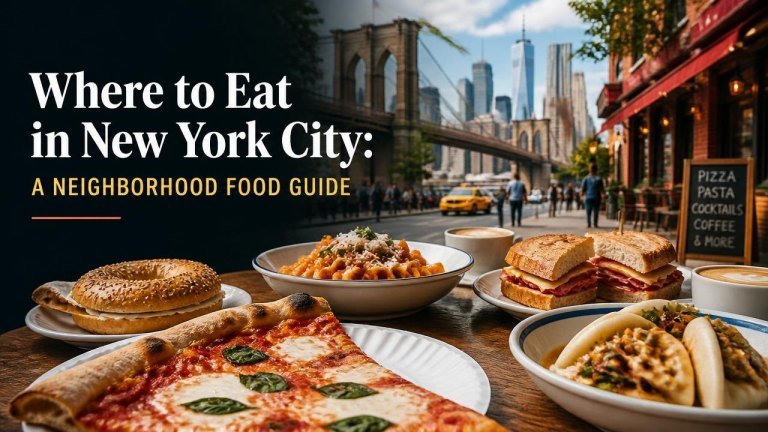
Where to Eat in New York City: A Neighborhood Food Guide
New York City is best explored one meal at a time. The city’s food culture changes dramatically between neighborhoods, boroughs, and even subway stops: you can move from old-school delis to regional Chinese cuisine, wood-fired pizza, or ambitious tasting menus within a single day.
This guide focuses on where to eat by neighborhood rather than offering one definitive restaurant list. Menus, opening hours, reservation policies, and restaurant lineups change frequently, so check each venue’s official channels before setting out.
How to Plan Your New York City Food Trip
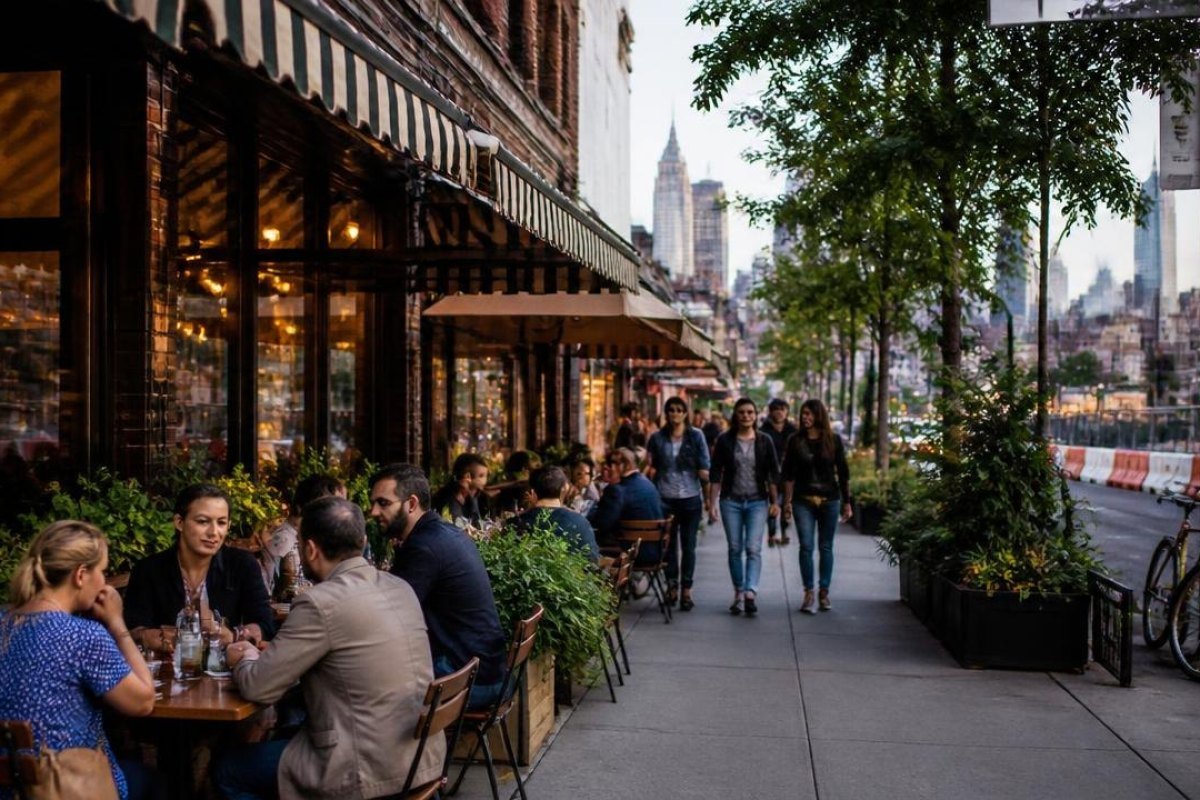
Choose one or two neighborhoods per day instead of trying to cross the entire city for every meal. A good plan combines a walkable food district, a nearby attraction, and enough flexibility for queues or spontaneous discoveries.
For popular restaurants, especially small dining rooms and celebrated tasting-menu venues, make reservations as early as possible. For casual food, arrive outside peak lunch and dinner hours or be prepared to wait. The city’s subway and buses make it practical to explore beyond Manhattan, but allow extra time when crossing boroughs.

What to Budget For
New York offers food at almost every price point, from pizza by the slice and food carts to expensive tasting menus. Remember to account for sales tax, a customary restaurant tip, drinks, and possible reservation or service charges. Prices vary widely, so check current menus before committing to a meal.
Manhattan’s Essential Food Neighborhoods
Manhattan is the easiest place to begin, with dense dining areas linked by short walks and frequent subway service. The most useful starting points include Chinatown, the Lower East Side, and the West Village.
Chinatown: Dim Sum, Noodles, and Regional Chinese Food
Manhattan’s Chinatown remains one of the city’s most rewarding areas for an informal meal. Look for dim sum, hand-pulled noodles, rice rolls, dumplings, roast meats, and Fujian-style specialties. The neighborhood rewards curiosity: compare several small dishes rather than ordering one large entrée.
For a classic outing, combine lunch with a walk through the surrounding streets toward the civic center or Lower East Side. Many restaurants are casual and busy, and some may have limited seating or cash preferences, so check before visiting.
Lower East Side: Jewish Classics and Modern Dining
The Lower East Side blends immigrant food history with one of downtown’s most energetic restaurant scenes. Traditional stops include pastrami sandwiches, smoked fish, and Jewish bakery treats, while newer restaurants bring Indian, Korean, Iberian, and contemporary American flavors.
This is a strong neighborhood for an evening food crawl. Start with a snack or shared plate, continue to a sit-down dinner, and finish at a bar or dessert counter. Crowds can be intense at famous institutions, so consider visiting at less conventional meal times.
East Village: Casual Restaurants and Global Comfort Food
The East Village is ideal when you want variety without a formal itinerary. Its streets offer Japanese ramen, Ukrainian comfort food, izakaya-style dining, vegetarian cooking, late-night bites, and newer restaurants with more polished menus.
Because many dining rooms are small, the area works well for flexible plans. Pick a few options in advance, then walk between them rather than relying on one reservation. The neighborhood is also convenient for combining dinner with music, bars, or an evening stroll.
West Village and Greenwich Village: Romantic Dining and Italian Favorites
The West Village is one of the city’s most atmospheric places to eat, with brownstone-lined streets and intimate dining rooms. Expect Italian cooking, French bistros, wine bars, classic burgers, and refined seafood.
Reservations are particularly useful here because many restaurants have limited tables. For a more relaxed visit, explore the neighborhood at lunchtime or choose a café, sandwich shop, or bar with a food menu. The area is excellent for a special occasion, but it also has more casual options than its reputation suggests.
Chelsea and the Meatpacking District: Markets, Galleries, and Modern Restaurants
Chelsea is a natural choice for combining food with art and walking. Chelsea Market provides a broad selection of prepared food, snacks, desserts, and international flavors, while nearby streets offer Japanese, Italian, Basque, seafood, and contemporary restaurants.
Pair a market visit with the High Line, but avoid assuming that every market vendor follows the same schedule. For a quieter meal, move away from the busiest attractions and look for restaurants along side streets or near the neighborhood’s residential blocks.
Queens: The Best Borough for Global Food Exploration
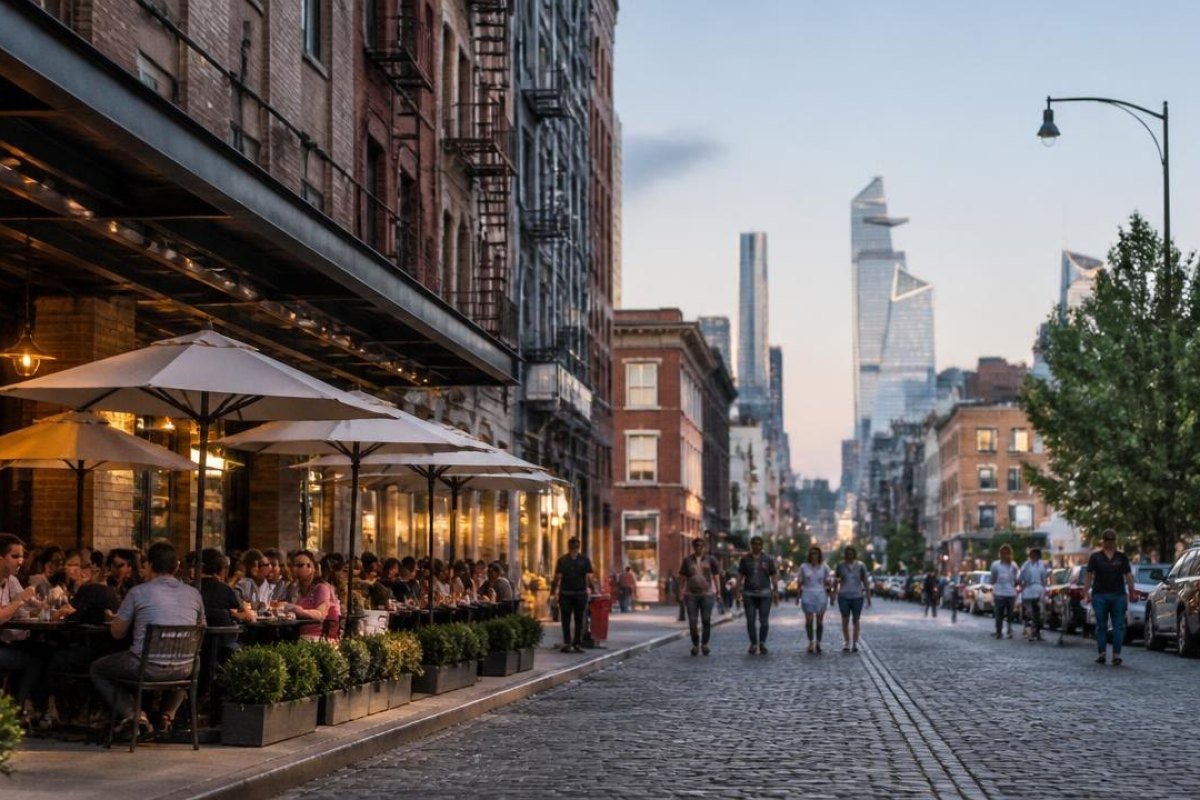
Queens is one of the most rewarding places in New York for authentic regional cooking. The distances are larger than in downtown Manhattan, but neighborhoods such as Flushing, Jackson Heights, and Sunnyside offer food experiences worth the journey, especially for visitors exploring New York neighborhoods to explore.
Flushing: Chinese, Korean, Taiwanese, and More
Flushing is a destination for serious food exploration, especially if you enjoy regional Chinese food, Korean barbecue, Taiwanese dishes, and Vietnamese cooking. Food halls, dumpling restaurants, noodle shops, bakeries, and seafood specialists are all part of the area’s appeal.
Plan to spend several hours rather than rushing through one meal. The district is busy and can feel overwhelming at first, so choose a central area, browse menus, and share dishes when possible. The subway makes Flushing accessible, although journey times depend on your starting point and service conditions.
Jackson Heights: Momo, Mexican, Colombian, and South Asian Food
Jackson Heights is a superb neighborhood for a casual food crawl. Roosevelt Avenue and the surrounding streets are known for Nepali momos, Mexican tacos, Colombian specialties, South Asian snacks, and fresh juices.
This is a place to follow the crowd and sample small portions. Street vendors and small restaurants can be especially busy in the evening. Bring patience, explore beyond the most visible storefronts, and keep an eye on local conditions when choosing outdoor food.
Sunnyside and Woodside: Neighborhood Restaurants with International Roots
Sunnyside and Woodside offer a less tourist-focused dining experience, with Irish pubs, Filipino food, South Asian cooking, Middle Eastern dishes, and newer restaurants reflecting the area’s changing communities.

These neighborhoods work well for travelers who want a local evening away from the busiest sightseeing zones. Restaurant hours and service styles vary, so checking ahead is especially useful before making a longer trip from Manhattan.
Brooklyn: Pizza, Italian Food, and Creative Dining
Brooklyn’s dining scene ranges from historic family restaurants to ambitious modern kitchens. The most practical areas for visitors include Williamsburg, Greenpoint, Downtown Brooklyn, and Park Slope, making it useful to compare neighborhoods for every traveler.
Williamsburg: Destination Restaurants and Trend-Driven Dining
Williamsburg is one of Brooklyn’s strongest choices for a planned meal. The neighborhood is known for destination Italian restaurants, natural-wine bars, sushi, bakeries, and inventive small plates.
Some of the area’s most talked-about restaurants book quickly, so reserve ahead for dinner. If you prefer a casual visit, explore Bedford Avenue and the waterfront area for cafés, slices, sandwiches, and drinks with skyline views.
Greenpoint: Polish Heritage and New International Flavors
Greenpoint’s culinary identity combines long-established Polish cooking with Mexican, Japanese, Taiwanese, and Vietnamese influences. It is a good neighborhood for comparing traditional bakeries and casual restaurants with newer, design-conscious dining rooms.
Greenpoint is spread out, so check the exact location of each stop before planning a walk. A neighborhood food day can easily include a bakery breakfast, a casual lunch, and a more ambitious dinner.
Park Slope, Fort Greene, and Clinton Hill: Relaxed Brooklyn Dining
These residential neighborhoods are useful when you want a slower pace and a broad mix of family-friendly restaurants, date-night dining, cafés, and bakeries. Park Slope is especially convenient after visiting Prospect Park, while Fort Greene and Clinton Hill reward longer walks.
Expect fewer concentrated food streets than in Manhattan, but plenty of independent restaurants. Check the day’s schedule before relying on brunch, as weekend demand can be high and individual venues may use reservation systems.
The Bronx and Staten Island: Worth the Extra Journey
Visitors who only eat in Manhattan miss important parts of New York’s food culture. The Bronx and Staten Island offer Caribbean flavors, Italian-American traditions, Latin American cooking, seafood, and neighborhood restaurants with deep local roots.
The Bronx: Italian Markets, Latin Food, and Arthur Avenue
Arthur Avenue is the Bronx’s best-known food destination, with Italian bakeries, fresh pasta, delis, markets, and restaurants. It is a strong choice for a long lunch followed by browsing for cheese, bread, pastries, or specialty groceries.
Elsewhere in the borough, look for Caribbean, West African, Mexican, and Central American food. The Bronx is large, so build your itinerary around one area rather than trying to combine distant neighborhoods in a single afternoon.
Staten Island: Italian-American Food and Waterfront Views
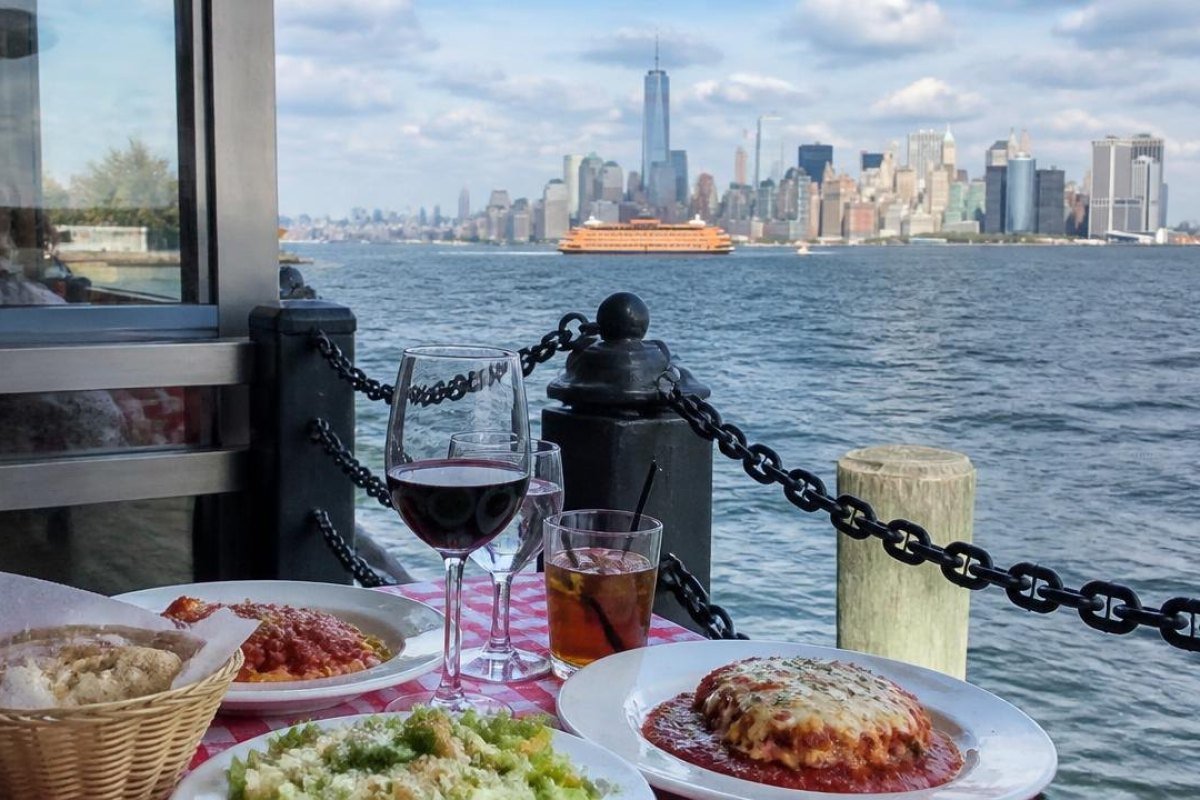
Staten Island can be paired with a ferry ride and waterfront sightseeing. Dining options include Italian-American classics, seafood, pizza, and neighborhood cafés.
Because the borough is less compact for visitors, research the exact route before leaving Manhattan. Treat Staten Island as a half-day or full-day outing rather than a quick restaurant detour.
What to Eat in New York City
Even if you only have a few days, try to sample several food traditions rather than eating the same style of cuisine repeatedly. The city’s essential categories include New York pizza, bagels, pastrami, and food from the city’s immigrant communities.
- Pizza by the slice: Choose a busy shop and eat it fresh, folding the slice if you like.
- Bagels: Try one with cream cheese, smoked fish, or a simple butter filling at breakfast.
- Deli sandwiches: Pastrami and corned beef are classic choices, especially downtown.
- Chinese noodles and dumplings: Chinatown and Flushing offer very different experiences.
- Street food: Tacos, halal carts, momos, and Caribbean snacks can make an excellent informal meal.
- Fine dining: Reserve early and check the menu, dress expectations, tasting format, and cancellation policy.
Practical Tips for Eating Around New York City
New York dining is easier when you plan for flexibility. Keep a few backup restaurants, allow time for transit, and avoid scheduling every meal so tightly that one delayed train ruins the day.
Reservations are most important for small restaurants, weekend brunch, celebrated tasting menus, and pre-theater dining. If you are eating near Broadway, confirm the travel time and aim to finish well before curtain rather than relying on a rushed meal.
Outdoor dining is widely available, but seating arrangements and seasonal setups can change. Ask about accessibility, dietary accommodations, and shared kitchen risks when necessary. Tipping customs remain an important part of the city’s restaurant culture, and the final bill may include taxes and additional service charges.
Suggested Food Itineraries
A First-Timer’s Manhattan Food Day
Begin with a bagel breakfast, walk through Greenwich Village or Chelsea, enjoy a market or casual lunch, and finish with dinner in the West Village or Lower East Side. This route balances iconic foods with neighborhood atmosphere.
A Queens Food Day
Choose either Flushing or Jackson Heights rather than attempting both. Focus on shared plates, small restaurants, and a slow afternoon of browsing. The best reward is variety: order several dishes and compare flavors across different kitchens.
A Brooklyn Food Day
Start with coffee and a bakery stop, explore Williamsburg or Greenpoint, and book an evening meal if you want a sought-after table. Include time for waterfront walking, independent shops, or a neighborhood bar between meals.
Final Advice: Eat by Neighborhood, Not by Checklist
The best New York food memories often come from choosing a neighborhood and staying there long enough to notice its rhythm. Mix iconic institutions with local favorites, leave room for spontaneous stops, and check current restaurant details before traveling.
Whether your priority is pizza, international street food, fine dining, or historic delis, New York City rewards visitors who explore beyond the most famous avenues. Let the neighborhood shape the meal, and you will experience a much more authentic and satisfying side of the city, along with other things to do beyond Times Square.