
Choosing where to stay in New York City can shape your entire trip. The city is made up of distinct neighborhoods, and each offers a different balance of sightseeing, restaurants, nightlife, local atmosphere, space, and price, as explored in these neighborhoods for every traveler.
For a first visit, staying near a convenient subway station is usually more important than being on a specific famous street. New York’s subway and bus network makes it possible to explore widely, while walking remains one of the best ways to experience the city. Before booking, compare the neighborhood’s transport connections, evening atmosphere, room size, and total hotel cost.
How to Choose the Best Area in New York City
The right neighborhood depends on what you want from the trip. First-time visitors often prefer central Manhattan, while returning travelers may enjoy Brooklyn, Queens, or Upper Manhattan. Families may value quieter streets and larger rooms, whereas nightlife-focused travelers may prioritize late-opening restaurants and bars.
New York accommodation can be expensive, and the displayed room rate may not represent the final cost. Check the booking conditions carefully for mandatory fees, taxes, cancellation terms, deposits, and resort-style charges before confirming a stay.

For stays of fewer than 30 days, be especially cautious with apartment-style listings. New York City has strict rules for short-term rentals, so a licensed hotel, hostel, or legally permitted property is generally the safer choice for visitors.

Midtown Manhattan: Best for First-Time Visitors
Midtown is the classic choice for travelers who want to reach many major sights with minimal journey planning. Times Square, Broadway, Rockefeller Center, Fifth Avenue, St. Patrick’s Cathedral, and major museums are all within easy reach of different parts of the district.
The area offers an extensive selection of hotels, from large international properties to compact budget rooms. Its main advantages are central sightseeing, excellent subway access, and late-night convenience.
Midtown is not one uniform neighborhood. The area around Times Square is bright, crowded, and highly commercial, while Midtown East is often more business-oriented. Near Bryant Park and Grand Central, visitors can find a more polished atmosphere with convenient connections.
Who should stay in Midtown?
Midtown works particularly well for first-time visitors, short city breaks, and travelers planning Broadway shows. It is also practical for visitors who want to return to their hotel easily between attractions.
Choose your hotel carefully if you prefer quiet evenings. Streets immediately around Times Square can remain busy late into the night, while nearby areas such as Bryant Park, Murray Hill, or Midtown East may feel more balanced alongside these things to do beyond Times Square.
Upper West Side: Best for Families and a Residential Atmosphere
The Upper West Side sits between Central Park and Riverside Park and has a more residential character than Midtown. It is known for broad avenues, apartment buildings, neighborhood cafés, cultural institutions, and convenient access to green space.
Families often appreciate the area’s parks and playgrounds, walkable streets, and relaxed evening pace. The American Museum of Natural History is nearby, while Central Park provides room for walking, cycling, and breaks from busy sightseeing.
Hotels may be less concentrated than in Midtown, so check the exact location of your accommodation and the nearest subway entrance. The neighborhood is a good base for exploring the Upper West Side, Central Park, and parts of Harlem, although Lower Manhattan will require more travel time.
What to consider before booking the Upper West Side
The Upper West Side is best for travelers who value space to slow down, local restaurants, and easy park access. It may feel too far north for visitors whose itinerary centers on Wall Street, the Lower East Side, or Brooklyn.
For a quieter stay, look beyond the busiest avenues and compare properties near subway stations rather than choosing solely by neighborhood name.
Upper East Side: Best for Museums and a Quieter Base
The Upper East Side is a strong choice for visitors interested in museums, elegant architecture, and a calmer Manhattan experience. Museum Mile and the Metropolitan Museum of Art are major attractions, while Central Park is directly to the west.
The neighborhood offers cultural attractions, refined residential streets, and good dining options. It can be especially appealing to couples, returning visitors, and travelers who prefer a less hectic base than Midtown.
Travel times vary considerably across the neighborhood. The eastern side may be less convenient for some sightseeing routes, so confirm the distance to the nearest subway station before booking.
Greenwich Village and the West Village: Best for Character and Dining
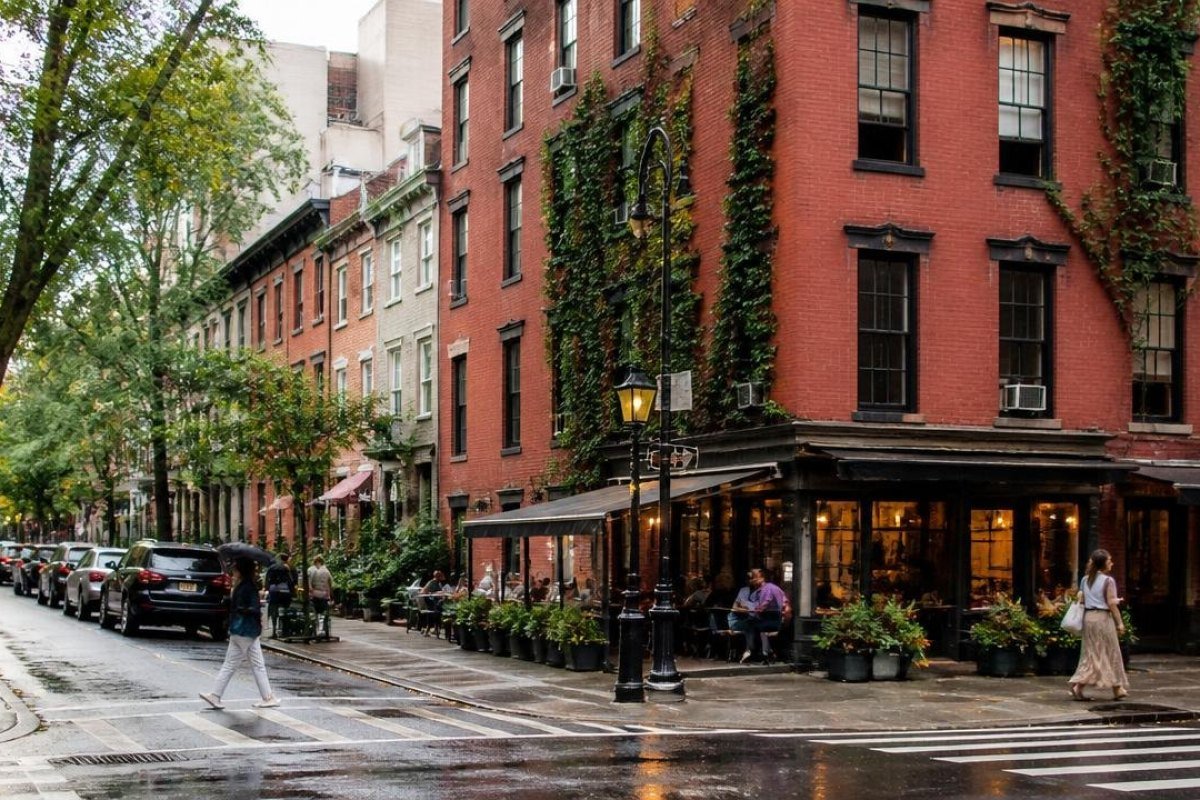
Greenwich Village and the West Village are among the most atmospheric places to stay in Manhattan. Their irregular streets, historic buildings, independent restaurants, jazz venues, and intimate bars create a very different feel from the grid-like streets of Midtown.
The area is ideal for travelers seeking neighborhood character, excellent dining, and evening walks. Washington Square Park, smaller galleries, and lively cafés are close at hand, while nearby subway lines connect the Village with other parts of the city.
Accommodation can be limited and expensive, particularly in the most picturesque blocks. Streets with nightlife may be noisy, and older buildings may have small rooms, stairs, or limited elevator access, so read the property details carefully.
SoHo, NoLita, and the Lower East Side: Best for Shopping, Food, and Nightlife
SoHo is known for cast-iron architecture, designer stores, galleries, and stylish restaurants. NoLita offers a more intimate mix of boutiques and cafés, while the Lower East Side is associated with nightlife, music venues, bars, and a broad New York neighborhood food guide.
These neighborhoods suit travelers who want fashionable surroundings, restaurant variety, and late-night energy. They are also well placed for exploring Chinatown, Little Italy, the East Village, and Lower Manhattan on foot.
Noise levels change from block to block. The Lower East Side can be lively late at night, while SoHo may feel busier during shopping hours and quieter after business activity fades. Always check recent guest comments about soundproofing and street noise.

Which downtown area is right for you?
Choose SoHo for shopping and architecture, NoLita for stylish but compact streets, and the Lower East Side for nightlife and food. Chinatown can offer a more energetic, practical base with excellent dining, though rooms may be smaller and streets busier.
Chelsea and Hudson Yards: Best for Art, Parks, and Modern Hotels
Chelsea combines galleries, restaurants, nightlife, and the High Line, one of the city’s most distinctive elevated parks. Hudson Yards adds modern towers, shopping, public art, and newer hotel developments.
This part of Manhattan appeals to visitors who want modern accommodation, art and design, and easy access to the High Line. Chelsea is also convenient for reaching the West Village, Union Square, and parts of Midtown.
The neighborhood changes quickly from one block to the next. Some streets are lively and polished, while others are more commercial or industrial in feel. Look at the exact address rather than relying only on the Chelsea label.
Tribeca and the Financial District: Best for Luxury and Lower Manhattan
Tribeca is known for converted warehouses, upscale restaurants, cobbled streets, and a relatively quiet atmosphere. The Financial District offers a larger concentration of hotels, waterfront walks, historic landmarks, and access to ferries and Lower Manhattan attractions.
These areas are a good match for travelers seeking high-end hotels, historic sights, and waterfront access. The 9/11 Memorial, One World Observatory, Wall Street, the Battery, and ferry terminals are nearby.
They can feel quieter outside business hours, particularly in parts of the Financial District. That may be an advantage for some visitors but less appealing if you want immediate access to nightlife and neighborhood cafés.
Brooklyn Heights, Downtown Brooklyn, and DUMBO: Best for Views and a Brooklyn Experience
Brooklyn offers a genuine alternative to Manhattan rather than simply a cheaper place to sleep. Brooklyn Heights provides historic streets and promenade views, DUMBO is known for striking bridge and skyline scenery, and Downtown Brooklyn has strong transport connections and a growing hotel scene.
The borough works well for travelers who want Manhattan skyline views, historic architecture, and independent restaurants. The Brooklyn Bridge Park waterfront is especially attractive at sunset, while nearby neighborhoods offer a more local pace.
Brooklyn is large, so the best choice depends on your itinerary. A hotel near Downtown Brooklyn may be practical for subway connections, while DUMBO and Brooklyn Heights can be more atmospheric but may command higher rates.
Is Brooklyn practical for sightseeing?
Yes, if your accommodation is near a reliable subway connection and you are comfortable allowing extra journey time. Brooklyn is especially convenient for Brooklyn-focused itineraries, waterfront walks, and travelers who have already visited the main Manhattan sights.

Long Island City: Best for Skyline Views and Good Connections
Long Island City in Queens is a popular alternative for visitors who want modern hotels, skyline views, and quick access to Manhattan. The neighborhood has waterfront parks, cultural venues, newer residential towers, and a growing selection of restaurants.
Its main advantages are Manhattan proximity, modern hotel inventory, and excellent subway links. Some hotels offer impressive views across the East River, often at rates that can be more competitive than comparable Manhattan properties, although prices vary by date.
The neighborhood is less traditional in atmosphere than Greenwich Village or the Upper West Side. Check the walking route to the station and nearby dining options, especially if you prefer not to travel for every meal.
Harlem: Best for Culture, Music, and a More Local Feel
Harlem offers a rich cultural history, distinctive restaurants, jazz venues, churches, and community life. It is a rewarding base for travelers interested in African American history, music, architecture, and food.
Visitors can enjoy live music, historic streets, and excellent soul-food and Caribbean dining. The neighborhood also provides access to northern Central Park and several subway routes into Midtown.
Harlem is varied rather than uniform. Research the exact block, read recent reviews, and choose accommodation close to the attractions and transport links you plan to use.
Which New York City Area Is Best for Different Travelers?
- First-time visitors: Midtown, Bryant Park, or Midtown East for central attractions and convenient connections.
- Families: Upper West Side or quieter parts of Midtown for parks, museums, and practical transport.
- Couples: Greenwich Village, West Village, SoHo, or Tribeca for dining and atmosphere.
- Nightlife travelers: Lower East Side, Greenwich Village, Chelsea, or the East Village.
- Budget-conscious visitors: Compare Long Island City, Downtown Brooklyn, Harlem, and outer parts of Manhattan.
- Returning visitors: Brooklyn, Queens, Harlem, or the Lower East Side for a more neighborhood-focused experience.
Regardless of the area, prioritize a nearby subway station, clear hotel policies, and recent guest feedback over a famous neighborhood name alone.
Getting Around New York City from Your Hotel
The subway is usually the most useful way to cover longer distances across the city, while buses can be helpful for shorter cross-town journeys. Walking is often the fastest option for exploring nearby neighborhoods, especially in Lower Manhattan and central Brooklyn.
Before booking, check the nearest station, the lines serving it, and whether the route requires transfers. Visitors should also consider late-night transport, airport connections, and walking distance with luggage.
The MTA’s current payment and fare information can change, so check official guidance shortly before your trip. Using contactless payment or the current approved fare system may be more convenient than relying on older travel advice about MetroCards.
Final Tips for Booking a New York City Hotel
Start by identifying the experiences that matter most: Broadway, museums, restaurants, nightlife, parks, shopping, or skyline views. Then choose the neighborhood that reduces the amount of daily travel rather than trying to stay close to every attraction.
Compare the full price, room dimensions, cancellation conditions, and transport location. In New York, a small difference in neighborhood can affect noise, convenience, and the character of your evenings.
For a first trip, central Manhattan remains the simplest base. For better neighborhood atmosphere or potentially different accommodation value, consider Brooklyn, Long Island City, Harlem, or a carefully chosen downtown district. The best place to stay is ultimately the area that matches your itinerary, energy level, and tolerance for daily travel.
.