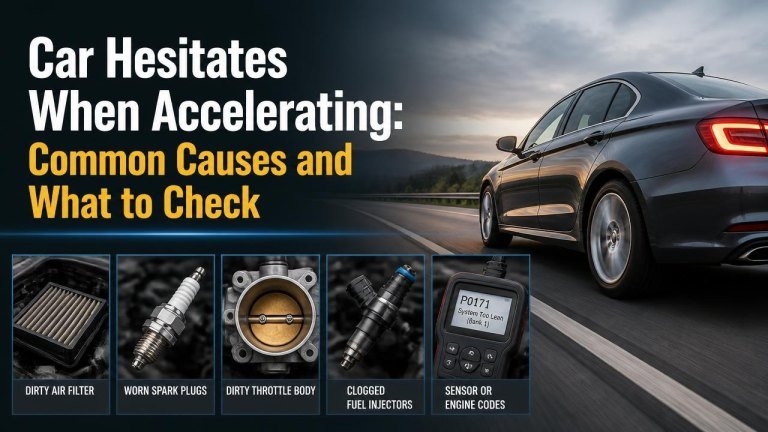
Car Hesitates When Accelerating: Common Causes and What to Check
Acceleration should feel smooth and predictable. If your car pauses, stumbles, or responds slowly when you press the accelerator, the cause may be minor—or it may indicate a problem that could worsen with continued driving. Paying attention to when the hesitation happens can help narrow down the source.
What Does It Mean When a Car Hesitates?
Acceleration hesitation is a brief delay between pressing the accelerator and the engine producing the expected power. You may notice surging, stumbling, or a momentary loss of power. The problem can occur from a stop, while passing, during uphill driving, or at a specific engine speed.
Some vehicles hesitate only when the engine is cold, while others do so after warming up. Note whether the check engine light is on, whether the engine misfires, and whether the transmission shifts normally. These details are useful for diagnosis.

Common Causes of Hesitation During Acceleration
Several systems work together when you accelerate. A problem with the air supply, fuel delivery, or ignition system can interrupt that process and make the engine respond slowly.
Dirty or Failing Mass Airflow Sensor
The mass airflow sensor measures the air entering the engine so the computer can calculate the proper fuel mixture. Contamination or sensor failure can cause incorrect air readings, poor throttle response, and rough acceleration.
A damaged air filter, an intake leak, or an improperly fitted aftermarket component can also affect airflow readings. Avoid spraying cleaners on the sensor unless the product is specifically designed for that component and the manufacturer’s instructions allow it.
Clogged Air Filter or Intake Restriction
An engine needs a steady supply of clean air. A severely restricted air filter may contribute to weak acceleration, reduced engine performance, and poor fuel economy. Inspect the filter according to the vehicle’s maintenance guidance and check for leaves, debris, or collapsed intake tubing.
Fuel Delivery Problems
A weak fuel pump, clogged fuel filter, restricted injector, or contaminated fuel can prevent the engine from receiving enough fuel under load. Typical clues include hesitation under hard acceleration, loss of power uphill, and difficulty starting.
Do not open pressurized fuel-system components without the correct tools and safety procedures. Fuel vapors and leaks create a serious fire risk, so fuel-system testing is often best left to a qualified technician.
Worn Spark Plugs or Ignition Components
Spark plugs, ignition coils, and related components must create a strong spark at the right time. Wear or damage can produce engine misfires and vibration, and flashing check engine lights during acceleration.
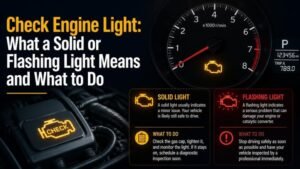
A flashing check engine light can indicate an active misfire that may damage the catalytic converter. Reduce driving and arrange an inspection promptly rather than repeatedly accelerating hard to test the problem.
Throttle Body or Throttle Position Sensor Issues
The throttle body controls airflow as you press the accelerator. Carbon buildup, an electronic fault, or a faulty throttle position sensor may cause delayed response, uneven acceleration, and sometimes limp mode.

Electronic throttle systems can require specific inspection, cleaning, or relearning procedures. Follow the vehicle manufacturer’s service instructions instead of forcing the throttle plate or disconnecting components unnecessarily.
Vacuum or Intake Leaks
Unmetered air entering through a cracked hose, loose connection, or damaged intake gasket can upset the engine’s air-fuel mixture. You may notice rough idle, hissing sounds, and hesitation at low speed.
Because some leaks are difficult to see, a repair shop may use specialized smoke testing. Replacing a visibly cracked hose can help, but avoid guessing if the symptom continues.
Transmission or Clutch Problems
Not every acceleration complaint originates in the engine. An automatic transmission may hesitate because of a control fault or internal problem, while a manual vehicle may have a slipping clutch. Watch for engine speed rising without matching speed, delayed gear engagement, or harsh shifting.
Transmission fluid level and condition should be checked only according to the manufacturer’s procedure, since some vehicles require a specific temperature and inspection method.
What to Check First
Begin with simple observations before replacing parts. Check for warning lights, recent maintenance, and changes in driving conditions. A hesitation that began immediately after refueling, for example, may point toward fuel quality or an evaporative-emissions issue.
- Record whether the problem occurs when the engine is cold or warm.
- Notice whether it happens from a stop, at highway speed, or under heavy load.
- Check whether the engine is shaking, backfiring, or making unusual noises.
- Inspect the air filter and visible intake hoses for damage or loose connections.
- Look for fluid leaks, damaged wiring, or disconnected electrical plugs.
- Use a compatible diagnostic scanner if the check engine light is illuminated.
When to Stop Driving
Some hesitation symptoms require immediate attention. Stop driving when there is a flashing check engine light, severe loss of power, or strong fuel smell. You should also avoid driving if the vehicle stalls in traffic, overheats, produces heavy smoke, or makes loud mechanical noises.
If the car only has mild hesitation and no warning signs, drive gently to a repair facility. Avoid towing, steep hills, high speeds, and heavy loads until the cause is identified.
How a Mechanic Diagnoses Acceleration Hesitation
A proper diagnosis begins with the symptom pattern and a road test. The technician may inspect stored fault codes, live sensor data, and fuel pressure before testing ignition, airflow, and transmission operation.
A diagnostic code does not always identify the failed part. It may indicate that a sensor detected an abnormal condition elsewhere in the system. Testing the related wiring, connectors, vacuum system, and mechanical components helps prevent unnecessary parts replacement.
How to Prevent Future Hesitation Problems
Follow the maintenance schedule for air-filter replacement, spark-plug service, and fluid inspections. Use the fuel grade specified for the vehicle, repair warning lights promptly, and address small drivability changes before they become severe.
Keeping records of service and symptoms can also help. Include when the hesitation occurs, the engine temperature, fuel level, road conditions, and any dashboard warnings.
Final Takeaway
A car that hesitates when accelerating may have a problem with fuel delivery, ignition, airflow, or the transmission. Start with visible checks and symptom patterns, but do not ignore warning lights or serious drivability changes. A timely diagnostic inspection can identify the cause safely and help prevent more expensive damage.