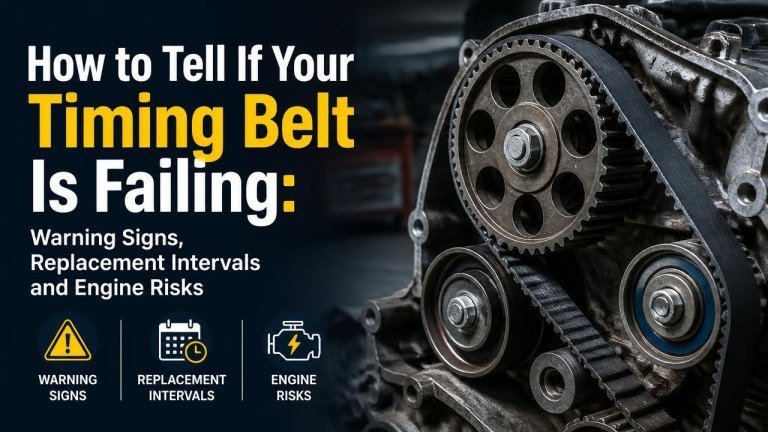
Knowing how to tell if your timing belt is failing can help you prevent a sudden breakdown and potentially expensive engine repairs. This belt keeps the engine’s internal components moving in precise coordination, so its condition is essential to reliable operation.
What Does a Timing Belt Do?
A timing belt synchronizes the crankshaft and camshaft, allowing the valves to open and close at the correct moments. It also helps maintain accurate engine timing while the engine is running. If the belt slips or breaks, pistons and valves may move out of sequence and collide in some engines. Understanding timing belt and chain differences can help explain why some engines require different maintenance.
Common Warning Signs of a Failing Timing Belt
Timing belts can deteriorate without obvious symptoms, which is why scheduled replacement matters. However, several signs may indicate a problem with the belt or related components.
Ticking or Unusual Engine Noises
A worn belt or failing tensioner may produce ticking sounds, chirping noises, or other unusual sounds from the front of the engine. Noise can also come from a damaged idler pulley or water pump, so a professional inspection is important before assuming the belt itself is at fault.

Difficulty Starting or Misfiring
If the belt has stretched, slipped, or lost teeth, the engine may have trouble starting, experience misfires, or run roughly. These symptoms can have many causes, but incorrect valve timing should be treated as a serious possibility.
Engine Vibration or Poor Performance
Incorrect timing can lead to rough idling, reduced power, and noticeable vibration. Continued driving may worsen the damage, especially if the belt is visibly worn or the engine is becoming increasingly difficult to operate.
Oil Leaks Near the Timing Cover
Oil around the timing cover may point to a leaking seal or gasket. Oil contamination can weaken the belt material and contribute to premature wear, belt deterioration, and eventual failure. Any leak in this area should be checked promptly.
Visible Cracks, Fraying, or Missing Teeth
Inspection may reveal cracks, frayed edges, or missing sections of the belt’s teeth. Do not rely on a visual check alone, because internal deterioration may not be visible while the belt is installed.
When Should a Timing Belt Be Replaced?
Replacement intervals vary by vehicle and engine. The correct schedule is listed in the owner’s manual, the manufacturer’s maintenance information, or service records from the vehicle’s previous owner. A car maintenance schedule by mileage can also help organize time-based and mileage-based service. Mileage and time both matter, because rubber components can age even when the vehicle is driven infrequently.
If the replacement history is unknown, treating the belt as overdue is generally safer than assuming it is still serviceable. A qualified technician can confirm the correct interval and inspect the surrounding components.
What Happens If the Timing Belt Breaks?
A broken belt stops the camshaft from turning while the crankshaft may continue to rotate. In an interference engine, this can cause valve damage, piston damage, and major internal repairs. In other engines, the result may be less severe, but a sudden stall can still create a safety hazard.
A belt that has only jumped a tooth can also cause incorrect timing, poor performance, and difficult starting. If the engine suddenly stalls or shows severe timing-related symptoms, avoid repeatedly trying to start it and arrange an inspection.
What Is Usually Replaced With the Belt?
Technicians often recommend replacing the tensioner, idler pulleys, and, where appropriate, the water pump during the same service. These parts may be difficult to access, and a worn pulley or pump can damage a new belt. The exact service package depends on the engine design and manufacturer guidance, while signs of a coolant leak may indicate a related water pump problem.
How to Protect Your Engine
Keep accurate service records and follow the recommended maintenance schedule rather than waiting for a warning sign. Ask a qualified technician to inspect the complete timing system if you notice unusual noises, starting problems, or oil contamination.
Because timing belt failure may occur without much warning, preventive replacement is usually more dependable than trying to judge the belt’s condition by appearance alone. Prompt attention can reduce the risk of unexpected breakdowns and costly engine damage.
Final Takeaway
The most reliable way to avoid timing belt failure is to follow the correct replacement interval and investigate symptoms early. Maintenance records, professional inspection, and timely replacement are the best defenses against a broken belt and the engine risks that can follow.