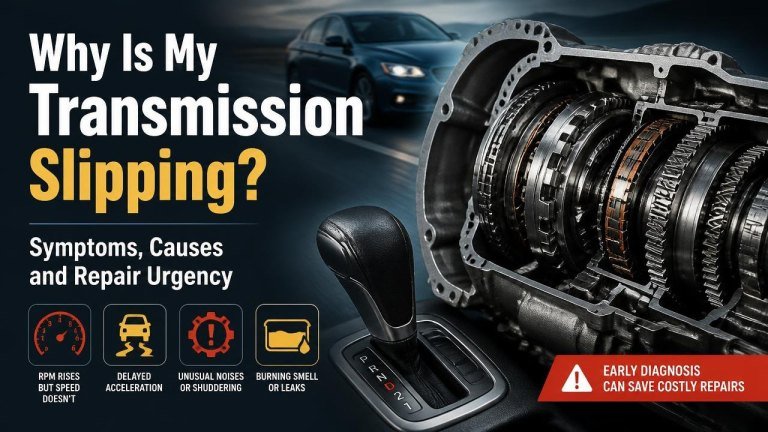
When a transmission is slipping, the engine may rev higher without a matching increase in road speed. You might also notice delayed acceleration, unexpected gear changes, or difficulty maintaining a gear. These symptoms should not be ignored because a minor transmission issue can become a major repair if driving continues.
What Does Transmission Slipping Feel Like?
The clearest sign is a disconnect between engine speed and vehicle acceleration. The engine sounds louder or the tachometer rises, but the vehicle does not move forward as expected. Some drivers describe this as the transmission “flaring” between gears.
Other signs may include delayed engagement, unexpected shifting, and a sensation that the vehicle briefly loses power. The problem can occur during acceleration, uphill driving, towing, or even steady cruising.
Common Symptoms to Watch For
- Engine revs rise suddenly while speed changes slowly.
- The transmission hesitates before moving after selecting Drive or Reverse.
- Gears change harshly, unpredictably, or more often than usual.
- The vehicle struggles to accelerate under load.
- You smell burning fluid or notice fluid leaking beneath the vehicle.
- The transmission warning light or check-engine light turns on.
Why Is My Transmission Slipping?
Transmission slipping can result from a fluid problem, internal wear, an electrical fault, or an issue with the clutch system in a manual transmission. Identifying the cause requires more than relying on one symptom, since several faults can feel similar from the driver’s seat.
Low, Dirty, or Incorrect Transmission Fluid
Automatic transmissions depend on fluid for hydraulic pressure, lubrication, and heat control. A low fluid level may prevent the transmission from applying clutches and bands firmly. Old or contaminated fluid can also reduce performance and contribute to excessive heat and internal wear.
A leak is especially important to address. Adding fluid may temporarily improve shifting, but it will not fix the source of the leak. The correct fluid type and inspection procedure vary by vehicle, so follow the manufacturer’s recommendations.
Worn Clutches, Bands, or Gears
Internal friction components gradually wear, particularly in vehicles used for heavy traffic, towing, or frequent hauling. Once the transmission’s friction surfaces can no longer hold properly, slipping may become more frequent and severe. Metal or debris in the fluid can indicate internal damage.
Solenoid, Sensor, or Control Problems
Modern transmissions use electronic controls to determine shift timing and fluid pressure. A faulty shift solenoid, sensor, wiring connection, or control module can cause delayed or incorrect shifts. Diagnostic scanning can help identify stored fault codes, but a code alone does not always prove which component has failed.
Manual Transmission Clutch Wear
In a manual vehicle, slipping often comes from a worn clutch disc, pressure plate, or related component. A common clue is rising engine speed during acceleration while road speed increases slowly, especially in a higher gear. A worn clutch may also produce a burning smell or a clutch pedal that engages unusually high.
How Urgent Is a Slipping Transmission?
The urgency depends on the severity and cause, but transmission slipping generally deserves prompt attention. Continued driving can create more internal heat, accelerate component wear, and turn a repairable issue into extensive damage.
Arrange an inspection soon if the vehicle still moves normally but shows occasional slipping. Avoid unnecessary driving and seek professional help promptly if the vehicle is losing acceleration, refusing to engage, shifting violently, leaking fluid, or producing a strong burning odor.
When to Stop Driving
Stop driving when the transmission cannot reliably transfer power or the vehicle becomes difficult to control. Particularly serious warnings include complete loss of movement, heavy fluid leakage, and loud grinding or clunking noises. Continuing to drive in these conditions may leave you stranded or create a safety risk in traffic.
What You Can Check Safely
Before arranging service, note when the symptom occurs: during cold starts, after warming up, while accelerating, or under a specific load. This information can help a technician reproduce the fault. You can also look for fluid spots, unusual odors, warning lights, and changes in the transmission’s behavior.
Do not crawl under a vehicle supported only by a jack, and do not add fluid unless you know the correct specification and checking procedure. Some transmissions have no conventional dipstick and require a particular temperature or service process for accurate inspection.
How a Professional Diagnoses the Problem
A proper diagnosis usually combines a road test with a visual inspection and electronic scan. The technician may check fluid level, fluid condition, leak points, shift data, and fault codes. Depending on the findings, further testing may include hydraulic pressure checks or inspection of internal components.
Accurate diagnosis matters because replacing a sensor will not solve a worn clutch, and changing fluid cannot repair severely damaged internal parts. Ask the repair shop to explain the identified cause, recommended repair, and likely consequences of delaying service.
Can Transmission Slipping Be Prevented?
Regular maintenance can reduce avoidable transmission problems. Follow the vehicle maker’s service schedule, use the specified fluid, and address leaks early. Good habits include avoiding unnecessary overloading, allowing the vehicle to warm appropriately in severe conditions, and responding to early shift changes before they worsen.
Maintenance cannot prevent every failure, especially when components have reached the end of their service life. However, timely inspections and proper fluid care can help protect internal components and preserve reliable operation.
Bottom Line
Transmission slipping means the engine’s power is not being transferred efficiently to the wheels. Look for rising engine RPM, delayed or harsh shifts, poor acceleration, leaks, and burning odors. Because continued slipping can increase heat and damage, schedule a professional diagnosis promptly and stop driving if the vehicle loses dependable movement or shows severe warning signs.