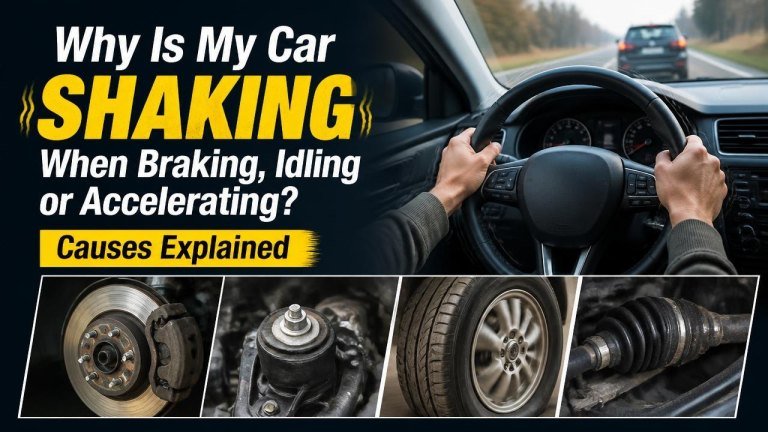
Feeling your car shake can be unsettling, especially when the vibration appears during braking, idling or acceleration. The cause may be something simple, such as an unbalanced wheel, or a more urgent issue involving the brakes, steering or engine.
Where and when you feel the shaking provides important clues. A vibration through the steering wheel usually points toward the front wheels or suspension, while shaking through the seat or floor may involve the rear wheels, drivetrain or engine mounts. Use these symptoms as a guide, but have the vehicle inspected before a minor fault becomes a safety problem.
Why Does My Car Shake When Braking?
Shaking during braking is often linked to the brake rotors, but worn suspension parts, tires or wheel components can create similar symptoms. If the vibration is strongest through the steering wheel, the problem may be concentrated at the front of the vehicle.
Warped or Uneven Brake Rotors
Brake rotors can develop uneven thickness or surface deposits after repeated heavy braking, overheating or prolonged use. When the brake pads clamp against an uneven rotor, you may feel a pulsating brake pedal or vibration through the steering wheel, sometimes accompanied by unusual brake noise.
A technician should measure the rotors and inspect the pads rather than automatically replacing parts. Depending on their condition and the vehicle manufacturer’s specifications, the rotors may need resurfacing or replacement. Driving with severe brake vibration can reduce braking control, so it should not be ignored.
Worn Brake Pads or Sticking Calipers
Unevenly worn brake pads or a sticking caliper can make one wheel brake differently from the others. Possible signs include pulling to one side, a burning smell, unusual brake noise or a wheel that feels excessively hot.
These faults can cause uneven braking and additional damage to the rotor. If the car shakes strongly, the brakes smell hot or the vehicle pulls sharply, stop driving when it is safe and arrange an urgent inspection.
Wheel, Tire or Suspension Problems
A bent wheel, damaged tire, loose wheel nuts or worn suspension joint may become more noticeable when the vehicle’s weight shifts forward under braking. Look for tire bulges, uneven tread wear, steering looseness or a repeated thumping sound.
Because these components affect steering and road contact, a professional should check them promptly. Never continue driving on a visibly damaged tire or with suspected loose wheel hardware.
Why Is My Car Shaking While Idling?
Shaking while the car is stopped usually points to an engine that is not running smoothly or a mounting system that is no longer isolating normal engine movement. The vibration may be more noticeable in Drive than in Park because the transmission places additional load on the engine.
Engine Misfire
An engine misfire occurs when one or more cylinders fail to burn the air-fuel mixture correctly. Common causes include worn spark plugs, failing ignition coils, fuel delivery problems or an intake air leak. Typical symptoms include rough idle, hesitation and a flashing or illuminated check-engine light.
A flashing check-engine light can indicate a misfire severe enough to damage the catalytic converter. Reduce driving and seek professional diagnosis, particularly if the engine is losing power or the light is flashing.
Dirty Throttle Body or Fuel System Issue
Carbon buildup around the throttle body, a restricted air filter or a fuel system fault can interfere with stable engine speed. The result may be unstable idle speed, stalling or shaking that improves when you press the accelerator.
Cleaning or replacing a component without testing can waste time and money. A diagnostic scan combined with checks of air, fuel and ignition systems is usually the best approach.
Worn Engine or Transmission Mounts
Engine and transmission mounts hold the powertrain in place while reducing vibration. When a mount cracks or collapses, normal engine movement can be transmitted into the cabin as excessive vibration or a clunk when shifting between Park, Reverse and Drive.
Mount problems may not always trigger a warning light. A technician can inspect the mounts while observing engine movement and checking for damaged rubber or hydraulic fluid leaks.
Why Does My Car Shake When Accelerating?
Acceleration-related shaking can come from the engine, drivetrain, tires or suspension. The speed at which the vibration begins and whether it occurs only under load can help narrow the cause.
Driveshaft, CV Joint or Axle Problems
Front-wheel-drive cars may shake during acceleration when a CV joint or axle is worn. Rear-wheel-drive and all-wheel-drive vehicles can develop similar symptoms from a driveshaft, universal joint or related component. Look for vibration under load, clicking during turns or a clunk when changing direction.
A damaged CV boot can allow grease to escape and dirt to enter the joint. Early inspection may prevent more expensive drivetrain repair needs.
Wheel Imbalance or Tire Damage
Wheel imbalance commonly causes vibration at particular road speeds, although it may feel more obvious while accelerating. Uneven tire wear, a separated belt or a bent rim can also produce speed-related shaking.
Check tire pressures and inspect the tread for bulges, exposed cords or irregular wear. A wheel balance and tire inspection can identify issues that are not visible from inside the vehicle, including problems related to tire age and condition.
Engine Power or Fuel Delivery Problems
If the vehicle shakes only when accelerating and also hesitates, loses power or backfires, the engine may be misfiring under load. Possible causes include weak ignition components, restricted fuel delivery or incorrect air-fuel mixture. A loss of power alongside shaking deserves prompt diagnosis.
How to Tell Where the Vibration Is Coming From
Pay attention to the circumstances surrounding the symptom. Note whether the shaking happens at a particular road speed, only during braking, only while the engine is cold or whenever the vehicle is in gear.
- Steering wheel vibration: often suggests front tires, wheels, brakes or suspension.
- Brake pedal pulsation: commonly points toward uneven brake rotors or braking components.
- Seat or floor vibration: may involve rear wheels, the drivetrain or engine mounts.
- Whole-car shaking at idle: may indicate an engine misfire or failed mount.
- Shaking during acceleration: can involve the drivetrain, tires or engine performance.
These clues are not a substitute for testing. Multiple faults can exist at the same time, and a worn tire or loose suspension component may create symptoms that resemble a brake problem.
Is It Safe to Drive a Shaking Car?
Safety depends on the severity and cause of the vibration. Mild vibration that appears only at a narrow speed range still deserves an appointment, while sudden or worsening shaking should be treated more seriously.
Stop driving and seek assistance if you notice severe steering vibration, a flashing check-engine light, smoke, a burning smell, loss of braking power, a strong pull to one side or a visibly damaged tire. Continuing to drive with these symptoms can increase the risk of losing control or causing further damage.
What Should You Do Next?
Start by recording when the vibration occurs and what makes it better or worse. Check tire pressures using the vehicle manufacturer’s recommended values, but avoid attempting repairs to brakes, steering or suspension without the correct tools and experience.
Ask a qualified technician to inspect the brake system, tires, wheels, suspension, engine mounts and drivetrain as appropriate. A diagnostic scan, road test and physical inspection can distinguish an engine issue from a wheel, brake or drivetrain fault.
In short, car shaking is a symptom rather than a diagnosis. Treat vibration during braking, idling or acceleration as a useful warning, and address it early to protect your safety and prevent a small repair from becoming a larger one.