A failing fuel pump can make a vehicle difficult to start, cause poor engine performance, or leave you stranded without warning. Because several other problems can create similar symptoms, it is important to understand the clues and diagnose a car that won’t start before replacing parts.
What Does the Fuel Pump Do?
The fuel pump moves fuel from the tank to the engine at the correct pressure and flow rate. In most modern vehicles, an electric pump sits inside or near the fuel tank and operates when the ignition is switched on. The engine control system then adjusts fuel delivery to match driving conditions.
When the pump becomes weak, the engine may receive insufficient fuel, especially during acceleration or under heavy load. A complete pump failure can stop fuel delivery altogether, while a damaged electrical connection may create symptoms that come and go.
Common Bad Fuel Pump Symptoms
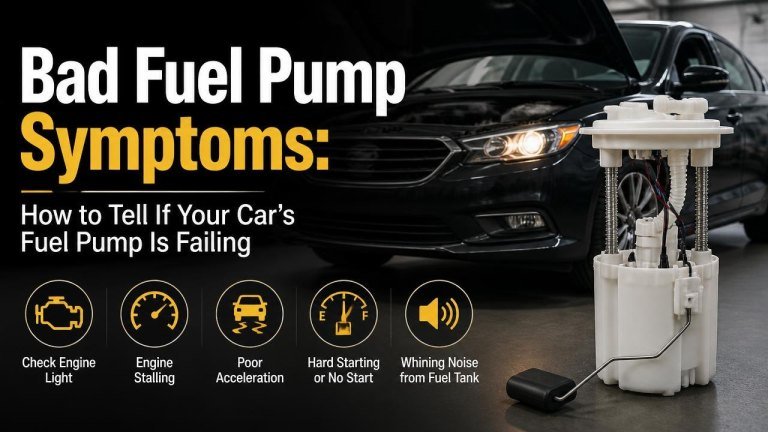
Fuel pump problems often develop gradually, although some failures happen suddenly. Watch for a combination of starting trouble, loss of power, and engine stalling rather than relying on one symptom alone.
- Hard starting: The engine cranks for longer than usual before it starts, particularly after the vehicle has been parked.
- Engine sputtering: The car may hesitate, surge, or stumble when accelerating or climbing a hill.
- Loss of power: A weak pump may not maintain fuel pressure when the engine demands more fuel.
- Unexpected stalling: The engine can shut off while driving and may restart after a short wait.
- Whining from the fuel tank: A loud or unusual hum from the tank area can indicate pump wear, although some pump noise is normal.
- Reduced fuel economy: Poor fuel delivery can cause the engine computer to adjust operation, while related faults may also increase fuel use.
- Check engine light: Fuel pressure or mixture problems may trigger a warning light, but the light alone does not prove that the pump is faulty.
Symptoms That Can Be Mistaken for a Bad Fuel Pump
Not every starting or performance issue comes from the pump. A clogged fuel filter, failing relay, a weak battery, restricted fuel line, or faulty fuel-pressure regulator can create similar behavior. Ignition problems, such as worn spark plugs or a failing crankshaft position sensor, may also cause stalling and hard starts.
Low fuel can sometimes expose a pump problem because the fuel surrounding the pump helps cool it. However, repeatedly driving with very little fuel can also contribute to premature wear. Before replacing the pump, check for stored diagnostic codes, electrical faults, and signs of restricted fuel flow.
How to Diagnose a Failing Fuel Pump
A proper diagnosis begins with the basics: confirm that the vehicle has fresh fuel, listen for the pump priming when the ignition is turned on, and inspect the relevant fuses and wiring. A brief humming sound may be normal, but a loud whine, grinding noise, or silence deserves further testing.
Check Fuel Pressure
A technician can connect a fuel-pressure gauge and compare the reading with the vehicle manufacturer’s specification. Low fuel pressure supports a fuel-delivery problem, but it does not automatically prove that the pump itself is defective. The filter, regulator, wiring, and fuel lines must also be considered.
Test Electrical Power
The pump needs reliable voltage and ground. A technician can test the pump connector, relay, fuse, and ground circuit while the pump is operating. If the pump receives proper power but produces inadequate pressure, replacement may be appropriate. If power is missing, repairing the circuit could solve the problem without replacing the pump.
Inspect Fuel Quality and Flow
Contaminated fuel, water in the tank, or debris can restrict delivery and damage fuel-system components. The diagnosis should consider fuel contamination, a blocked filter, and restricted lines before conclusions are drawn. Professional testing is especially important on vehicles with high-pressure fuel systems.
Can You Drive With a Bad Fuel Pump?
Driving with suspected fuel-pump trouble is risky because the vehicle may lose power or stop unexpectedly. A sudden stall can be dangerous in traffic, at an intersection, or on a high-speed road. If the car is stalling repeatedly, struggling to accelerate, or showing severe hesitation, avoid driving it until it has been inspected.
If the engine has stopped and will not restart, move the vehicle to a safe location if possible and arrange roadside assistance. Do not continue trying to start the car for long periods, since repeated cranking can drain the battery and make diagnosis more difficult.
What Causes Fuel Pump Failure?
Fuel pumps can wear out through normal use, but several conditions may shorten their service life. Common contributing factors include contaminated fuel, repeated operation with a very low fuel level, electrical faults, and debris that restricts the filter or pickup screen.
Damage to the fuel tank, poor-quality replacement parts, and overheating can also contribute to failure. Following the vehicle manufacturer’s maintenance recommendations and using clean, suitable fuel can help reduce avoidable fuel-system problems.
When to Seek Professional Help
Seek professional assistance when the engine stalls while driving, fuel pressure is outside specification, or you smell fuel. Fuel is highly flammable, so avoid working near open flames, sparks, or hot components. A fuel leak requires immediate attention rather than continued troubleshooting on the road.
A qualified technician has the equipment to test pressure, electrical supply, current draw, and fuel quality safely. An OBD2 scanner can also help identify related faults. Accurate testing can prevent an unnecessary pump replacement and reveal related faults that could damage a new component.
Key Takeaway
The strongest warning signs of a failing fuel pump include hard starting, loss of power, unusual tank noise, and repeated stalling. These symptoms can have other causes, so confirm the diagnosis with fuel-pressure and electrical tests before replacing parts. If the car loses power or shows signs of a fuel leak, stop driving and have it inspected safely.