When a car will not start or its electrical systems begin acting strangely, the battery and alternator are often the first suspects. Because both parts work together, their symptoms can look similar. However, knowing the difference between a bad battery and a bad alternator can help you avoid replacing the wrong component.
What the Battery and Alternator Do
The battery stores electrical energy and supplies the strong burst of power needed to start the engine. Once the engine is running, the alternator produces electricity for the vehicle’s electrical systems and restores the battery’s charge. In simple terms, the battery handles starting power, while the alternator supports ongoing electrical demand and battery charging.
Since these components depend on each other, an alternator problem can eventually drain a healthy battery. Likewise, a weak battery can make the charging system work harder than normal.
Common Signs of a Bad Battery
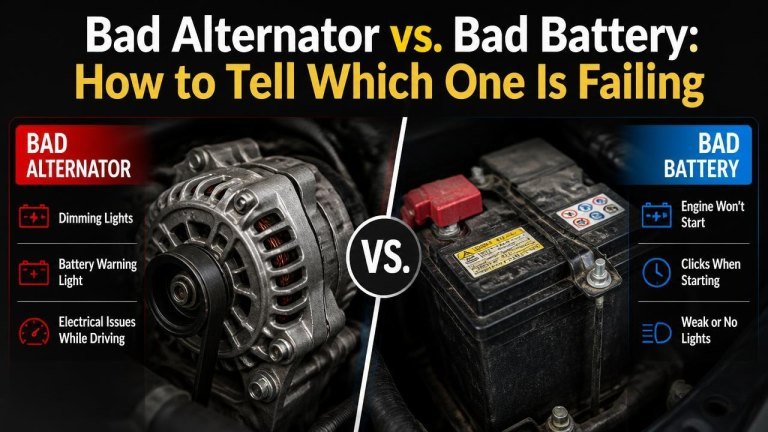
A failing battery usually causes problems when you try to start the vehicle. Watch for these starting symptoms, signs of a weak battery, and reduced power:

- The engine cranks slowly or sounds weaker than usual.
- You hear a clicking sound when turning the key or pressing the start button.
- The interior lights, headlights, or dashboard appear unusually dim before starting.
- The vehicle starts with a jump but struggles to start again later.
- Electrical accessories lose power when the engine is off.
- The battery case looks swollen, damaged, or corroded around the terminals.
A battery may fail suddenly, especially if it has been deeply discharged or can no longer hold a charge. Cold weather can make an aging battery’s weakness more noticeable, but a battery can deteriorate in any season.
Common Signs of a Bad Alternator
An alternator problem often becomes more apparent while the engine is running. Important clues include dim headlights, charging warnings, and electrical instability:
- The battery-shaped warning light appears on the dashboard.
- Headlights or interior lights become dimmer or fluctuate while driving.
- Electrical accessories work inconsistently or lose power.
- The engine stalls after the vehicle has been running for a while.
- A fully charged or recently replaced battery repeatedly goes dead.
- You hear whining, grinding, or other unusual noises from the belt area.
Because the alternator powers many systems while the engine runs, a serious charging fault can leave the vehicle unable to continue operating after the battery’s stored energy is used.
Bad Alternator vs. Bad Battery: Key Differences
The most useful distinction is when the problem occurs. A battery fault is usually most obvious during startup, while an alternator fault often creates trouble after the engine starts or while driving. A battery that repeatedly loses charge may be the victim of an alternator that is not replenishing it.
| Symptom | More commonly linked to a battery | More commonly linked to an alternator |
|---|---|---|
| Slow or failed engine cranking | Yes | Possible if the battery was not recharged |
| Clicking when starting | Yes | Indirectly possible |
| Battery warning light while driving | Less likely | Yes |
| Dim or flickering lights while running | Less likely | Yes |
| Vehicle starts with a jump but soon stalls | Possible | Strong possibility |
| Battery repeatedly goes dead | Possible | Possible, especially if charging is inadequate |
These clues are not a substitute for testing. Loose connections, damaged cables, a worn drive belt, starter problems, and electrical drains can produce similar symptoms.
How to Test the Battery and Alternator
A visual inspection is a useful first step. Check for loose terminals, corrosion, damaged cables, and a battery case that appears swollen or cracked. Do not handle a damaged battery unnecessarily, and seek professional assistance if you notice leakage or significant damage.
Test the Battery With the Engine Off
A multimeter can provide a general indication of the battery’s state. Set it to measure DC voltage and test across the battery terminals with the vehicle turned off. A healthy, fully charged battery typically shows a voltage near its rated resting level, while a notably lower reading suggests low charge, battery weakness, or a possible charging issue. Voltage alone cannot prove that the battery can deliver enough starting power.
Test Charging Voltage With the Engine Running
With the engine running, measure voltage at the battery terminals again. The reading should rise above the battery’s resting voltage when the alternator is charging. If it remains near the resting reading or fluctuates significantly, the system may have a problem involving the alternator, drive belt, wiring, or voltage regulation. Exact readings vary by vehicle, so compare results with the manufacturer’s specifications.
Many repair shops and parts retailers can perform a battery and charging-system test. A proper test can assess both the battery’s starting capability and the alternator’s output rather than relying on symptoms alone.
Can a Bad Alternator Ruin a New Battery?
Yes, an alternator that is undercharging can leave a new battery repeatedly depleted. Repeated deep discharges may shorten the battery’s service life. An alternator with a charging fault can also create excessive voltage, which may damage the battery and other electrical components. For this reason, replacing a battery without checking the charging system can lead to another failure.
If a battery has recently been replaced but the vehicle still needs jump-starts, test the alternator, serpentine belt problems, cables, and possible parasitic electrical drains.
What to Do When Your Car Shows These Symptoms
If the engine will not crank, avoid repeatedly trying to start it, because this can further drain the battery. Check the terminals and use a jump-start only if it is safe and you follow the vehicle manufacturer’s instructions. If the car starts but the battery warning light remains on, limit driving and arrange for inspection as soon as possible.
Stop driving and seek assistance if you notice burning smells, severe electrical malfunction, smoke, a damaged belt, or repeated stalling. A vehicle that loses alternator output may stop running without much warning.
How to Prevent Repeat Battery and Alternator Problems
Regular maintenance can reduce the chance of being stranded. Keep the battery terminals clean and secure, inspect the drive belt during scheduled service, and address warning lights promptly. Avoid leaving lights or accessories on when the engine is off, and have the electrical system tested when a battery repeatedly loses charge.
The best long-term approach is to diagnose the root cause rather than replace parts based on one symptom. Testing the battery, alternator, cables, and starter together provides a more reliable answer.
Final Takeaway
A bad battery most often causes slow cranking, clicking, or failure to start. A bad alternator is more likely to cause dim lights, warning indicators, electrical problems while driving, or a battery that keeps going dead. Because the symptoms can overlap, a battery and charging-system test is the safest way to identify the failing component and make the correct repair.