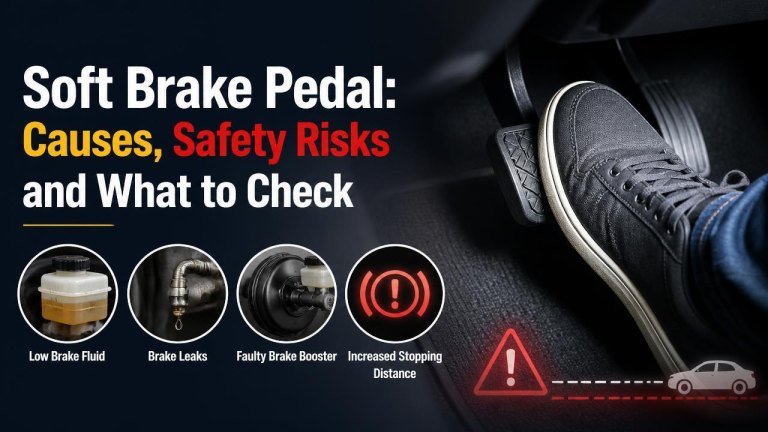
A soft brake pedal should never be ignored. If the pedal feels spongy, sinks unusually far, or becomes firmer only after pumping, the braking system may not be creating or maintaining enough hydraulic pressure.
Some causes are relatively simple to identify, but others can lead to a sudden loss of braking ability. Understanding the possible causes and knowing what to check can help you make a safer decision about whether the vehicle should be driven or inspected immediately.
What a Soft Brake Pedal Feels Like
A soft pedal may feel spongy, travel farther than normal, or require more pressure before the vehicle begins to slow. In some cases, the pedal gradually moves toward the floor while you hold it down. If pumping the pedal temporarily improves its firmness, that is an important warning sign rather than a permanent fix.
Brake feel can vary between vehicles, but any sudden change from the vehicle’s normal pedal response deserves attention. A pedal that feels low, inconsistent, or unusually weak may indicate a problem with hydraulic pressure, brake fluid, or a mechanical component.
Common Causes of a Soft Brake Pedal
Several faults can produce similar symptoms. The most likely cause depends on the vehicle, its maintenance history, warning lights, and whether there are visible leaks or recent brake repairs.
Air in the Brake Lines
Brake fluid does not compress easily, but air bubbles in the lines can compress when the pedal is pressed. This creates a soft or springy sensation and may make the pedal feel firmer after repeated pumping.
Air can enter after brake work, a low-fluid condition, or a leak. The usual repair involves finding the underlying problem and bleeding the brakes correctly. Simply pumping the pedal without removing the air does not solve the cause.
Low or Leaking Brake Fluid
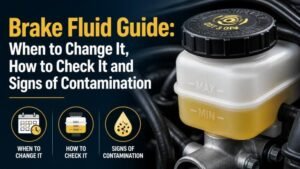
A low reservoir may result from worn brake pads, a leak, or another hydraulic fault. While fluid level can decrease gradually as pads wear, a rapid drop should be treated as a potential leak.
Inspect the area around the master cylinder, brake lines, calipers, wheel cylinders, and the inside of the wheels for wetness or staining. A brake fluid leak can reduce braking performance quickly, so the vehicle should not be driven if fluid is visibly escaping or the pedal is becoming weaker.
Worn Brake Components
Severely worn pads or shoes can increase pedal travel. In some vehicles, rear drum brakes that are out of adjustment may also contribute to a low pedal because the shoes must move farther before contacting the drum.
Other issues, such as a sticking caliper or damaged hardware, can affect how the brakes apply and release. These conditions require an inspection of the pads or shoes, rotors or drums, calipers, and adjustment mechanisms.
Master Cylinder Problems
The master cylinder converts pedal movement into hydraulic pressure. If its internal seals fail, the pedal may slowly sink while steady pressure is applied, even when no external fluid leak is visible.
A sinking pedal is a serious clue because it can indicate an internal bypass inside the master cylinder. Professional testing is usually needed to confirm the fault and determine whether replacement or other repairs are appropriate.
Brake Hose or Component Expansion
Flexible brake hoses can deteriorate internally or expand under pressure. A damaged hose may cause a longer pedal, uneven braking, or a change in pedal feel. Rigid lines can also corrode and leak, particularly in areas exposed to moisture and road contaminants.
Safety Risks of Driving With a Soft Pedal
A soft pedal can increase stopping distance and make emergency braking less predictable. The vehicle may still stop during gentle driving, but braking performance can deteriorate under burning smell under heat, repeated use, or a sudden hydraulic failure.
Do not continue driving if the pedal reaches near the floor, braking power is clearly reduced, the vehicle pulls sharply, a brake warning light appears, or fluid is leaking. These symptoms may indicate a serious brake fault that could worsen without warning.
If the vehicle must be moved to safety, keep the distance as short as possible and avoid traffic when feasible. In many situations, the safer option is to arrange professional recovery rather than drive to a repair facility.
What to Check Before Seeking Repairs
Basic checks can provide useful information, but they should not replace a proper brake inspection. Work only when the vehicle is safely parked on level ground, and never place any part of your body beneath a vehicle supported only by a jack.
- Check whether the brake warning light or another dashboard warning is illuminated.
- Look at the brake fluid reservoir and note whether the level is below the recommended range.
- Inspect for visible fluid leaks around the wheels, under the vehicle, and near brake lines.
- Notice whether the pedal sinks while you hold steady pressure.
- Check whether pumping the pedal changes its firmness, but do not treat this as a repair.
- Consider whether the problem began after recent brake work, a fluid change, or component replacement.
Do not add the wrong type of fluid, ignore a low reservoir, or open hydraulic connections unless you have the correct equipment and procedure. Contaminated fluid or an incorrectly performed repair can create additional problems.
When to Stop Driving Immediately
Stop driving and arrange assistance if the pedal suddenly drops, the vehicle requires excessive effort to stop, or the brakes feel different from one application to the next. A rapidly worsening pedal can indicate fluid loss or a component failure.
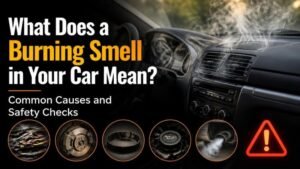
You should also avoid driving when there is a strong burning smell, heavy pulling, grinding, or a warning light combined with poor braking. These symptoms may point to overheated brakes, damaged parts, or a hydraulic problem that needs urgent attention.
How a Technician Diagnoses the Problem
A technician will usually begin by confirming the symptom and checking the fluid level, warning indicators, and visible components. The inspection may include looking for hydraulic leaks, measuring brake condition, and checking the operation of the master cylinder and calipers.
If air is suspected, the system may be tested and bled according to the vehicle manufacturer’s procedure. The technician may also inspect hoses, lines, wheel cylinders, rear-brake adjustment, and electronic brake-system components where applicable.
How to Prevent Brake Pedal Problems
Regular brake inspections can identify worn friction material, damaged hoses, corroded lines, and fluid problems before pedal feel changes significantly. Follow the vehicle manufacturer’s maintenance recommendations and use the specified brake fluid.
Pay attention to gradual changes, including increased pedal travel, new noises, pulling to one side, vibration, or the need to pump the brakes. Early attention can reduce the risk of costly secondary damage and, more importantly, protect braking performance.
Bottom Line
A soft brake pedal is a warning that the braking system may not be operating correctly. Possible causes include air in the lines, low or leaking fluid, worn components, hose problems, and a failing master cylinder.
Because braking faults can worsen quickly, treat a newly soft or sinking pedal as a safety issue. Check for warning signs and visible leaks, but arrange a professional inspection rather than relying on pumping the pedal or continuing to drive normally.