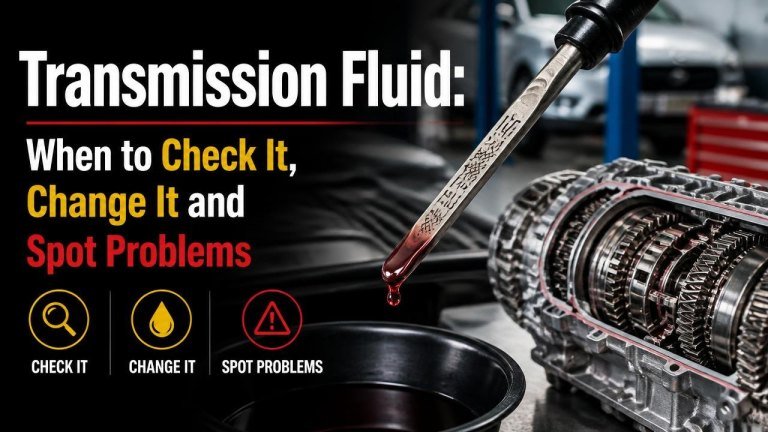
Transmission fluid plays a vital role in keeping your vehicle moving smoothly. It lubricates internal components, helps control operating temperature, and supports consistent gear changes. Whether your vehicle has an automatic, manual, continuously variable, or dual-clutch transmission, paying attention to fluid condition can help you spot problems before they become expensive repairs.
Why transmission fluid matters
Transmission fluid does more than reduce friction. It provides lubrication, carries away heat, and helps hydraulic or electronic systems complete gear changes correctly. Over time, fluid can become contaminated or lose important additives, which may affect transmission performance.
Using the correct fluid type is essential. Different transmissions require specific formulations, and the wrong product may cause poor shifting or internal damage. Always check the owner’s manual or follow the vehicle manufacturer’s service information.
When to check transmission fluid
Check the fluid according to the vehicle manufacturer’s instructions. Some vehicles have a traditional dipstick, while others use a sealed design that requires a specific inspection procedure. Fluid level can also depend on the transmission temperature, engine condition, and whether the vehicle is parked on level ground.
It is wise to inspect for signs of trouble whenever you notice delayed engagement, rough shifting, or an unusual smell. You should also check beneath the vehicle for fresh fluid after parking, especially if the transmission has recently been serviced or the vehicle has experienced an impact.
How to check a transmission with a dipstick
Park on a level surface and follow the manual’s instructions for warming the vehicle. With the engine running if specified, remove the dipstick, wipe it clean, reinsert it fully, and check the level again. The fluid should generally sit within the marked range.
Look at the fluid’s color, smell, and consistency. Exact appearance varies by fluid type, so the manufacturer’s guidance is more reliable than color alone. Do not overfill, because excessive fluid can also cause foaming and shifting problems.
Vehicles without a transmission dipstick
Many modern vehicles have no user-accessible dipstick. Their fluid level may need to be checked through a service plug at a specified temperature and with the vehicle positioned correctly. This procedure often requires special equipment, so a qualified technician may be the safest choice.
A sealed transmission still needs fluid inspections and leak checks. “Sealed” does not necessarily mean the fluid never needs service; it means the inspection and filling process is different.
When to change transmission fluid
The best interval is the one listed in your owner’s manual or maintenance schedule. Service requirements vary with the transmission design, driving conditions, and vehicle use. Towing, frequent stop-and-go driving, heavy loads, steep terrain, and extreme temperatures may place additional demands on the fluid.
Transmission service may involve draining and refilling the fluid, replacing a filter, cleaning a pan, or following a specialized procedure. Ask what the service includes and confirm that the shop will use the specified fluid and the correct filling method.

Fluid change versus transmission flush
A fluid change typically removes some or all of the accessible old fluid and replaces it with fresh fluid. A flush uses additional equipment or fluid to exchange more of the old product. Neither option is automatically right for every vehicle.
Before approving a flush, consider the transmission’s service history, current condition, and manufacturer recommendations. A reputable technician should explain the proposed method rather than recommending a generic service for every vehicle.
Signs of transmission fluid problems
Transmission trouble can develop gradually or appear suddenly. Common warning signs include slipping gears, hesitation when selecting Drive or Reverse, grinding or whining noises, and fluid leaking under the vehicle. A warning light may also appear, although the absence of a warning light does not guarantee that everything is normal.
Burnt-smelling fluid, visible debris, or a level that repeatedly drops can indicate a leak or internal wear. Do not rely on fluid replacement alone to fix symptoms such as shuddering, harsh shifts, or loss of drive. These issues may require diagnostic testing.
What transmission fluid color and smell can tell you
Fluid appearance should be evaluated in context. Fresh fluid may change color during normal use, and different formulations are not always the same shade. A burnt odor, unusually dark fluid, or metallic particles may justify further inspection.
Do not touch hot fluid or crawl under a vehicle supported only by a jack. If you see active leakage, feel severe slipping, or cannot select a gear, arrange for professional assistance instead of continuing to drive.
How to prevent transmission problems
Follow the maintenance schedule and filters and repair leaks promptly. Avoid towing or carrying loads beyond the vehicle’s rating, and allow the transmission to operate as intended rather than repeatedly shifting between gears to control the vehicle.
Good preventive care includes using the right fluid, keeping the cooling system in good condition, and responding early to unusual behavior. Save service records so a technician can understand the transmission’s history during future inspections.
When to seek professional help
Contact a qualified technician if the transmission slips, refuses to engage, leaks heavily, overheats, or produces new and persistent noises. Professional diagnosis of fault codes can identify whether the issue involves fluid level, a sensor, a solenoid, a leak, or internal components.
Early attention may prevent a minor issue from becoming a major repair. If the vehicle is unsafe to drive or has lost forward or reverse movement, prioritize safe recovery over attempting to reach a repair shop.
Final takeaway
Transmission fluid should be checked and changed according to the vehicle’s requirements, not a one-size-fits-all rule. Watch for leaks, unusual shifts, and changes in fluid condition, and use only the recommended product. Regular inspections and timely service can support smoother operation and help reveal problems before they worsen.