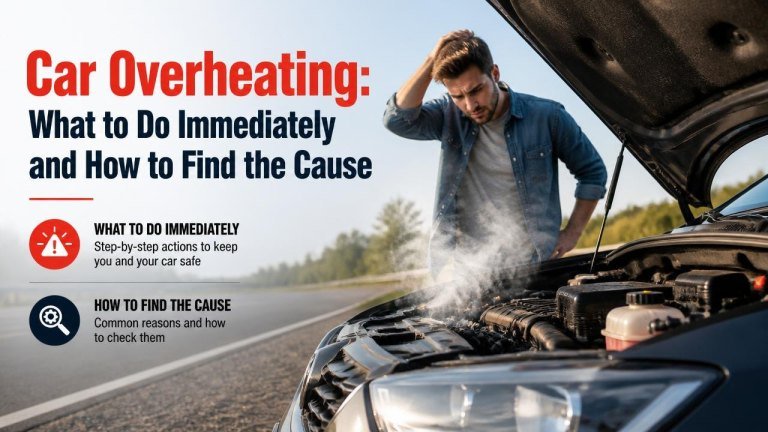
A car overheating is more than an inconvenience. Excessive engine temperature can damage critical components, leave you stranded, and create a safety risk if you continue driving. Knowing how to respond immediately can help protect both you and your vehicle.
What to Do When Your Car Overheats
The first priority is to reduce the engine’s workload and find a safe place to stop. Turn off the air conditioning, switch on the heater temporarily if you need to lower engine heat while searching for a safe stopping point, and watch the temperature gauge closely. If the gauge reaches the red zone, a warning light appears, or steam comes from under the hood, pull over as soon as it is safe.
Once stopped, turn off the engine and move away from traffic if possible. Keep the engine switched off, avoid opening the radiator cap, and wait for the vehicle to cool before inspecting anything. Hot coolant can be under pressure and may cause severe burns.
Should You Keep Driving?
Driving an overheating car, even for a short distance, can turn a manageable cooling-system problem into major engine damage. Stop immediately if you notice steam, a persistent temperature warning, loss of power, unusual knocking, or coolant leaking beneath the vehicle.
If the temperature returns to normal after a complete cool-down, do not assume the problem is fixed. Check the coolant level only when the engine is cold and arrange an inspection before making a longer trip. When the cause is unclear, the safest option is roadside assistance or a qualified mechanic.
How to Check an Overheated Car Safely
Do not open the hood immediately if steam is escaping. Stand clear and allow the engine to cool for at least several minutes, or longer if the temperature remains high. Keep your hands away from fans and belts because some electric cooling fans can start unexpectedly, even after the engine is turned off.
After the engine has cooled, look for obvious signs such as coolant puddles, cracked hoses, a loose belt, or a strong sweet smell. Never touch hot components. Check the coolant reservoir level and add the correct coolant only if the vehicle manufacturer allows it and the engine is fully cool. In an emergency, water may provide temporary help, but the cooling system should be inspected and refilled correctly afterward.
Common Causes of Engine Overheating
Overheating usually means the engine is producing more heat than the cooling system can remove. The cause may be simple, such as low coolant, or more serious, such as internal engine damage. A proper diagnosis using an OBD2 scanner is important because adding coolant alone may only hide the underlying fault.
Low Coolant or a Coolant Leak
Low coolant is one of the most common reasons for an overheating engine. A leak may come from a radiator hose, water pump, radiator, thermostat housing, or reservoir. Look for wet spots, dried colored residue, or a sweet odor after the engine cools; a fluid leak color guide can help identify the source.
Do not rely only on the absence of a puddle. Small leaks can evaporate on hot engine parts, while internal leaks may not appear beneath the car. A mechanic can perform a pressure test to locate leaks that are difficult to see.
Failed Thermostat
The thermostat controls when coolant flows through the radiator. If it remains closed, coolant cannot circulate properly and the engine temperature can rise quickly. A thermostat problem may cause rapid overheating, fluctuating temperature readings, or uneven heat from the cabin vents.
Blocked or Damaged Radiator
A radiator must release heat into the surrounding air. Dirt, debris, internal corrosion, or external damage can restrict that process. A blocked radiator may cause overheating during slow traffic, uphill driving, or hot weather, especially when airflow is limited.
Cooling Fan Problem
The radiator fan provides airflow when the car is stationary or moving slowly. A failed fan motor, blown fuse, faulty relay, or damaged sensor can allow the temperature to climb in traffic while remaining normal at higher speeds. This pattern often points to an airflow problem rather than a lack of coolant.
Water Pump or Drive Belt Failure
The water pump circulates coolant through the engine and radiator. A damaged pump may leak, make grinding or whining noises, or fail to move coolant effectively. In some vehicles, the pump is driven by a belt, so a broken belt can also affect other essential systems. This situation requires immediate professional attention.
Head Gasket or Internal Engine Damage
An overheating engine can sometimes develop a failed head gasket or other internal damage. Possible warning signs include white exhaust smoke, bubbles in the coolant reservoir, repeated coolant loss without an obvious leak, milky engine oil, or persistent overheating. These symptoms require a professional diagnosis before the vehicle is driven again.
Warning Signs That Require a Mechanic
Arrange professional help if the car overheats more than once, loses coolant, or shows signs of a damaged cooling system. You should also stop driving if the temperature warning returns soon after adding coolant, because the vehicle may have a significant leak or circulation problem.
Other serious symptoms include white exhaust smoke, engine misfires, unusual noises, visible leaks, and a temperature gauge that rises rapidly. Understanding different exhaust smoke colors can help identify a serious engine problem. Towing the vehicle is usually safer and less expensive than risking permanent engine damage.
How to Prevent Future Overheating
Regular maintenance can identify cooling-system problems before they become emergencies. Follow the manufacturer’s service recommendations, use the correct coolant, and never mix fluids unless the vehicle instructions specifically permit it.
- Check the coolant level when the engine is cold.
- Inspect hoses, belts, and the radiator for wear or damage.
- Pay attention to temperature gauge changes and warning lights.
- Keep the radiator area free from leaves, dirt, and other debris.
- Have recurring coolant loss diagnosed rather than repeatedly topping it up.
At the first sign of overheating, respond promptly. Stopping safely, allowing the engine to cool, and getting the cause diagnosed can prevent a small cooling-system fault from becoming a major repair.