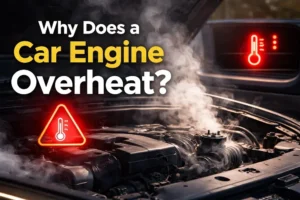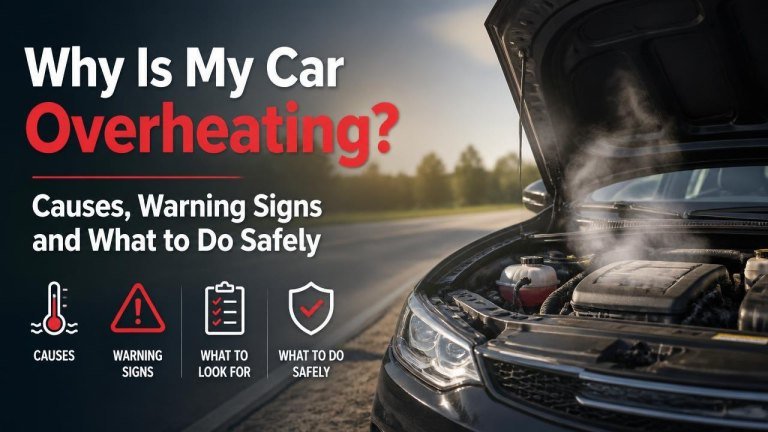
Seeing the temperature gauge climb or steam rise from under the hood can be frightening. An overheating engine can suffer serious damage if you continue driving, but taking the right steps quickly can reduce the risk and keep you safer.
What Does It Mean When a Car Overheats?
An engine produces intense heat while it runs. The cooling system normally controls that heat using coolant, a radiator, a water pump, a thermostat, and airflow. Overheating occurs when the system cannot remove heat effectively or the engine is generating more heat than normal.
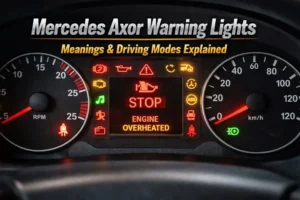
Common clues include a temperature gauge in the red zone, a temperature warning light, reduced engine performance, or steam from the engine bay. A sweet smell may indicate leaking coolant, while an unusual grinding or squealing sound can point to a failing cooling-system component.
Common Causes of Engine Overheating
Several problems can cause an overheating engine. Some are minor, but others require immediate repair. The most important areas to consider are coolant level, airflow, and cooling-system circulation.
Low Coolant or a Coolant Leak
Coolant carries heat away from the engine. If the reservoir is low, the radiator level is insufficient, or coolant is escaping through a damaged hose, radiator, water pump, or seal, the system may no longer cool the engine properly.
Look for wet spots, colored fluid, or a sweet odor around the engine bay or beneath the vehicle. Never remove a radiator cap while the engine is hot, because pressurized coolant can cause severe burns. Learn more about coolant leak signs when checking the source.
A Faulty Thermostat
The thermostat regulates coolant flow as the engine warms up. If it becomes stuck closed, hot coolant cannot circulate through the radiator efficiently. This can cause the temperature to rise quickly, sometimes even when the coolant level appears normal.
A thermostat problem may require attention when there are rapid temperature changes, repeated overheating episodes, or an engine that stays unusually cold or hot.
Radiator or Cooling Fan Problems
The radiator releases heat into the surrounding air. Blocked fins, internal corrosion, external debris, or a damaged radiator can reduce its effectiveness. Electric cooling fans are especially important when the vehicle is stationary or moving slowly.
A failed fan motor, fuse, relay, or temperature sensor may lead to overheating in traffic while the car seems cooler at higher speeds. Watch for overheating in traffic, fan noise that never starts, or visible damage near the radiator.
Water Pump or Drive Belt Failure
The water pump circulates coolant through the engine and radiator. A worn bearing, damaged impeller, or leaking pump can reduce circulation. On some vehicles, a drive belt powers the pump; if that belt breaks, the engine may overheat rapidly.
Possible warning signs include coolant leakage, whining or grinding noises, and a temperature increase shortly after starting the engine. These symptoms can overlap with serpentine belt warning signs.
Low Engine Oil or Internal Engine Problems
Engine oil helps reduce friction and carries away some heat. A very low oil level can contribute to excessive engine temperature, although adding oil does not fix an underlying cooling-system fault.
More serious causes include a damaged head gasket, cracked component, or other internal engine failure. Possible clues are white exhaust smoke, milky oil, persistent coolant loss, or bubbles in the coolant system. These symptoms require professional diagnosis.
Warning Signs Your Car Is Overheating
Do not rely only on the temperature gauge. An overheating vehicle may also show steam, warning lights, and unusual smells before the gauge reaches the red zone.
- The temperature gauge moves into the red or hot range.
- A coolant-temperature warning light appears.
- Steam or vapor comes from under the hood.
- The engine loses power, runs roughly, or begins knocking.
- You smell sweet coolant or hot metal.
- The heater blows cold air even though the engine is hot.
- Coolant drips beneath the vehicle after parking.
If the warning signs are severe, treat the situation as an emergency rather than trying to complete your trip.
What to Do If Your Car Starts Overheating
Your first priorities are protecting people, reducing engine load, and stopping safely. Follow these steps as soon as it is safe to do so.
- Turn off the air conditioning. If the temperature is only beginning to rise and you can safely continue for a short distance, turning on the heater may draw some heat away from the engine. This is only a temporary measure.
- Pull over safely. Move away from traffic, stop on a stable surface, switch off the engine, and turn on your hazard lights if appropriate.
- Keep clear of steam. Open the hood only if it is safe and there is no heavy steam or visible fire. Keep your hands and face away from the engine bay.
- Wait for the engine to cool. Do not remove the radiator cap or coolant reservoir cap while the system is hot or pressurized.
- Check for obvious problems only after cooling. Look for a low coolant level, a broken belt, or a visible leak. Do not reach near moving fans, belts, or hot components.
- Call for assistance when needed. If coolant is leaking, the engine overheats again, the warning remains, or you are unsure what caused the problem, arrange towing and professional inspection.
Can You Drive an Overheating Car?
Continuing to drive can turn a manageable cooling-system repair into major engine damage. The safest choice is to stop as soon as possible, especially when there is steam, loss of power, or a gauge in the red zone.
Even if the temperature returns to normal after cooling, the problem may still be present. Driving again without diagnosis can cause repeated overheating, warped components, or permanent internal damage. Review what to do immediately before driving again.
What Not to Do When Your Engine Is Hot
Several common reactions can increase the danger. Avoid opening the radiator cap, pouring cold water onto a hot engine, or continuing to drive normally.
- Do not touch the radiator, hoses, belts, or fan immediately after stopping.
- Do not remove a pressurized cap to check the coolant level.
- Do not stand directly over the engine bay if steam is escaping.
- Do not repeatedly restart the engine to see whether the problem has disappeared.
- Do not assume adding coolant is enough if the system has a leak.
How a Mechanic Diagnoses Overheating
A professional diagnosis usually begins with a visual inspection and a review of the vehicle’s symptoms. The mechanic may check coolant pressure, thermostat operation, and fan performance, while also looking for leaks or signs of internal engine damage.
Testing may include inspecting the radiator, water pump, hoses, drive belt, temperature sensor, and cooling fan controls. If coolant is disappearing without an obvious external leak, further testing may be needed to check for combustion gases or a head-gasket problem.
How to Help Prevent Overheating
Routine maintenance can identify many problems before they leave you stranded. Pay attention to fluid levels, warning lights, and changes in temperature rather than waiting for a breakdown.
- Check coolant only when the engine is cool and follow the vehicle manufacturer’s instructions.
- Use the correct coolant type and mixture for your vehicle.
- Inspect hoses, belts, and the area beneath the vehicle for signs of leaks or damage.
- Keep the radiator and grille free from leaves, dirt, and other debris.
- Have recurring temperature problems diagnosed promptly.
- Follow the recommended maintenance schedule for coolant and related components.
When to Call a Towing Service
Arrange a tow instead of driving when the engine remains hot, coolant is visibly leaking, the temperature warning returns, or the vehicle has lost power. A safe stopping point, professional diagnosis, and avoiding further damage are more important than completing the journey.
If you see smoke that may indicate a fire, move away from the vehicle and contact emergency services. Do not attempt repairs beside fast-moving traffic or while hot components are still pressurized.
Final Takeaway
An overheating car should never be ignored. Low coolant, a faulty thermostat, radiator or fan problems, water-pump failure, and internal engine faults are all possible causes. Stop safely, let the vehicle cool, avoid opening a hot cooling system, and seek professional help when the cause is not obvious or the problem returns.