The serpentine belt is a critical part of your vehicle’s accessory drive system. It transfers power from the engine’s crankshaft to components such as the alternator, power steering pump, water pump, and air-conditioning compressor. When it becomes worn or breaks, several systems can stop working at once.
Understanding the warning signs of serpentine belt failure can help you arrange repairs before a breakdown occurs. Regular inspection and timely replacement are among the simplest ways to protect your vehicle’s reliability.
What the Serpentine Belt Does
The serpentine belt uses a continuous loop to drive multiple accessories from one engine pulley. Its condition affects the alternator, cooling system, and power steering, depending on the vehicle’s design.
A belt failure may cause the battery to stop charging, steering assistance to disappear, or engine temperature to rise if the water pump is belt-driven. Because the results can develop quickly, a damaged belt should not be ignored.
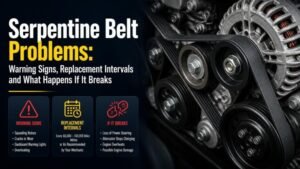
Common Warning Signs of Serpentine Belt Failure
Early symptoms often appear as changes in sound, appearance, or accessory performance. Pay attention to unusual noises, visible damage, and dashboard warnings rather than waiting for the belt to break; these are common serpentine belt warning signs.
Squealing, Chirping, or Slapping Noises
A high-pitched squeal may indicate belt slipping, inadequate tension, contamination, or a worn pulley. A repetitive chirp can point to misalignment or pulley runout, while a slapping sound may suggest a loose, damaged, or partially separated belt.
Noise that changes when the air conditioner is switched on may indicate a problem with belt load, tension, or an accessory pulley. Do not assume that applying belt dressing is a permanent repair; it can mask the symptom without correcting the cause.
Cracks, Fraying, and Missing Ribs
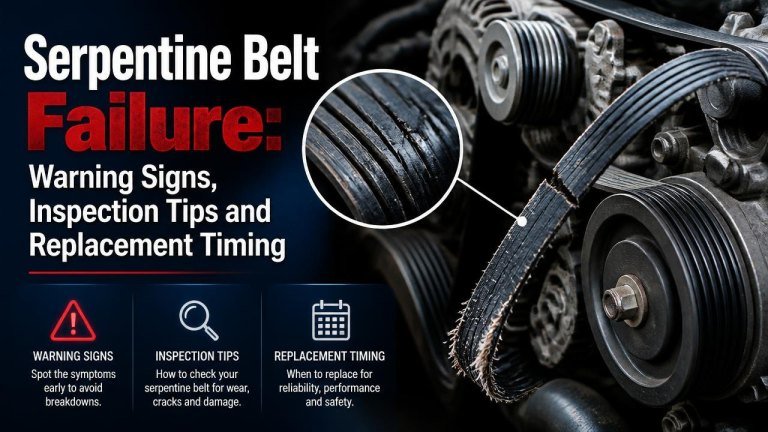
Inspect the belt for frayed edges, missing ribs, and exposed or separating layers. Glazing, which gives the belt a shiny surface, may indicate excessive slipping or heat.
Small surface cracks alone do not always reveal the complete condition of a modern belt, so inspect the ribs, edges, and back carefully. Any belt with significant damage, contamination, or separation should be replaced promptly.
Loss of Electrical or Cooling Performance
A failing belt can cause the battery light to illuminate, headlights to dim, or electrical equipment to behave unusually if the alternator is no longer turning properly. These symptoms can resemble a bad alternator or battery. If the belt drives the water pump, an engine temperature warning may appear as coolant circulation is reduced.
Stop driving as soon as it is safe if the temperature gauge rises, steam appears, or the charging warning remains on. Continuing to operate the vehicle may cause severe engine damage.
How to Inspect a Serpentine Belt
Inspect the belt with the engine switched off and completely cool. Look for cracks and glazing, edge damage, and oil or coolant contamination. Use a flashlight to see the belt’s ribs and the areas around the pulleys.
Check whether the belt sits correctly in every grooved pulley. It should track smoothly without wandering, excessive looseness, or visible vibration. Never place your hands, clothing, or tools near a moving belt.
Inspect the Tensioner and Pulleys
A failing belt can cause accessory-drive vibration if the tensioner is weak, an idler pulley is noisy, or an accessory bearing is binding. With the engine off, look for pulley wobble, rust-colored dust, or signs that the belt is not aligned; these checks can help distinguish related car vibration causes.
If you are qualified to do so, rotate accessible pulleys by hand after confirming the engine cannot start. Rough movement, grinding, or resistance indicates that further diagnosis is needed.
When Should a Serpentine Belt Be Replaced?
Replacement timing depends on the vehicle, belt material, operating conditions, and manufacturer recommendations. The best approach is to follow the owner’s manual, inspect the belt during routine service, and replace it when damage or abnormal wear is found.
Vehicles exposed to extreme heat, heavy dust, oil leaks, frequent short trips, or demanding accessory loads may require closer monitoring. A belt can also age from time and heat even when the vehicle has relatively low mileage.
Replace the Belt During Related Repairs
Consider replacing the belt when repairing a leaking seal, replacing a water pump, or servicing a tensioner. Installing a belt alongside a failing tensioner or idler pulley may lead to another breakdown and duplicate labor.
Before installation, the cause of any old belt damage should be identified. Correcting contamination, pulley misalignment, or bearing problems is just as important as fitting the new belt.
What to Do If the Serpentine Belt Breaks
If the belt breaks, pull over safely and switch off the engine. Watch for a charging warning, loss of steering assistance, or rapid overheating. Do not continue driving simply because the vehicle still starts.
Arrange a professional inspection or towing service. The technician should check the belt path, tensioner, idler pulleys, driven accessories, and any wiring or covers that may have been affected.
Can You Replace a Serpentine Belt Yourself?
Many serpentine belts can be replaced by a capable home mechanic with the correct routing diagram and tools. However, access can be tight, and releasing the spring-loaded tensioner requires care. Routing the belt incorrectly can damage accessories or prevent proper operation.
Before removing the old belt, photograph its path or confirm the routing diagram under the hood. After installation, verify that every rib is seated in its pulley grooves and that the tensioner returns to a normal position.
Protect Your Vehicle With Routine Belt Checks
A short inspection during regular maintenance can reveal wear, misalignment, and contamination before they become a roadside failure. Replace the belt according to the manufacturer’s guidance and investigate any noise or warning light promptly.
Because the serpentine belt may operate several essential systems, prevention is usually safer and less disruptive than waiting for a complete break. When in doubt, have a qualified technician inspect the entire accessory drive system.