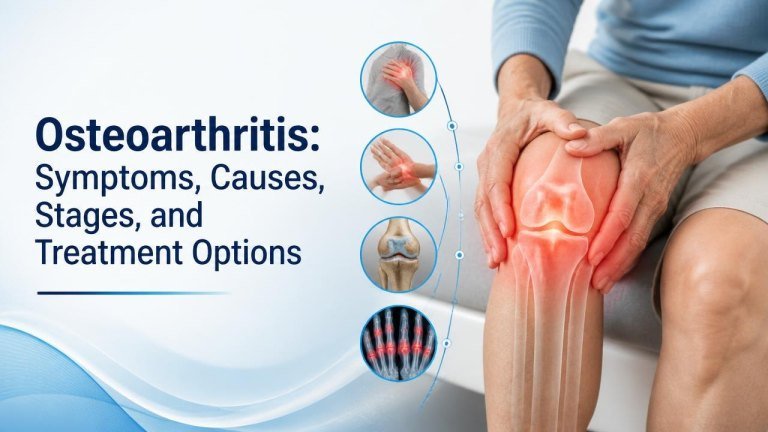
Osteoarthritis is the most common form of arthritis. It develops when the tissues within a joint gradually change, causing pain, stiffness, swelling, and reduced movement. Although it is often associated with aging, osteoarthritis can affect adults of many ages, particularly after a joint injury or with repeated joint stress.
This guide explains the symptoms, causes, stages, diagnosis, and treatment options for osteoarthritis. If joint pain is persistent, worsening, or interfering with daily activities, a healthcare professional can help identify the cause and recommend appropriate care.
What Is Osteoarthritis?
Osteoarthritis is a long-term joint condition involving changes to cartilage, the smooth tissue that helps bones move easily against each other. It can also affect the surrounding bone, joint lining, ligaments, and muscles.
Osteoarthritis commonly affects the knees, hips, hands, spine, and big toes. It may develop in one joint or several joints. Symptoms can vary from mild discomfort to significant pain and loss of function.
Common Symptoms of Osteoarthritis
Symptoms often develop gradually and may change over time. Common signs include:
- Joint pain during or after movement
- Stiffness after waking or remaining inactive
- Swelling or tenderness around the joint
- A grating, clicking, or cracking sensation during movement
- Reduced flexibility or range of motion
- Difficulty with activities such as climbing stairs, gripping objects, or walking
- Changes in joint shape, especially in the fingers or toes
Osteoarthritis pain may worsen after activity and improve with rest, although advanced disease can cause discomfort even when the joint is not being used. Symptoms can also fluctuate depending on activity, sleep, general health, and other factors.
What Causes Osteoarthritis?
Osteoarthritis results from a combination of mechanical, biological, and lifestyle factors rather than one single cause. Over time, joint tissues may become less resilient and less able to repair themselves.
Risk Factors
Factors that may increase the likelihood of osteoarthritis include older age, previous joint injury, repeated physical stress, and a family history of the condition. Other contributors include:
- Excess body weight, which can increase pressure on weight-bearing joints
- Muscle weakness or joint instability
- Congenital or structural joint differences
- Occupations or sports involving repetitive joint loading
- Some metabolic or inflammatory health conditions
Having a risk factor does not mean osteoarthritis is inevitable. Maintaining strength, protecting joints after injury, and managing overall health may help reduce symptoms and preserve function.
Stages of Osteoarthritis
Osteoarthritis is sometimes described in stages based on symptoms, physical examination, and imaging findings. These stages are useful for discussion, but they do not always reflect how much pain or disability a person experiences.
Early or Mild Osteoarthritis
In the early stage, there may be occasional pain, mild stiffness, or discomfort after prolonged activity. Joint movement is usually well preserved, and changes on an X-ray may be minor.
Moderate Osteoarthritis
Moderate disease may cause more frequent pain, reduced mobility, swelling, and stiffness after rest. Everyday activities can become more difficult, and imaging may show narrowing of the joint space or bone changes.
Advanced Osteoarthritis
Advanced osteoarthritis can involve persistent pain, marked stiffness, and significant loss of function. Bone changes, limited movement, and joint deformity may be present. Some people may require specialist treatment when nonsurgical measures no longer provide enough relief.
How Osteoarthritis Is Diagnosed
A healthcare professional usually diagnoses osteoarthritis using your symptom history, a physical examination, and an assessment of joint movement. They may ask when the pain occurs, whether there has been an injury, and how symptoms affect daily life.

X-rays can show changes such as joint-space narrowing, bone spurs, or changes in bone structure. Blood tests or other imaging may be recommended when symptoms suggest gout or another condition, such as inflammatory arthritis or an injury.
Osteoarthritis Treatment Options
There is no single treatment that works for everyone. A treatment plan usually combines exercise, symptom management, and practical changes tailored to the affected joint and the person’s goals.
Exercise and Physical Therapy
Regular, appropriate movement is one of the most useful treatments for osteoarthritis. Strength training can support the joint, while flexibility and aerobic exercises may improve movement and stamina. A physical therapist can teach joint-friendly exercises and adjust them as symptoms change.
Low-impact activities such as walking, cycling, swimming, or water exercise may be easier to tolerate than high-impact exercise. Starting gradually and increasing activity carefully can help reduce flare-ups.
Weight Management and Daily Adjustments
For people who carry excess weight, gradual weight loss may reduce stress on weight-bearing joints and improve mobility. Helpful adjustments may include pacing activities, using supportive footwear, modifying work tasks, and taking short movement breaks after sitting.
Medicines and Injections
Depending on your health history, a clinician may recommend topical pain relief, oral medicines, or other treatments. Information about osteoarthritis pain relief can help explain potential options, but medicines should be chosen carefully because some can affect the stomach, kidneys, liver, heart, or interact with other drugs.
In some cases, an injection into the joint may provide temporary symptom relief. The benefits and risks vary, so these treatments should be discussed with a qualified healthcare professional.
Surgery
Surgery may be considered when severe pain and loss of function continue despite appropriate nonsurgical treatment. Joint replacement is one option for selected people with advanced disease, particularly when symptoms substantially affect daily life.
Living Well With Osteoarthritis
Managing osteoarthritis is an ongoing process. Set realistic goals, remain as active as symptoms allow, and use pacing to balance activity with recovery. Keeping a record of pain triggers and helpful strategies can make appointments more productive.
Supportive devices, such as braces, canes, or specialized tools, may help some people. However, they should fit correctly and be used with professional guidance when possible. Good sleep, balanced nutrition, and treatment of other health conditions can also support overall well-being.
When to Seek Medical Advice
Arrange an evaluation for persistent joint pain, swelling, stiffness, or reduced movement that does not improve with self-care. Seek prompt medical attention if a joint becomes suddenly very swollen, red, hot, or severely painful, or if symptoms follow a significant injury.
A healthcare professional can confirm whether osteoarthritis is the cause and help create a treatment plan that protects mobility and supports your daily goals.
Key Takeaway
Osteoarthritis is a common condition that can affect comfort, movement, and independence, but symptoms can often be managed. Early assessment, regular exercise, appropriate pain management, and personalized treatment can help many people remain active and maintain their quality of life.