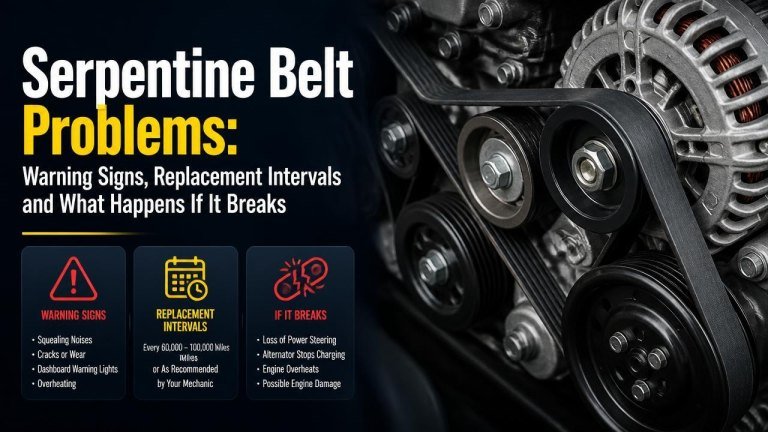
The serpentine belt is a long, flexible belt that transfers power from the engine’s crankshaft to accessories such as the alternator, power steering pump, air-conditioning compressor, and sometimes the water pump. Because it operates whenever the engine runs, wear can develop gradually and eventually lead to a sudden breakdown.
Knowing the common warning signs can help you arrange service before a damaged belt leaves you stranded. The correct replacement interval depends on the vehicle, belt material, driving conditions, and the manufacturer’s maintenance schedule.
What Does a Serpentine Belt Do?
A serpentine belt drives several engine accessories with one continuous belt. The alternator relies on it to charge the battery, while the air-conditioning compressor uses it to operate the climate system. On some engines, the belt also powers the water pump or power steering system.
A spring-loaded or hydraulic tensioner keeps the belt tight, and guide pulleys help maintain its path. This means a belt problem may actually be caused by a worn tensioner, seized pulley, or misaligned accessory rather than the belt alone.
Common Warning Signs of Serpentine Belt Problems
Serpentine belt issues often produce noticeable symptoms before complete failure. Pay attention to changes in sound, appearance, and the operation of belt-driven accessories.
Squealing, Chirping, or Slapping Noises
A high-pitched squeal may indicate belt slipping caused by wear, contamination, insufficient tension, or a misaligned pulley. A repeated chirping sound can point to alignment problems, while a loose or damaged belt may create a slapping noise.
Noise that appears when starting the engine, switching on the air conditioning, or accelerating deserves attention. Spraying a belt with a lubricant is not a reliable repair and can hide the underlying problem or damage the belt material.
Visible Cracks, Fraying, or Glazing
Inspect the belt with the engine switched off. Look for frayed edges, missing ribs, exposed reinforcing cords, and deep cracks. A shiny or glassy surface, known as glazing, may mean the belt has been slipping or overheated.
Modern belts may not show traditional cracks as early as older designs, so inspect the ribs and overall condition rather than relying on one symptom. Any belt that is torn, contaminated with oil, or visibly damaged should be assessed promptly.
Electrical or Accessory Performance Changes
If the belt slips or stops turning, the alternator may not charge the battery properly. Possible symptoms include a battery warning light, dimming lights, or difficulty restarting the vehicle. If the belt drives the water pump, the engine may also begin to overheat.
Heavy steering, loss of air conditioning, or unusual temperature readings can also indicate a belt or pulley problem. These symptoms should not be ignored, especially if several appear at once.
How Often Should a Serpentine Belt Be Replaced?
There is no universal replacement mileage that applies to every vehicle. Many manufacturers provide an inspection schedule rather than a fixed replacement date, because belt life depends on vehicle design, climate, and driving conditions.
Use the owner’s manual or official maintenance information for the recommended inspection and replacement guidance. A mechanic may recommend earlier replacement if the belt has been exposed to oil or coolant, operates in extreme temperatures, or shows signs of wear.
During routine service, the technician should inspect the belt’s ribs, tensioner, idler pulleys, and the alignment of every driven accessory. Replacing only the belt while leaving a noisy or binding pulley can lead to another failure.
What Causes a Serpentine Belt to Fail?
Normal aging gradually hardens and weakens the rubber compound. Other common causes include coolant leaks and overheating, excessive heat, incorrect tension, and pulley misalignment.
A failing tensioner can allow the belt to vibrate or slip, while a seized accessory pulley can overload the belt until it breaks. Improper installation, an incorrect belt size, or debris caught in the pulley grooves can also shorten belt life.
What Happens If the Serpentine Belt Breaks?
The consequences depend on which accessories the belt drives. In many vehicles, a broken belt immediately stops the alternator, causing the battery to discharge. Power steering assistance may disappear, making the vehicle harder to control at low speeds.
If the belt operates the water pump, coolant circulation can stop and the engine may overheat quickly. Continued driving with an overheating engine can cause serious engine damage. Air conditioning will generally stop working as well.
A broken belt can sometimes become tangled around other components, potentially damaging seals, wiring, or nearby covers. If you see a battery warning light, temperature warning, or sudden loss of steering assistance, pull over safely and switch off the engine as soon as conditions allow.
Can You Drive With a Damaged Serpentine Belt?
Driving with a visibly damaged, loose, or noisy belt is risky. A belt can fail without much additional warning, and the result may include loss of charging, loss of steering assistance, or rapid overheating.
If the belt has already broken, do not assume the vehicle can safely travel a short distance. Turn off the engine and arrange roadside assistance or professional inspection. A technician should identify why the belt failed before installing a replacement.
How Serpentine Belt Replacement Works
A technician normally releases the belt tensioner, removes the old belt, and checks the pulleys and driven accessories. The new belt must follow the correct routing diagram and sit fully inside every pulley groove.
After installation, the technician should confirm proper tension, alignment, and smooth pulley movement. If the belt failed because of a damaged tensioner or seized accessory, that component may need replacement too.
How to Prevent Serpentine Belt Problems
Regular inspection is the simplest way to reduce the risk of failure. Check for visible damage, listen for new noises, and follow the vehicle manufacturer’s service guidance.
- Keep the belt free from oil, coolant, and other fluids.
- Have squealing or chirping investigated instead of masking it with a belt spray.
- Ask for the tensioner and idler pulleys to be inspected during belt service.
- Replace a contaminated, frayed, or badly worn belt promptly.
- Carry out repairs when warning lights, overheating, or accessory failures appear.
When to Seek Professional Help
Arrange an inspection if you notice persistent belt noise, visible fraying, repeated slipping, or an unexplained battery warning light. Immediate help is especially important when there is engine overheating, heavy steering, or a belt that has come off.
Because the belt works with multiple accessories, accurate diagnosis matters. Replacing the belt without correcting a faulty pulley or tensioner may only provide a temporary solution. Prompt service can help prevent a minor maintenance issue from becoming a costly breakdown.