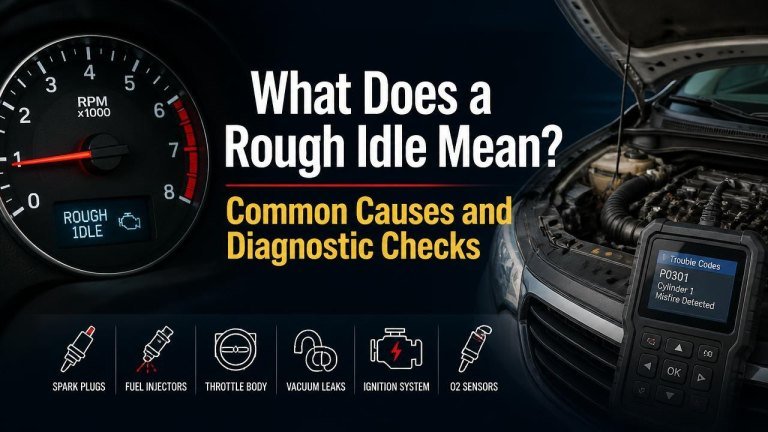
A rough idle means the engine is not running smoothly when the vehicle is stopped or the transmission is in Park or Neutral. Instead of maintaining a steady rhythm, the engine may shake, surge, dip in speed, or feel as though it might stall.
Some causes are relatively simple, while others require prompt attention. Understanding the symptoms and following a logical diagnostic process can help you identify the likely source before replacing parts unnecessarily.
What Does a Rough Idle Feel Like?
A rough idle may appear as engine vibration, an unstable engine speed, or a noticeable change in exhaust sound. You might feel shaking through the steering wheel, seat, or floor, particularly when the vehicle is stopped.
Other signs can include hesitation when pulling away, an engine that nearly stalls, fluctuating idle speed, reduced fuel economy, or an illuminated check engine light. The problem may be present only when the engine is cold, only after it warms up, or under specific conditions such as using the air conditioner.

Common Causes of a Rough Idle
The idle depends on the correct balance of air, fuel, ignition timing, and engine control signals. A fault in any of these systems can disturb combustion and make the engine run unevenly. Important clues include when the symptom occurs, which warning lights appear, and whether performance changes while driving.
Vacuum Leaks
A vacuum leak allows unmetered air to enter the intake system. This can create a lean air-fuel mixture and cause surging idle speed, hissing sounds, or difficult starting. Common leak points include cracked hoses, loose intake connections, and damaged intake manifold gaskets.
Inspect visible hoses and connections for splits, looseness, or deterioration. Because some leaks are hidden beneath the intake system, a professional smoke test may be needed to locate them accurately.
Dirty Throttle Body or Idle Air Control System
The throttle body regulates airflow into the engine, while the idle control system helps maintain the correct speed when the accelerator is released. Carbon buildup can restrict airflow and produce low idle speed, stalling, or an engine that hunts up and down.
Cleaning may help in some vehicles, but electronic throttle bodies often require specific procedures afterward. Follow the manufacturer’s service instructions rather than forcing the throttle plate or applying unsuitable cleaners.
Ignition Problems
Worn spark plugs, failing ignition coils, damaged plug wires, or incorrect plug gaps can cause an intermittent or constant misfire. Typical clues include engine shaking, poor acceleration, and a flashing or steady check engine light.
A diagnostic scan may identify a cylinder-specific misfire code. However, the code indicates where the misfire was detected, not always the exact failed component, so related wiring, fuel delivery, and compression should also be considered.
Fuel Delivery Issues
An engine may idle roughly if it receives too much or too little fuel. Possible causes include clogged injectors, a restricted fuel filter, low fuel pressure, or contaminated fuel. The condition may become more noticeable under acceleration if the fuel system cannot meet demand.
Fuel pressure testing and injector testing can distinguish between a supply problem and an individual injector fault. Avoid replacing injectors based only on a general rough-idle symptom.
Faulty Sensors
The engine computer relies on sensors to calculate airflow and fuel requirements. A failing mass airflow sensor fault, throttle-position sensor, coolant-temperature sensor, or oxygen sensor can contribute to incorrect fuel control, poor cold starts, or unstable idle.
Scan data can be more useful than simply replacing a sensor. Check for implausible readings, wiring damage, poor electrical connections, and contamination before condemning the component.
Exhaust Gas Recirculation Problems
An EGR valve that remains open when it should be closed can introduce exhaust gas at idle, where it may cause rough running, hesitation, or stalling. Carbon deposits can prevent the valve from sealing correctly.
EGR-related faults may store diagnostic trouble codes, but the valve, control solenoid, passages, and vacuum or electrical connections all need to be checked as applicable to the vehicle.
Mechanical Engine Problems
Uneven compression, a leaking valve, a damaged head gasket, or incorrect valve timing can also cause a rough idle. Mechanical faults often produce persistent symptoms, power loss, or unusual noises that do not improve after basic maintenance.

A compression test or leak-down test can help evaluate cylinder sealing. These tests are especially important when ignition and fuel checks do not identify the cause.
Diagnostic Checks to Perform
Start with the simplest observations before disassembling anything. Record whether the rough idle occurs during cold starts, warm operation, or when accessories are switched on. Note whether the check engine light is on and whether the engine actually misfires while driving.
Check for Diagnostic Trouble Codes
Connect a suitable scan tool and read stored, pending, and manufacturer-specific codes where available. Look for misfire codes, fuel-trim information, and sensor-related faults, but treat each code as a starting point rather than final proof.
Freeze-frame data can show the engine conditions present when a fault was recorded. Clearing codes before recording them may remove useful diagnostic information.
Inspect the Intake and Vacuum System
Examine the air duct, vacuum hoses, PCV system, and intake connections for cracks or disconnections. Pay attention to loose clamps, split rubber, and oil residue around joints, which may suggest an air leak or poor seal.
Do not use flammable sprays around a running engine to search for leaks. A smoke machine is safer and generally more reliable when visual inspection is inconclusive.
Evaluate the Ignition System
Inspect spark plugs for abnormal wear, fouling, or damage, and check whether their condition differs between cylinders. A technician may use coil swaps, spark testing, or waveform testing to locate weak ignition output, intermittent misfires, or wiring faults.
Follow the correct service procedure and avoid touching ignition components while the engine is operating, as ignition systems can produce dangerous voltage.
Check Fuel and Air Data
Review short-term and long-term fuel trims with a scan tool, then compare the readings with other symptoms. Abnormal trims can point toward unmetered air, fuel-pressure problems, or inaccurate airflow measurement, although interpretation depends on the vehicle and operating conditions.
Fuel pressure should be measured using the correct specification and test equipment. A restricted filter, weak pump, or faulty pressure regulator may require different repairs.
Test Engine Compression When Needed
If the problem remains after intake, ignition, and fuel checks, test cylinder compression. Uneven readings may indicate valve leakage, worn piston rings, or timing-related problems.
Compression testing should be performed consistently on all cylinders. A leak-down test can provide more detail by showing whether pressure escapes through the intake, exhaust, crankcase, or cooling system.
Can You Drive With a Rough Idle?
It depends on the severity and the warning signs. A mild, occasional vibration may allow a short trip for diagnosis, but an engine that is stalling frequently, losing power, or producing a flashing check engine light should not be ignored.
A flashing warning light often indicates an active misfire that can damage the catalytic converter. Stop driving if the vehicle becomes unsafe to control, overheats, smells strongly of fuel, or develops severe mechanical noise.
How to Prevent Rough-Idle Problems
Follow the recommended maintenance schedule and use the correct spark plugs, filters, and fluids. Preventive care should include air-filter replacement, spark-plug inspection, and attention to small vacuum or electrical faults before they become larger problems.
Use fuel from reliable sources and address warning lights promptly. Keeping service records can also reveal patterns, such as a recurring misfire or a problem that appears only after a specific repair.
When to See a Professional
Seek professional diagnosis when the rough idle is severe, returns after a repair, or cannot be explained by a basic inspection. Specialized tools can identify vacuum leaks, electrical faults, and mechanical wear more accurately than trial-and-error parts replacement.
The most effective approach is systematic: confirm the symptom, scan for codes, inspect air and ignition systems, test fuel delivery problems, and evaluate engine compression when necessary. That process saves time and helps ensure the underlying cause—not just the symptom—is repaired.