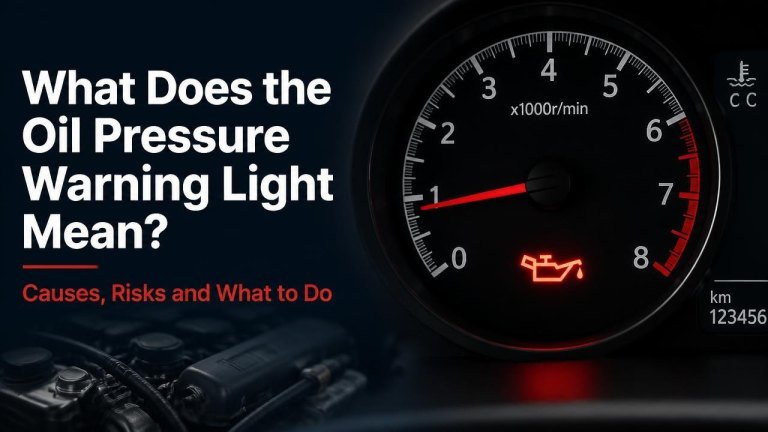
The oil pressure warning light is one of the most important alerts on your dashboard. It usually appears as a red oil can symbol and indicates that the engine may not be receiving adequate oil pressure. This is different from a simple reminder to change the oil.
Because engine oil protects moving parts from excessive friction and heat, a pressure problem can cause serious damage in a short time. Knowing what the light means and how to respond can help protect your engine and your safety.
What Does the Oil Pressure Warning Light Mean?
The warning light generally means the engine’s oil pressure is too low, although the exact cause may vary. It can be triggered by a low oil level, a failing oil pump, a blocked passage, or a faulty pressure sensor.
When the light comes on briefly while starting the engine, it may be part of the normal dashboard check. However, if it stays on after the engine starts, appears while driving, or flashes repeatedly, treat it as a serious warning. The most important concerns are poor lubrication, excessive friction, and possible engine damage.
What to Do When the Light Comes On
If the oil pressure light illuminates while driving, respond promptly. Safely pull over, switch off the engine, and avoid continuing the journey until you understand the cause.
- Find a safe place to stop as soon as possible.
- Turn off the engine and wait several minutes before checking the oil.
- Park on level ground and inspect the dipstick if your vehicle has one.
- Look for visible leaks beneath the vehicle or around the engine.
- If the oil level is low, add the correct oil specified in the owner’s manual.
- Restart the engine only if it is safe to do so and the warning has cleared.
- If the light remains on, stop driving and arrange professional assistance.
The key priorities are switching off the engine, checking the oil level, and avoiding unnecessary driving. Do not assume the vehicle is safe simply because it still runs normally.
Common Causes of an Oil Pressure Warning Light
Several problems can trigger the warning. Some are simple to correct, while others require immediate diagnosis by a qualified technician.
Low Engine Oil Level
A low oil level is one of the most common causes. Oil may be lost through a leak, consumed by the engine, or left low after an incorrect service. When there is not enough oil in the sump, the pump may struggle to maintain pressure.
Check for oil spots, a low dipstick reading, or signs of oil around the filter, drain plug, seals, and engine components. Use only the recommended oil and avoid overfilling.
Oil Leaks
A leak can reduce the oil level gradually or cause a rapid loss of lubrication. Possible sources include the oil filter, sump, drain plug, valve-cover gasket, or other engine seals.
Visible fluid under the vehicle, a burning-oil smell, or fresh oil around the engine should be treated as important clues. A leak can quickly become a loss of oil, a pressure drop, and a major repair problem.
Faulty Oil Pressure Sensor or Wiring
The warning may be caused by a defective pressure sensor, damaged wiring, or a poor electrical connection. In this situation, the engine may have normal pressure even though the dashboard light is illuminated.
However, it is unsafe to assume the sensor is at fault without testing. A technician should verify the reading with a mechanical pressure gauge and inspect the sensor, wiring, and electrical connections.
Blocked Oil Filter or Passages
A clogged or unsuitable oil filter can restrict oil flow. Sludge or debris may also obstruct internal oil passages, preventing lubricant from reaching critical engine components.
Using the correct filter and following the recommended maintenance schedule helps reduce the risk of restricted flow, sludge buildup, and lubrication failure.
Worn or Failing Oil Pump
The oil pump circulates oil through the engine. If it becomes worn, damaged, or obstructed, it may no longer create sufficient pressure, especially when the engine is hot or operating at low speed.
An oil pump problem generally requires professional diagnosis. Continuing to drive can turn a repairable fault into severe bearing damage, overheating, or engine failure.
Internal Engine Wear
Worn bearings and other internal components can allow oil to escape through excessive clearances. This may lower pressure even when the oil level is correct and the pump is functioning.
Engine wear may also cause tapping, knocking, or rumbling noises. Warning signs such as unusual engine noise, low pressure at idle, and persistent warnings need prompt inspection.
Can You Drive With the Oil Pressure Light On?
Driving with the oil pressure light on is generally unsafe. The engine may be operating with insufficient lubrication, and damage can occur before other symptoms become obvious.
Do not continue driving to reach a repair shop if the light stays on, the engine makes unusual noises, or the oil level is normal but the warning remains. The safer choice is stopping immediately, turning off the engine, and contacting roadside assistance or a qualified mechanic.
Oil Pressure Light vs. Oil Change Reminder
An oil pressure warning is not the same as an oil change reminder. A service reminder indicates that routine maintenance is due, while the red oil warning light can indicate an active lubrication problem.
Both warnings deserve attention, but they require different responses. A service reminder can usually be scheduled according to the vehicle’s maintenance guidance. An oil pressure warning may require immediate action, oil-level inspection, and professional diagnosis.
How a Mechanic Diagnoses the Problem
A technician will usually begin by checking the oil level, oil condition, leaks, dashboard fault information, and the warning-light circuit. The most reliable next step is often measuring actual pressure with a mechanical gauge.
Depending on the results, diagnosis may include inspecting the filter, pressure sensor, wiring, oil pump, pickup tube, and internal engine components. Accurate testing helps distinguish a sensor fault from a genuine pressure problem and prevents unnecessary parts replacement.
How to Help Prevent Oil Pressure Problems
Regular maintenance can reduce the likelihood of lubrication faults. Check the oil level periodically, especially before long trips, and use the grade and specification listed in the owner’s manual.
- Follow the recommended oil and filter service intervals.
- Check for leaks and investigate unexplained oil loss.
- Use the correct oil specification for the engine.
- Pay attention to tapping, knocking, or other new noises.
- Respond promptly to dashboard warnings.
Good maintenance supports proper oil flow, reliable pressure, and longer engine life. It cannot prevent every failure, but it can help identify problems before they become more serious.
Final Takeaway
The oil pressure warning light should always be taken seriously. It may indicate something as simple as a low oil level, but it can also signal a failing pump, a blocked passage, a sensor problem, or internal engine wear.
When the light remains on, stop safely, switch off the engine, check the oil if appropriate, and seek professional help if the warning does not clear. Protecting the engine starts with quick action, correct diagnosis, and not driving through the warning.