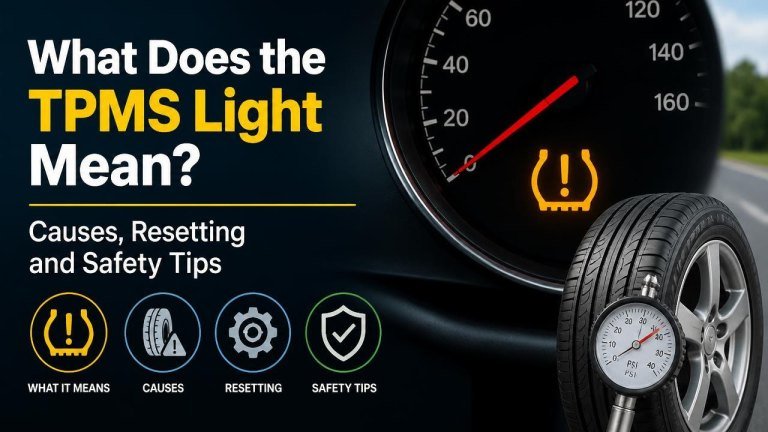
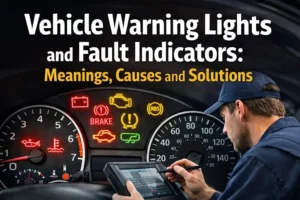
The TPMS light is a warning from your vehicle’s Tire Pressure Monitoring System. It usually means one or more tires have pressure below the recommended level, but it can also indicate a sensor or system fault. Understanding the warning can help you protect your tires, improve handling, and avoid unnecessary damage, just as with other vehicle warning lights.
What Does the TPMS Light Mean?
Most TPMS warning lights look like a tire outline with an exclamation mark in the center. If the light comes on and stays illuminated while driving, the system has detected that at least one tire may be significantly underinflated.
Some vehicles display the pressure of each tire on the dashboard or infotainment screen. Others only provide the warning light, so you will need to check the tires manually with a reliable pressure gauge.
What the Different TPMS Light Patterns Indicate
A steady TPMS light
A steady light commonly indicates low tire pressure. Temperature changes, a slow puncture, an air leak around the valve, or normal pressure loss can all cause the warning to appear.
A flashing TPMS light
If the light flashes for a short time and then remains on, the system may have detected a malfunction. Possible causes include a damaged sensor, a weak sensor battery, a communication problem, or replacement wheel options that are not compatible with the vehicle’s monitoring system.
Common Causes of a TPMS Warning
- Low tire pressure: A tire may simply need to be inflated to the recommended pressure.
- A puncture or slow leak: A nail, screw, damaged tread, or leaking valve can gradually reduce pressure.
- Cold weather: Lower temperatures can reduce tire pressure enough to trigger the warning.
- Uneven pressure: One tire may be lower than the others even when the difference is not obvious visually.
- Recent tire service: Tire rotation, replacement, or installation of a spare wheel may require a relearn or reset procedure.
- Faulty TPMS components: A damaged sensor or depleted internal battery can cause a flashing warning light.
What to Do When the TPMS Light Comes On
- Slow down and find a safe place to stop. Avoid abrupt steering or heavy braking if the vehicle feels unstable.
- Inspect the tires. Look for a visibly low tire, puncture, bulge, cut, or other damage.
- Check the pressure when the tires are cold. Use the pressure listed on the driver’s doorjamb label, door edge, fuel-filler flap, or owner’s manual—not the maximum pressure printed on the tire sidewall.
- Inflate or repair the tire as needed. Do not continue driving on a tire that is severely damaged or losing air quickly.
- Recheck the warning. After correcting the pressure, the light may go out after driving for a short distance, or the vehicle may require a manual reset.
How to Reset the TPMS Light
The correct reset method depends on the vehicle. Some systems reset automatically after the tires are brought to the correct pressure and the vehicle is driven. Others require a TPMS reset option in the vehicle settings, a dedicated reset button, or a sensor relearn procedure.
Before resetting, confirm that all four tires—and the spare if it is monitored—are inflated to the manufacturer’s recommended pressures. Resetting the system without correcting the pressure can hide an ongoing safety problem.
Typical reset methods
- Drive normally for a period of time after correcting the pressure.
- Use the vehicle’s dashboard or infotainment menu to select the tire-pressure calibration or reset function.
- Press and hold the TPMS reset button if the vehicle has one.
- Follow the owner’s manual procedure for sensor relearning after tire or wheel service.
If the light remains on or flashes after the tires are correctly inflated, have the system inspected by a qualified technician.
Can You Drive With the TPMS Light On?
Driving with the light on is not automatically dangerous, but it should not be ignored. Low pressure can reduce handling and braking performance, increase heat buildup, accelerate tread wear, increase the risk of tire failure, and make it harder to reduce fuel consumption.
Stop as soon as it is safe if the vehicle pulls to one side, vibrates, feels unstable, or has a tire that is visibly damaged or nearly flat. If the pressure is only slightly low and the vehicle feels normal, drive carefully to a place where you can check and correct the tires.
How to Prevent TPMS Warnings
- Check tire pressure regularly, preferably when the tires are cold.
- Inspect the tread and sidewalls for damage or unusual wear.
- Check pressure before long trips and after major temperature changes.
- Use the recommended pressure for the vehicle and load conditions.
- Ask a technician to verify the TPMS sensors when replacing tires or wheels.
When to Seek Professional Help
Contact a tire professional or qualified mechanic if the TPMS light flashes, returns soon after inflation, stays on after a reset, or appears after wheel service. Professional diagnosis may be needed to locate a slow leak, test the sensors, or complete the vehicle’s relearn procedure.
The TPMS light is an important early warning. Check the tire pressure promptly, address visible damage without delay, and use your vehicle’s owner’s manual for the exact reset instructions.