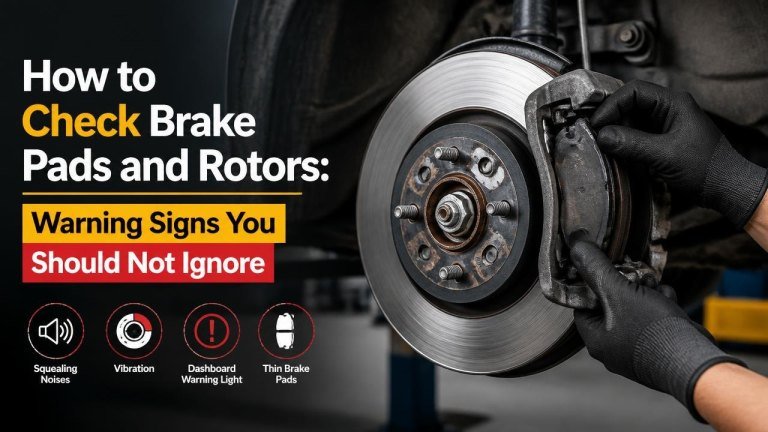
Brake problems rarely improve on their own. Learning how to check your brake pads and rotors can help you spot wear early, avoid unnecessary damage, and know when it is unsafe to continue driving.
Why Brake Inspections Matter
Your vehicle’s braking system converts motion into heat and friction. Over time, brake pads wear down, rotors can develop grooves or hot spots, and other components may become damaged. A quick inspection can reveal problems before they affect stopping performance.
Inspect your brakes whenever you notice a change in braking behavior, after driving through deep water or road debris, and during routine tire rotations. If you are unsure about any part of the inspection, have a qualified technician examine the vehicle.
How to Check Brake Pads
Brake pads are often visible through the openings in a wheel. Park on a flat surface, switch off the engine, engage the parking brake, and allow the brakes to cool completely. Never place any part of your body under a vehicle supported only by a jack.
- Look through the wheel spokes toward the brake caliper.
- Find the pad material between the caliper and rotor.
- Compare the visible pad thickness with the backing plate.
- Check whether the inner and outer pads appear to be wearing evenly.
A pad with very little friction material remaining needs attention. Uneven thickness, cracked friction material, or a pad worn close to its metal backing plate can indicate a more serious problem, such as a sticking caliper or uneven hydraulic pressure.
Signs the Brake Pads Need Replacement
Common clues include a high-pitched wear indicator, a scraping sound, or a brake warning light. Do not ignore metal-on-metal grinding, because continued driving can damage the rotor and reduce braking ability. A deep groove or a visibly thin pad also deserves prompt inspection.
Brake dust on a wheel is not automatically a sign of failure, but a sudden difference in dust between the two sides may suggest uneven brake wear. Have the system checked if one wheel becomes much dirtier, hotter, or more odorous than the others.
How to Check Brake Rotors
Look at the exposed rotor surface through the wheel. A healthy rotor is generally smooth, although light surface discoloration can occur after normal use. Focus on the condition of the braking surface rather than minor cosmetic marks near the rotor’s outer edge.
Watch for deep circular grooves, blue or purple heat discoloration, and visible cracks. A pronounced outer lip may indicate significant wear, but rotor thickness must be measured against the vehicle manufacturer’s minimum specification. Visual inspection alone cannot confirm whether a rotor is safe to reuse.
Rotors should be inspected on both sides of the vehicle. One rotor may look acceptable while the opposite side has corrosion, scoring, or heat damage. A technician can use a micrometer and other tools to check remaining rotor thickness and identify runout.
What Brake Vibration Can Mean
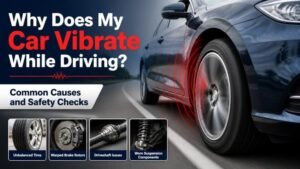
A steering-wheel shake or pulsing brake pedal may indicate rotor thickness variation, excessive runout, uneven pad deposits, or a problem elsewhere in the suspension. Vibration that appears mainly during braking should not be dismissed as normal.
Because several issues can cause similar symptoms, avoid assuming that replacing rotors alone will solve the problem. A complete inspection should include the pads, calipers, wheel hardware, and suspension components.
Warning Signs You Should Not Ignore
Some symptoms require immediate attention because they can affect your ability to stop safely. Stop driving as soon as it is safe and arrange professional assistance if you experience a soft or sinking pedal, brake fluid leakage, or a sudden loss of braking power.
- Grinding noises: These may mean the friction material is gone and metal is contacting the rotor.
- Pulling while braking: This can result from uneven pad wear, a sticking caliper, tire problems, or other faults.
- Burning smells or smoke: Overheated brakes can suffer serious damage and should be allowed to cool before inspection.
- Brake warning lights: A dashboard warning can indicate low fluid, worn components, or an electronic system fault.
- Longer stopping distances: Any noticeable reduction in braking performance is a safety concern.
What You Can Check Safely at Home
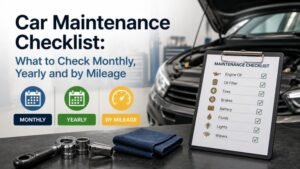
A basic visual check can help you identify obvious wear, but it does not replace a professional brake inspection. You can safely observe pad thickness, rotor surface condition, and the presence of unusual leaks or damage as part of a basic car maintenance checklist without dismantling the braking system.
Do not remove wheels, loosen brake lines, or work beneath a vehicle unless you have the correct tools, secure support equipment, and the necessary knowledge. Brake components are safety-critical, and incorrect reassembly can create a dangerous failure.
When to Schedule Professional Brake Service
Arrange service when pads are visibly thin, rotors are deeply scored, braking feels different, or warning signs keep returning. Professional service is especially important when wear is uneven, the pedal feels abnormal, or you cannot identify the source of a noise.
A technician can measure pad and rotor wear, inspect the calipers and hoses, test the brake fluid, and verify that the system operates correctly. Ask for an explanation of the findings and whether both sides of an axle require attention for balanced braking.
Final Brake Inspection Checklist
Before deciding that your brakes are in good condition, confirm that you have checked the pad thickness, rotor surface, and overall braking feel. Also consider whether there are unusual sounds, smells, warning lights, leaks, or differences between the left and right sides.
- Inspect the visible brake pad material.
- Look for rotor grooves, cracks, and heat marks.
- Pay attention to noise, vibration, pulling, and pedal changes.
- Stop driving if braking performance suddenly worsens.
- Use a qualified technician when the problem is uncertain or severe.
Regular attention to your brake pads and rotors can prevent avoidable damage and help protect everyone on the road. When in doubt, treat unusual brake behavior as a safety issue rather than something to monitor indefinitely.