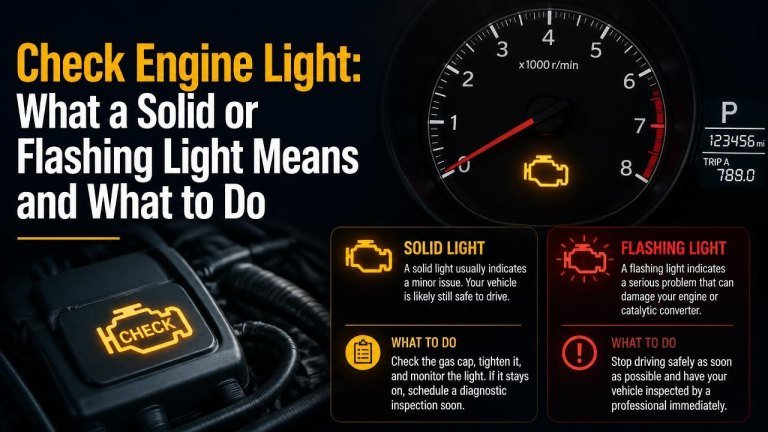
The check engine light is one of your vehicle’s most important warning signals. It may appear because of a minor issue, such as a loose fuel cap, or a problem that could damage the engine or affect safety.
The light’s behavior matters. A solid light usually indicates a fault that needs attention soon, while a flashing light can signal a severe problem requiring immediate action. Understanding the difference can help you protect your vehicle and make safer decisions.
What the Check Engine Light Means
The check engine light is connected to the vehicle’s onboard diagnostic system. When the system detects an abnormal reading from the engine, emissions equipment, or related components, it stores a diagnostic trouble code and turns on the warning light. The light alone does not identify the exact fault, so a diagnostic scan is often needed to find the cause.
A warning may be triggered by an emissions problem, a sensor issue, an ignition fault, or a condition affecting engine performance. Some problems are temporary, but the light should not be ignored simply because the vehicle still seems to drive normally.
What a Solid Check Engine Light Means
A solid check engine light generally means the vehicle has detected a fault that is not currently causing an immediate emergency. You may be able to continue driving briefly, but the issue should be checked as soon as practical.
Common possibilities include a loose fuel cap, a failing oxygen sensor, an emissions-system fault, or a problem with the ignition or fuel system. If the vehicle runs smoothly and no other warning signs appear, arrange a professional inspection or diagnostic scan rather than continuing to drive indefinitely.
What to Do When the Light Is Solid
First, check whether the fuel cap is properly tightened. If the cap was loose, the light may take some time and driving cycles to turn off. Do not assume that this is the cause, however, if the warning remains on.
- Pay attention to poor acceleration, unusual noises, or changes in fuel economy.
- Schedule a diagnostic scan if the light stays on.
- Avoid heavy loads, aggressive driving, and unnecessary long trips until the cause is known.
- Have the vehicle inspected sooner if another warning light appears.
What a Flashing Check Engine Light Means
A flashing check engine light is more urgent. It can indicate an active misfire or another serious fault that may overheat and damage the catalytic converter or cause the engine to run poorly.
If the light is flashing, reduce speed and avoid hard acceleration. Look for engine shaking, loss of power, smoke, unusual smells, or other signs of trouble. If the vehicle runs roughly or feels unsafe, pull over in a safe location and arrange roadside assistance or professional help.
What to Do When the Light Is Flashing
Do not treat a flashing warning as a routine maintenance reminder. Continuing to drive can turn a manageable repair into more extensive damage. Take these steps:
- Ease off the accelerator and avoid high engine speeds.
- Move to a safe place if the vehicle is shaking, losing power, or producing unusual smells.
- Turn off the engine if the symptoms are severe or the vehicle may be unsafe to operate.
- Arrange an inspection by a qualified technician before driving normally again.
Can You Drive With the Check Engine Light On?
Whether you can drive depends on the light’s behavior and how the vehicle feels. A vehicle with a solid warning and no noticeable symptoms may be driven a short distance to a repair facility, but prompt diagnosis is still important.

A vehicle with a flashing warning, severe vibration, overheating, smoke, reduced power, or unusual noises should not be driven farther than necessary to reach a safe location. Safety and preventing additional damage should take priority over completing a journey.
Common Causes of a Check Engine Light
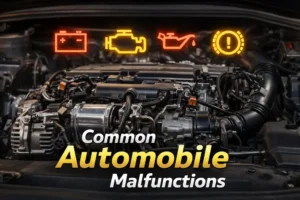
The warning can result from many different systems, and the same symptom may have more than one possible cause. Common examples include:
- A loose or damaged fuel cap
- A worn spark plug or faulty ignition coil
- A failing oxygen or airflow sensor
- An emissions-control system problem
- A catalytic converter fault
- Fuel delivery or engine timing issues
- Wiring, connector, or electrical problems
These possibilities cannot be confirmed by the light alone. A stored diagnostic code helps narrow the search, but further testing may still be necessary before replacing parts.
How Mechanics Diagnose the Problem
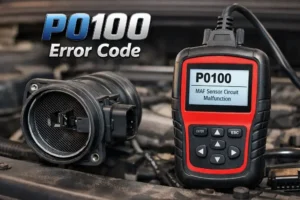
A technician usually begins with a visual inspection and connects a scan tool to retrieve the vehicle’s diagnostic trouble codes. The code provides a starting point, not always a final diagnosis.
Further checks may include testing sensors, inspecting wiring, measuring fuel or ignition performance, and looking for vacuum or exhaust leaks. Avoid replacing expensive components based only on a code description. Accurate testing helps identify the root cause and prevents unnecessary repairs.
Should You Clear the Check Engine Light?
Clearing the warning without repairing the underlying problem is not a solution. It may temporarily turn off the light, but the fault can return and useful diagnostic information may be lost.
In addition, clearing codes can reset the vehicle’s readiness monitors. This may make it harder to determine whether the emissions system has completed its self-checks. Have the cause diagnosed and repaired before clearing the code unless a qualified technician is performing a planned test.
When to Seek Immediate Help
Stop driving and seek professional assistance when the check engine light is flashing or when it appears with loss of power, severe shaking, overheating, smoke, or strong fuel smells. These symptoms may indicate a condition that can damage the vehicle or create a safety risk.
A solid light without symptoms is usually less urgent, but it still deserves attention. Early diagnosis can prevent a small problem from becoming a more expensive repair and may help keep the vehicle reliable.
Bottom Line
A solid check engine light usually means you should arrange a diagnosis soon, while a flashing light calls for immediate caution. Check simple possibilities such as the fuel cap, but do not rely on guesswork.
Pay attention to warning-light behavior, changes in how the vehicle drives, and any additional symptoms. When in doubt, reduce driving and have the vehicle inspected by a qualified professional.