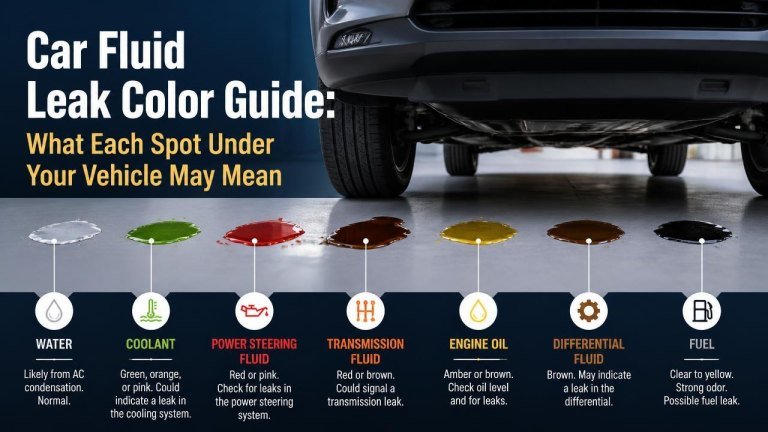
Finding a wet spot under your vehicle can be concerning, but the fluid’s color, texture, and location can provide useful clues. While color alone cannot confirm the exact problem, it can help you decide how urgently the vehicle needs attention.
Why Fluid Color Matters
Vehicle fluids are designed for different systems, so they often have distinctive colors, odors, and consistencies. A fresh leak may look different from an older stain, and road grime can make identification more difficult. Place a piece of clean cardboard under the vehicle to observe a new drip more clearly, but avoid touching unknown fluids with your bare hands.
Always consider the fluid’s location and the vehicle’s maintenance history. A leak near the front, center, or rear of the vehicle may point to different components, and recently serviced systems can sometimes leave harmless residue.
Clear or Water-Like Fluid
Clear, odorless water beneath the vehicle is often normal air-conditioning condensation, especially after using the climate-control system. This type of drip is usually not oily and commonly appears near the passenger-side front area.

However, clear fluid can also be windshield washer fluid if it has a noticeable cleaning-fluid smell or a blue, green, or pink tint. If the liquid feels oily, has an unusual odor, or continues leaking without air-conditioning use, have the source inspected.
Brown or Black Fluid
Dark brown or black fluid is commonly associated with engine oil. Used oil may appear nearly black, while newer oil can look amber or brown. It usually feels slippery and may collect beneath the engine or near the oil pan. An oil pressure warning light can signal a more urgent problem.
An oil leak should not be ignored. Check the oil level on level ground with the engine off and follow the vehicle manufacturer’s procedure. If the level is low, the oil-pressure warning light is on, or the leak is heavy, avoid driving until the problem is assessed.
Red or Pink Fluid
Red or pink fluid may be automatic transmission fluid or power-steering fluid, depending on the vehicle. Transmission fluid often has a distinct petroleum smell and may appear beneath the middle or front portion of the vehicle.
A transmission leak can lead to rough shifting, delayed engagement, or loss of drive. Power-steering fluid may appear near the front of the vehicle and can be accompanied by whining during steering or increased steering effort. Because some modern vehicles use electric power steering, consult the owner’s manual before assuming the source.
Green, Orange, Pink, or Yellow Fluid
Brightly colored fluid is often engine coolant, although coolant colors vary by formula and vehicle. It may have a sweet smell and can appear under the radiator, hoses, thermostat housing, or engine area.

Coolant leaks can cause overheating, steam, or a rising temperature gauge. Never remove a radiator or coolant reservoir cap while the engine is hot. Let the vehicle cool completely, then check the level only as directed by the manufacturer. Keep coolant away from children and pets because it is hazardous if swallowed.
Yellow or Clear-Oily Fluid
Yellowish or clear-to-amber oily fluid near a wheel may indicate brake fluid. Brake fluid is usually thinner than engine oil and can have a sharp chemical smell. A leak may come from a brake line, caliper, wheel cylinder, or master cylinder.
Brake-fluid loss is a safety-critical issue. If the brake pedal feels soft, sinks toward the floor, or requires extra distance to stop, do not continue driving. Arrange for the vehicle to be inspected or towed.
Thick Dark Fluid Near a Wheel
Heavy black grease around the inside of a wheel or suspension component may come from a damaged CV boot. The boot holds grease around the constant-velocity joint, and a split boot can spread grease outward as the axle rotates.
You may also hear clicking while turning if the joint has already been damaged. Prompt repairs can sometimes prevent further component wear, so arrange an inspection when grease appears around an axle or wheel.
How to Check a Suspected Leak Safely
Park on a level surface, switch off the engine, and allow hot components to cool. Use cardboard to identify the drip’s position, then compare the fluid with known samples from the vehicle’s dipsticks or reservoirs only when the owner’s manual permits it.
- Note the fluid’s color, smell, and thickness.
- Record where the spot appears relative to the front and rear wheels.
- Check warning lights and fluid levels using the manufacturer’s instructions.
- Do not crawl under a vehicle supported only by a jack.
- Keep hands away from moving parts, hot surfaces, and pressurized systems.
When a Fluid Leak Requires Immediate Attention
Stop driving and seek professional help for a large or rapidly growing puddle, a flashing warning light, smoke, overheating, or a noticeable change in braking, steering, or shifting. Fuel leaks are especially urgent because of the fire risk; do not start the engine if you smell gasoline or see fuel beneath the vehicle.
Small leaks can become serious when fluid levels fall below safe limits. A qualified technician can lift the vehicle safely, trace the source, and determine whether the issue involves a hose, seal, gasket, reservoir, or major component.
Final Takeaway
Fluid color is a helpful first clue, not a diagnosis. Combine color, location, and vehicle symptoms to judge the situation, and treat brake fluid, fuel, coolant, and significant oil or transmission leaks as reasons for prompt inspection. When in doubt, protecting your safety and the vehicle’s critical systems is more important than continuing to drive.