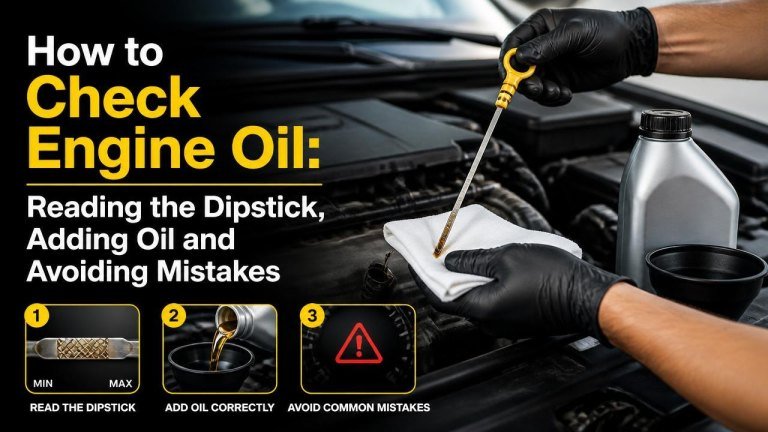
Checking your engine oil is a simple maintenance task that can help you spot low oil levels, leaks, or possible engine problems before they become more serious. With the vehicle parked safely and the engine prepared correctly, the process takes only a few minutes.
Why checking engine oil matters
Engine oil lubricates moving parts, helps control heat, and carries away contaminants. A low oil level can increase friction, while old or contaminated oil may reduce protection. Checking the level regularly gives you an early warning of leaks or excessive oil consumption.
What you need before starting
Prepare a clean cloth or paper towel and the correct oil for your vehicle. Your owner’s manual is the best source for the required oil viscosity, oil specification, and engine capacity. If you need to add oil, use a funnel to prevent spills around the filler opening.
How to check engine oil step by step
For an accurate reading, park on level ground, switch off the engine, and apply the parking brake. Allow the engine to cool for a few minutes so oil can drain back into the sump. Some vehicles have specific checking instructions, so follow the owner’s manual if they differ.

1. Locate and remove the dipstick
Open the bonnet and identify the dipstick, usually marked with a brightly colored handle. Pull it out carefully and wipe the blade completely clean with a lint-free cloth. Cleaning the blade first is essential because the initial reading may be inaccurate.
2. Reinsert the dipstick
Push the dipstick fully back into its tube, wait briefly, and remove it again. Keep the blade horizontal to avoid smearing the oil. The second reading shows the actual oil level between the minimum and maximum marks.

3. Read the oil level and condition
The oil should normally be between the two marks, preferably not above the maximum line. Note the oil’s level, color, and texture. Dark oil is not automatically a problem, but thick sludge, a milky or heavily contaminated oil, metal particles, or a strong fuel smell should be investigated by a qualified technician.
How to add engine oil safely
If the level is near or below the minimum mark, remove the oil filler cap and add a small amount of the correct oil. Pour slowly through a clean funnel, then wait a moment before checking again. Add oil in small increments and stop when the level is safely within the marked range.
Do not pour oil directly from a large container if you cannot control the flow. Wipe away any spilled oil, replace the filler cap securely, and make sure the dipstick is fully seated. Running the engine briefly may distribute the oil, but switch it off and allow time for the oil to settle before taking a final reading.
Common engine oil checking mistakes
- Checking on a slope: An uneven surface can produce a misleading reading.
- Reading too soon: Oil needs time to drain back after the engine stops.
- Overfilling: Too much oil can cause foaming and may damage engine components.
- Using the wrong oil: Always match the specification in the owner’s manual.
- Failing to clean the dipstick: Residual oil can make the level appear higher than it is.
- Ignoring warning signs: Oil pressure warnings, repeated low readings, or visible leaks require prompt attention.
When to seek professional help
Contact a qualified mechanic if the oil level drops repeatedly, you see oil beneath the vehicle, or the engine makes unusual knocking or ticking sounds. Stop driving and seek assistance if an oil pressure warning light remains on, if the engine overheats, or if the oil appears milky or heavily contaminated. These symptoms may indicate a problem that adding oil alone will not solve.
How often should you check engine oil?
Check the oil at regular intervals and before long journeys, especially if the vehicle is older, used for frequent short trips, or operating under demanding conditions. The right schedule depends on the vehicle and its engine, so use the manufacturer’s maintenance guidance. Regular checks help you notice gradual oil loss, changing oil condition, and developing problems early.
Final checklist
Park on level ground, switch off the engine, clean and reinsert the dipstick, then read the level carefully. Use only the recommended oil and add it gradually. Confirm the final level is between the marks, secure the caps, and clean up any spills. A few minutes of careful checking can provide valuable protection for your engine.