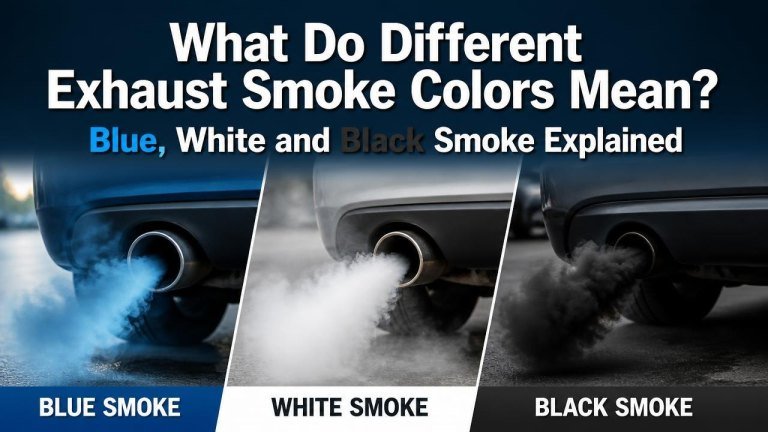
The color of your vehicle’s exhaust smoke can provide an early warning that something is not working correctly. While a brief puff may be harmless in some situations, persistent smoke usually means the engine is burning oil, fuel, or coolant incorrectly.
Understanding the difference between blue, white, and black exhaust smoke can help you describe the problem accurately and decide how quickly your car needs attention.
What Does Blue Exhaust Smoke Mean?
Blue or blue-gray smoke usually means the engine is burning engine oil. Oil may be entering the combustion chamber through worn piston rings, damaged valve stem seals, or a problem with the turbocharger. Because oil is not meant to burn with the fuel mixture, blue smoke should not be ignored.
The smoke may be most noticeable during acceleration, after the vehicle has been idling, or when starting the engine. You may also notice a burning-oil smell or a gradual drop in the oil level.
Common Causes of Blue Smoke
- Worn piston rings allowing oil into the cylinders
- Faulty valve seals letting oil pass into the combustion chamber
- Turbocharger wear causing oil to enter the intake or exhaust
- An overfilled crankcase or incorrect engine oil level
Driving with persistent blue smoke can lead to low oil pressure, catalytic converter damage, and serious engine wear. Check the oil level as soon as it is safe to do so, and arrange a professional inspection if the smoke continues.
What Does White Exhaust Smoke Mean?
Thin white vapor is often normal, especially on a cold morning. It is usually condensed water vapor leaving the exhaust system and should disappear as the engine reaches operating temperature. However, thick white smoke that continues after warm-up can indicate that coolant is entering the cylinders.
A failed head gasket, a cracked cylinder head, or engine block damage can allow coolant into the combustion chamber. Persistent white smoke may be accompanied by a sweet smell, overheating, rough running, or a falling coolant level.
When White Smoke Needs Attention
- It remains visible after the engine is fully warm
- The engine shows signs of overheating
- The coolant level drops without an obvious external leak
- The engine runs roughly or loses power
Do not continue driving an overheating vehicle. Stopping promptly can help prevent severe engine damage. Never remove the coolant cap while the engine is hot, because the cooling system may be under dangerous pressure.
What Does Black Exhaust Smoke Mean?
Black smoke generally indicates that the engine is burning too much fuel or not receiving enough air. This creates a rich fuel mixture, leaving unburned fuel particles in the exhaust. Black smoke is more common in diesel engines, although petrol engines can produce it when there is a fuel or air-management fault.
Possible causes include a blocked air filter, leaking fuel injectors, a faulty mass airflow sensor, or problems with the turbocharger and its control system. You may also notice poor fuel economy, reduced performance, or rough idle symptoms.
Common Reasons for Black Smoke
- A restricted or dirty air filter
- Leaking or malfunctioning fuel injectors
- A faulty oxygen, mass airflow, or boost sensor
- Incorrect fuel pressure or turbocharger operation
- Diesel particulate filter or emissions-system problems
Black smoke should be diagnosed promptly because excess fuel can damage the catalytic converter, dilute engine oil, and increase emissions. Replacing a filter may solve a simple problem, but sensor and injection faults require proper testing.
What Does Grey Exhaust Smoke Mean?
Grey smoke can be harder to interpret because it may point to several issues. Light grey smoke may indicate oil consumption, while darker grey smoke can be associated with excessive fuel, transmission fluid problems, or a malfunctioning positive crankcase ventilation system.
The pattern matters. Smoke during acceleration may suggest one cause, while smoke after idling or during startup may suggest another. A technician will usually consider the smoke color alongside oil usage, warning lights, engine performance, and diagnostic test results.
Does Smoke Color Mean the Same on Petrol and Diesel Engines?
The basic clues are similar, but diesel engines can produce visible smoke under conditions that may be less typical for petrol engines. A diesel may emit a brief dark puff under heavy acceleration, especially if its air, fuel, or emissions systems are not operating correctly.
In both engine types, persistent smoke is more important than a momentary puff. Pay attention to how long it lasts, when it appears, and whether it is accompanied by unusual smells, warning lights, or changes in performance.
What Should You Do If Your Car Is Smoking?
Start by observing the smoke safely. Note its color, when it appears, how long it lasts, and whether the vehicle is losing oil or coolant. Check fluid levels only when the engine is cool and parked on a level surface.
- Stop driving if the engine is overheating or the smoke is heavy.
- Check for warning lights and unusual engine noises.
- Look for visible oil or coolant leaks, without touching hot components.
- Arrange a diagnostic inspection if the smoke persists.
A mechanic may check compression, coolant pressure, fuel trim, injector operation, turbocharger condition, and stored fault codes. Accurate testing is more reliable than judging the cause from smoke color alone.
Can Exhaust Smoke Be Prevented?
Regular maintenance can reduce the risk of smoke-related problems. Use the manufacturer-recommended oil and keep up with oil changes, air-filter replacement, coolant checks, and scheduled inspections.
Deal with warning signs early, including low fluid levels, rough running, overheating, poor fuel economy, and repeated warning lights. Early diagnosis may prevent a small fault from becoming expensive engine damage.
Bottom Line
Blue smoke usually points to burning oil, thick white smoke can indicate coolant entering the engine, and black smoke commonly means too much fuel or too little air. A small amount of vapor on a cold start may be normal, but persistent smoke deserves attention.
Recording the smoke’s color, timing, smell, and related symptoms will help a technician identify the problem faster. When in doubt—particularly if the car is overheating or losing fluids—stop driving and seek professional advice.