Wheel Alignment vs. Wheel Balancing: What’s the Difference and When Does Your Car Need Each?
Wheel alignment and wheel balancing are both essential for a smooth, safe drive, but they solve different problems. Alignment corrects the angles of the wheels, while balancing ensures the weight of each wheel and tire assembly is distributed evenly. Knowing the difference can help you respond to symptoms quickly and avoid unnecessary tire wear.
What Is Wheel Alignment?
Wheel alignment adjusts the position of the wheels so they match the vehicle manufacturer’s specifications. A technician checks angles such as camber, toe, and caster to help the vehicle track correctly and allow the tires to meet the road evenly.
Alignment can be affected by potholes, curbs, collisions, worn suspension components, or normal wear over time. Even a small change in wheel geometry can influence steering response, handling, and tire life.
Signs Your Car May Need an Alignment
- The vehicle pulls to one side when you are driving on a reasonably level road.
- The steering wheel sits off-center while the car travels straight.
- The tires show uneven or rapid tread wear, especially on one edge.
- The vehicle feels less stable or does not respond normally during turns.
If you notice these symptoms after hitting a pothole or curb, have the steering and suspension inspected as well as the alignment checked. An alignment adjustment cannot correct a damaged or worn component.
What Is Wheel Balancing?
Wheel balancing corrects uneven weight distribution in a tire and wheel assembly. A technician uses a balancing machine to identify heavy spots and attaches small balancing weights where needed. The goal is to keep the assembly rotating smoothly at different speeds.
Balancing problems can develop after a tire is installed or repaired, when a wheel weight falls off, or when a tire or wheel becomes damaged. They are usually felt as vibration rather than as a steering pull.
Signs Your Car May Need Wheel Balancing
- A noticeable vibration through the steering wheel, particularly at certain speeds.
- Shaking through the seat or floor, which may point to a problem at the rear wheels.
- Uneven tread wear that appears as cupping or scalloping.
- Unusual noise or a less comfortable ride after fitting new tires.
Vibration can also result from a bent wheel, tire damage, a worn wheel bearing, worn suspension parts, or another mechanical issue. A professional inspection is the safest way to identify the cause.
Wheel Alignment vs. Wheel Balancing
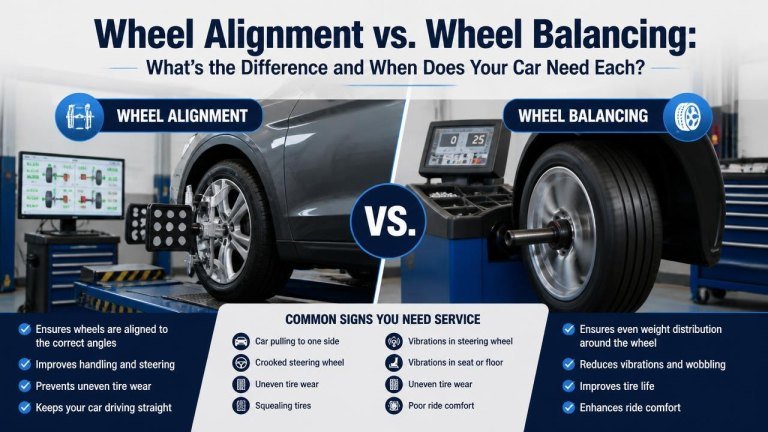
The simplest distinction is that alignment concerns wheel angles, while balancing concerns weight distribution. Alignment affects how the vehicle tracks and how the tires contact the road. Balancing affects how smoothly the wheel and tire rotate.
| Service | Main purpose | Common symptom |
|---|---|---|
| Wheel alignment | Corrects wheel geometry and steering direction | Pulling, an off-center steering wheel, or edge wear |
| Wheel balancing | Corrects uneven weight in the rotating assembly | Speed-related vibration or shaking |
Some vehicles need both services. For example, a pothole may disturb the alignment and damage a wheel, while installing a new tire normally requires balancing. The visible symptoms can overlap, so a technician may check both systems.
When Does Your Car Need Each Service?
Have the alignment inspected after a hard impact, when you notice a steering change, or when tire wear becomes uneven. It is also sensible to check alignment after suspension or steering repairs and whenever new tires show signs of irregular wear.
Request wheel balancing when you feel a speed-related vibration, after mounting or repairing a tire, or if a wheel weight has come loose. Balancing is also worth checking when a previously smooth ride becomes noticeably rough.
Follow the vehicle manufacturer’s maintenance guidance, but do not wait for a scheduled visit if the car develops strong vibration, pulls suddenly, shows visible tire damage, or displays a TPMS warning light.
Why These Services Matter
Proper alignment and balancing support even tire wear, stable handling, and a more comfortable ride. They can also reduce unnecessary stress on tires, steering parts, suspension components, and wheel bearings.
Neither service can compensate for unsafe tires or damaged mechanical parts. If tread is badly worn, a tire has a bulge, or its tire age and condition raise concerns, stop driving when it is safe to do so and arrange a professional inspection.
How to Reduce Alignment and Balancing Problems
- Check tire pressure regularly and keep it at the recommended pressure.
- Drive carefully around potholes, curbs, and rough road surfaces.
- Inspect tires for uneven wear, damage, or missing wheel weights.
- Have new tires balanced and ask whether alignment should be checked.
- Address steering, suspension, or tire concerns before they become larger safety problems.
Final Takeaway
Wheel alignment and wheel balancing are different services with different purposes. Alignment corrects the direction and angles of the wheels; balancing smooths the rotation of the tire and wheel assembly. If your car pulls, wears tires unevenly, or has an off-center steering wheel, suspect alignment. If it shakes at particular speeds, balancing may be the answer. When symptoms are unclear, a qualified technician can inspect the tires, wheels, steering, and suspension together.