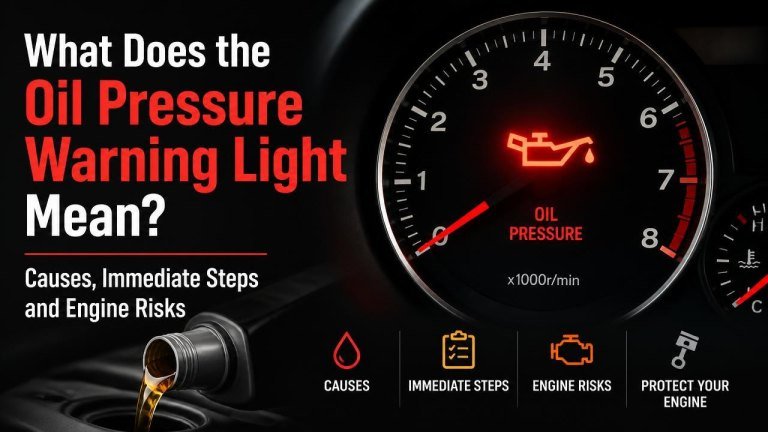
The oil pressure warning light is one of the most serious dashboard alerts. It usually indicates that the engine may not be receiving enough oil pressure to lubricate critical internal components. Continuing to drive can turn a relatively manageable fault into severe and expensive engine damage.
What Does the Oil Pressure Warning Light Mean?
The warning light generally means the engine’s oil pressure is too low, although the exact cause may vary. Engine oil must circulate under pressure to protect bearings, camshafts, pistons, timing components and other moving parts from excessive friction and heat.
A brief light during engine start-up can be normal because pressure takes a moment to build. However, if the light remains on, appears while driving, flickers repeatedly or is accompanied by unusual engine noise, treat it as an oil pressure warning light and an urgent mechanical warning.
What to Do When the Light Comes On
Take immediate action to protect the engine. The safest response is to reduce the risk of further damage rather than trying to reach your destination.
- Pull over safely as soon as possible and switch off the engine.
- Wait a few minutes on level ground, then check the oil level using the dipstick if it is safe to do so.
- If the oil level is low, add the correct oil gradually, using the vehicle manufacturer’s specification.
- Restart the engine only briefly to see whether the warning disappears. If it stays on, switch the engine off immediately.
- Arrange professional diagnosis or towing instead of driving with the warning illuminated.
Do not assume that adding oil has solved the problem. A correct oil level does not rule out a failed oil pump, blocked oil passage, internal wear or a faulty pressure sensor.
Common Causes of Low Oil Pressure
Several faults can trigger the warning. Some are simple to correct, while others require inspection and testing inside the lubrication system.
Low Engine Oil Level
A low level may result from an oil leak, neglected servicing, oil consumption or a recent maintenance error. If the oil level falls far enough, the oil pump may draw in air instead of a steady supply of oil, causing pressure to drop.
Look for oil beneath the vehicle, fresh residue around the engine or a noticeable burning-oil smell. Even if no leak is visible, the engine may still be consuming oil internally.
Incorrect or Degraded Oil
Oil that is the wrong viscosity, badly contaminated or overdue for replacement may not provide the expected protection. Fuel dilution, coolant contamination and sludge can also affect oil flow and pressure.
Using the correct specification matters, especially in engines with turbochargers, variable valve timing or other components that depend on precise oil pressure.
Oil Pump or Pickup Problems
The oil pump creates circulation pressure, while the pickup draws oil from the sump. A worn pump, damaged pickup tube, blocked pickup screen or restricted passage can prevent adequate oil delivery.
These faults may cause a warning that remains on despite a normal dipstick reading. Diagnosis may require a mechanical pressure test and removal of components for inspection.
Faulty Oil Pressure Sensor or Wiring
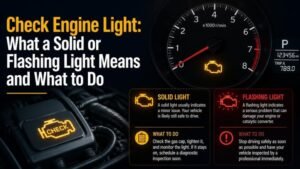
Sometimes the engine has acceptable pressure but the sensor, connector or wiring is defective. This can produce a false warning or an intermittent light, similar to some check engine light causes.
Because a sensor fault can look identical to genuine low pressure from the driver’s seat, it should not be assumed without testing. A technician can compare the dashboard signal with an external pressure gauge.
Internal Engine Wear
Worn crankshaft bearings, camshaft journals or other internal clearances can allow oil to escape faster than the pump can maintain pressure. This condition is more likely in an engine with high wear, persistent noise or a history of inadequate lubrication.
Internal wear may be accompanied by ticking, knocking or rattling, particularly as the engine warms up. Driving farther can accelerate damage to expensive components.
Why Low Oil Pressure Can Damage an Engine
Oil does more than reduce friction. It also helps carry heat away, supports hydraulic systems and protects surfaces from direct metal-to-metal contact. When pressure falls, the protective oil film can become too weak.
Possible consequences include bearing damage, scored camshafts, seized components, turbocharger failure and severe overheating. In the worst cases, the engine can stop suddenly or require replacement.
Damage can occur quickly, particularly when the engine is operating at high speed or under heavy load. That is why the warning deserves a faster response than many other dashboard alerts.
Can You Drive With the Oil Pressure Light On?
Driving with the light illuminated is not recommended. Even a short journey can cause serious harm if the warning reflects a genuine loss of lubrication.
If the light appears only briefly during cornering or hard braking, the oil level may be near the minimum and moving away from the pickup. That still indicates a need to check engine oil immediately and investigate why the level is low.
If the warning flashes together with engine noise, stop as soon as it is safe. Do not continue driving merely because the vehicle still feels normal.
How a Technician Diagnoses the Problem
A proper diagnosis begins with checking the oil level and condition, inspecting for leaks and verifying whether the warning is present under different operating conditions.
- A technician may connect a mechanical oil pressure gauge to confirm actual pressure.
- The oil pressure sensor and electrical circuit can be tested for faults.
- The oil filter, sump, pickup and pump may be inspected if pressure is genuinely low.
- Engine noises, service history and evidence of internal wear can help identify the underlying cause.
Replacing the sensor without measuring pressure first may hide a dangerous mechanical problem. Testing should establish whether the warning is electrical, maintenance-related or caused by internal engine damage.
How to Prevent Oil Pressure Problems
Regular maintenance can reduce the risk of lubrication faults, although it cannot prevent every component failure.
- Check the oil level according to the vehicle manufacturer’s guidance.
- Follow the recommended service intervals and use the correct oil specification.
- Inspect for oil leaks and unusual consumption.
- Pay attention to new ticking, tapping or knocking sounds.
- Deal with warning lights promptly instead of postponing diagnosis.
Keeping the engine properly serviced is especially important when a vehicle is used for frequent short trips, towing, high-load driving or extended periods in severe conditions.
Key Takeaway
The oil pressure warning light should be treated as an immediate stop warning, not a routine service reminder. Pull over safely, switch off the engine, check the oil level and seek professional help if the warning remains or returns.
Responding quickly can prevent costly engine damage and may turn a serious failure into a repair that is far simpler to resolve.