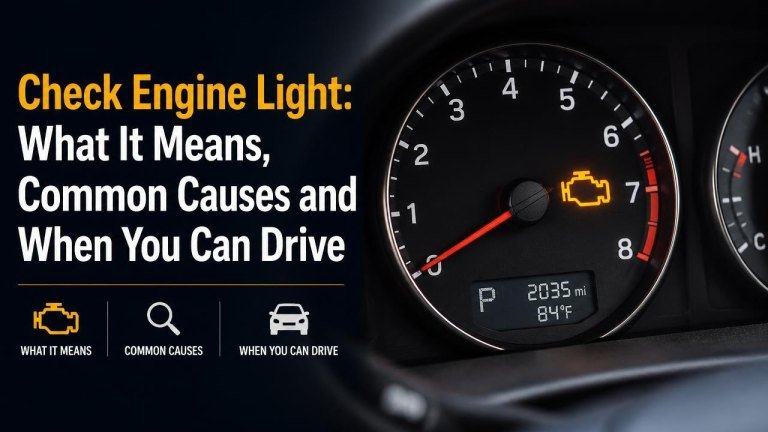
The check engine light is one of the most useful warnings on your dashboard, but it can also be one of the most confusing. It may appear because of a minor emissions issue, or it may indicate a problem that could damage the engine if ignored.
Understanding whether the light is steady or flashing, noticing how your vehicle is running, and arranging a diagnostic check can help you decide what to do safely.
What the Check Engine Light Means
The check engine light is connected to your vehicle’s onboard diagnostic system. This system monitors the engine, emissions equipment, and related sensors. When it detects a reading outside the expected range, it stores a diagnostic trouble code and turns on the warning light.
The light does not identify the failed part by itself. A scan tool is needed to read the code, and further testing may be necessary to find the actual cause. A code pointing to a sensor, for example, does not always mean the sensor is the only problem.
Steady Versus Flashing Check Engine Light
A steady light usually means the vehicle has detected a fault that may not require an immediate stop. You should still schedule a diagnosis soon, particularly if the light remains on after restarting the vehicle.
A flashing light is more urgent. It can indicate an active misfire that may overheat and damage the catalytic converter. Reduce speed, avoid hard acceleration, and pull over when it is safe. If the engine is shaking, losing power, smoking, or producing unusual noises, turn it off and arrange professional assistance.
Common Causes of a Check Engine Light
Many different faults can trigger the warning. Some are relatively simple, while others require prompt repairs.
Loose or Damaged Fuel Cap
A loose, missing, or damaged fuel cap can allow fuel vapors to escape and trigger the evaporative emissions system. Check that the cap is fitted correctly. The light may not switch off immediately, even after the issue is corrected.
Oxygen Sensor or Air-Fuel Sensor Problem
These sensors help the engine computer adjust the fuel mixture. A failed sensor can affect fuel economy, emissions, and engine performance. Driving briefly may be possible, but delaying diagnosis can place extra strain on other emissions components.
Misfire or Ignition Fault
Worn spark plugs, faulty ignition coils, or fuel delivery problems can cause a rough idle, hesitation, or loss of power. A misfire may also make the check engine light flash, which should be treated as a serious warning.
Catalytic Converter Problem
The catalytic converter helps reduce harmful exhaust emissions. Symptoms of a problem may include reduced acceleration, unusual exhaust smells, or poor engine performance. Continuing to drive with an unresolved misfire can make catalytic converter damage worse.
Mass Airflow or Other Sensor Failure
Airflow, temperature, pressure, and position sensors provide information used to control the engine. A fault may cause poor acceleration, hard starting, or an unstable idle, although the symptoms can vary by vehicle.
Battery or Charging System Issue
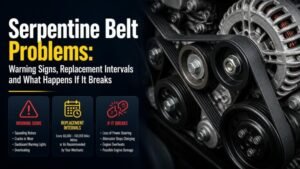
Low voltage from a weak battery, failing serpentine belt, or poor electrical connection can produce warning lights and unusual diagnostic codes. If the vehicle has dim lights, slow cranking, or multiple electrical warnings, have the charging system checked promptly.
When Is It Safe to Drive?
You may be able to drive a short distance to a repair facility when the light is steady, the vehicle feels normal, and there are no other warning signs. Drive gently, avoid heavy loads, and arrange a diagnostic scan as soon as practical.
Do not continue driving normally if the light is flashing or the vehicle shows severe shaking, major power loss, overheating, smoke, or unusual mechanical noises. Pull over safely and seek assistance. Your owner’s manual may also provide model-specific guidance.
What to Do When the Light Comes On
- Check the dashboard for additional warning lights and note whether the check engine light is steady or flashing.
- Pay attention to changes in engine sound, performance, starting, fuel consumption, or exhaust odor.
- If you recently refueled, inspect the fuel cap and make sure it is securely tightened.
- Avoid clearing the warning light before diagnosis, because this can erase useful stored information.
- Arrange a diagnostic scan with a qualified technician, even if the vehicle appears to drive normally.
Can You Turn Off the Check Engine Light?
The light should be turned off by correcting the underlying fault, not simply by erasing the code. A scan tool can clear the warning, but it does not repair the vehicle. If the problem remains, the light will likely return.
Disconnecting the battery may also erase diagnostic information and reset the vehicle’s emissions monitors. This can make troubleshooting more difficult, so diagnosis should generally come first.
How a Diagnostic Scan Helps
A scan reveals the vehicle’s diagnostic trouble code, but the code is only the starting point. A technician may need to inspect wiring, test sensors, check for vacuum leaks, or verify fuel and ignition performance.
Professional diagnosis is especially important when the warning is flashing, several warning lights appear, or the vehicle has noticeable drivability problems. The safest repair depends on finding the root cause rather than replacing parts based on the code alone.
The Bottom Line
A check engine light should never be ignored indefinitely. A steady warning often allows careful driving to a repair shop, while a flashing warning or serious performance symptom calls for immediate caution. Check the basics, avoid unnecessary driving, and get the vehicle scanned so a small fault does not become a more expensive repair.