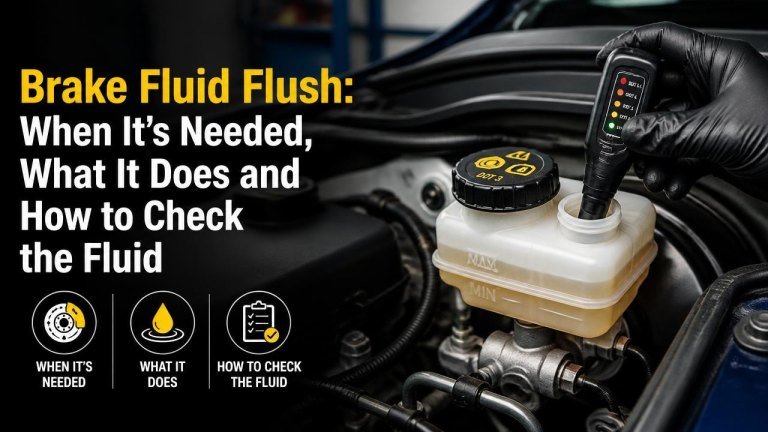
Brake Fluid Flush: When It’s Needed, What It Does and How to Check the Fluid
Brake fluid transfers pressure from the brake pedal to the components that slow and stop your vehicle. Because it absorbs moisture over time and can collect contaminants, the fluid may eventually lose performance. A brake fluid flush replaces the old fluid throughout the system with fresh fluid, helping maintain consistent braking operation.
What a Brake Fluid Flush Does
A brake fluid flush removes old fluid, moisture, and other contaminants from the braking system. A technician drains or extracts the existing fluid, adds the correct replacement fluid, and bleeds the brake lines to remove trapped air.
Fresh fluid helps preserve a firm pedal feel and supports reliable operation of the master cylinder, calipers, wheel cylinders, and other hydraulic components. A flush is different from simply topping up the reservoir because topping up does not remove contaminated fluid elsewhere in the system.
When Is a Brake Fluid Flush Needed?
The correct service interval depends on the vehicle manufacturer, driving conditions, brake system design, and the type of fluid used. Always check the owner’s manual before scheduling service. Some vehicles have a recommended time interval, while others rely more heavily on inspection and fluid testing.
Common Signs of Old or Contaminated Fluid
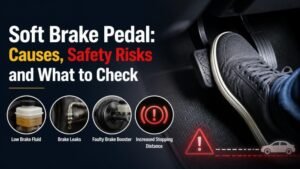
Several symptoms may suggest that the fluid needs attention, although they can also indicate other brake problems. Watch for a spongy pedal, reduced braking consistency, or a pedal that feels different after repeated braking.
- Brake fluid that appears dark, cloudy, or dirty
- A brake warning light or fluid-level warning
- Visible moisture or leakage near brake components
- A soft pedal after the vehicle has been serviced or a brake line has been opened
- Fluid that fails a professional moisture or boiling-point test
Do not ignore a brake warning light, significant fluid loss, or a pedal that moves unusually close to the floor. These issues require prompt inspection because they may involve a leak or another safety-critical fault.
How to Check Brake Fluid
Many vehicles have a translucent reservoir in the engine compartment, usually mounted near the firewall in front of the driver. Park on a level surface, switch off the engine, and allow hot components to cool before inspecting it.
- Locate the brake fluid reservoir using the owner’s manual if necessary.
- Check that the fluid level sits between the minimum and maximum markings.
- Look at the fluid’s color and clarity without opening the reservoir.
- Inspect the area around the reservoir and visible brake components for signs of leakage.
- Check the reservoir cap or manual for the specified fluid type before adding anything.
A clean reservoir, correct fluid level, and clear fluid appearance are useful clues, but a visual check cannot measure moisture content or determine the condition of fluid inside every brake line. A workshop can test the fluid and inspect the complete hydraulic system.
Why Brake Fluid Becomes Contaminated
Most brake fluids are hygroscopic, meaning they absorb moisture from the surrounding air through microscopic openings and system seals. Over time, this moisture can lower the fluid’s boiling point. Under heavy braking, water-contaminated fluid is more likely to contribute to vapor formation and a softer pedal.

Brake fluid can also become contaminated by rubber debris, corrosion particles, or residue from incorrect products. Using the wrong fluid type may damage seals or affect braking performance, so fluid specifications should never be guessed.
Brake Fluid Flush vs. Brake Fluid Top-Up
Adding fluid may correct a low reservoir level, but it does not automatically solve the reason for the loss. A low level can result from normal brake pad wear, but it can also indicate a hydraulic leak or another fault.
A flush is a complete maintenance procedure. It replaces the fluid in the system and removes air when performed correctly. Topping up is only appropriate when the fluid level is low for a known, properly assessed reason and the correct specification is used.
Can You Flush Brake Fluid Yourself?
Brake fluid replacement requires suitable tools, the correct fluid, safe lifting equipment when needed, and a reliable bleeding procedure. The work must prevent air from entering the system and must avoid contaminating painted surfaces, since brake fluid can damage paint.
DIY work may be possible for an experienced vehicle owner, but professional service is the safer choice if you are unfamiliar with brake bleeding. Never drive the vehicle if the pedal remains soft, the fluid leaks, or braking performance is uncertain. Use only the manufacturer-approved specification and keep the work area free from dirt.
How Often Should Brake Fluid Be Flushed?
There is no universal interval that applies to every vehicle. Follow the maintenance schedule in the owner’s manual and consider a fluid inspection during routine brake service. Vehicles used for towing, mountainous driving, frequent short trips, or other demanding conditions may require closer attention.
Ask a technician to assess the fluid condition, service history, and brake system performance together. This approach is more dependable than relying on color alone or assuming that a low fluid level means the fluid simply needs replacing.
Final Safety Checks
After any brake fluid service, the pedal should feel firm and braking should be smooth and predictable. Check for leaks around the reservoir, lines, calipers, and wheel cylinders, and confirm that the warning light has switched off when appropriate.
If the pedal feels soft, the vehicle pulls while braking, stopping distances seem longer, or the fluid level drops again, stop driving and arrange an inspection. A brake fluid flush can support dependable braking, but it cannot replace diagnosis of worn pads, damaged hoses, leaking lines, or other brake faults.