Your car’s alternator keeps the battery charged and supplies electricity to essential systems while the engine runs. When it begins to fail, the vehicle may still start for a short time, but the battery can eventually lose enough power to leave you stranded.
Recognizing early warning signs, understanding the difference between an alternator and battery problem, and arranging a professional charging-system test can help prevent a sudden breakdown.
What Does the Alternator Do?
The alternator is driven by the engine and converts mechanical energy into electrical power. It helps run the car’s lights, electronics, and other electrical equipment while also recharging the battery.
If the alternator cannot produce enough electricity, the vehicle may rely increasingly on battery losing its charge. Once that reserve is depleted, the engine can stall or fail to start.
Common Bad Alternator Symptoms
Several symptoms can indicate a charging-system problem. One sign alone may have another cause, but multiple symptoms appearing together deserve prompt attention.
1. Warning Light on the Dashboard
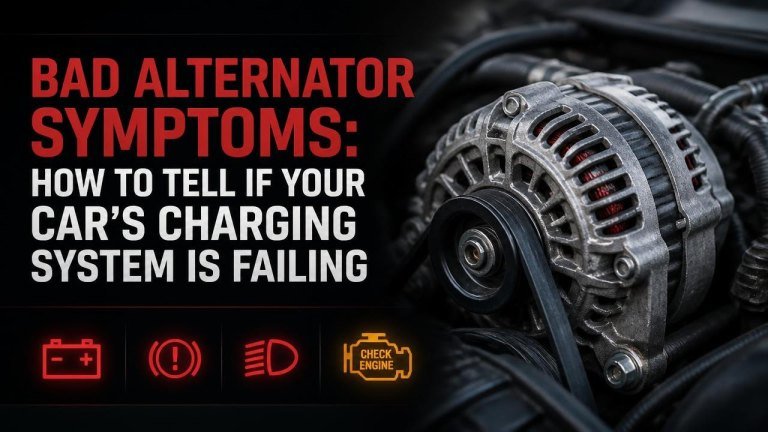
A battery-shaped warning light or charging-system message may appear when the car detects a problem with voltage output, the alternator, or related wiring. It does not always mean the battery itself is defective.
The warning may come on briefly at startup or remain illuminated while driving. Treat a persistent warning as a reason to have the charging system inspected soon.
2. Dim or Flickering Lights
Headlights, interior lights, and dashboard illumination may become dim or flicker when alternator output is unstable. The brightness may change as engine speed rises or as electrical demand increases.
This symptom can also result from a loose connection, poor ground, or wiring fault, so testing is needed before replacing parts.
3. Electrical Accessories Work Slowly
Power windows, the blower motor, windshield wipers, or heated seats may operate more slowly than usual. These changes suggest the vehicle may not be receiving enough electrical power to support its accessories normally.
Problems may become more noticeable when several accessories are used at the same time, such as the headlights, climate control, and rear defroster.
4. Battery Keeps Going Dead
A battery that repeatedly loses its charge may be receiving insufficient power from a weak alternator. However, an old battery, parasitic drain, or damaged cable can create the same symptom.
If a replacement battery goes flat again, request a complete test of the battery, alternator, and charging connections rather than replacing the battery repeatedly.
5. Strange Whining or Grinding Noises
A worn alternator bearing, damaged pulley, or slipping belt can create whining, grinding, or squealing noises. The sound may change with engine speed.
Do not ignore unusual belt-area noises. A failed belt can stop the alternator from turning and may affect other engine-driven components, depending on the vehicle.
6. Burning Smell
A burning rubber or hot electrical smell may indicate a slipping belt, overheated wiring, or an alternator working under excessive strain. This is a potentially serious sign of signs of overheating or electrical damage.
Turn off unnecessary electrical equipment and arrange an inspection promptly. If smoke, severe heat, or a strong burning odor is present, stop driving when it is safe to do so.
7. Engine Stalling or Difficulty Starting
As charging performance declines, the battery may not have enough energy to operate the starter or ignition system. This can cause slow cranking, repeated starting problems, or an engine that stalls after starting.
A no-start condition can have many causes, but a combination of starting trouble and earlier electrical symptoms makes a charging-system fault more likely.
Alternator Problems Versus Battery Problems
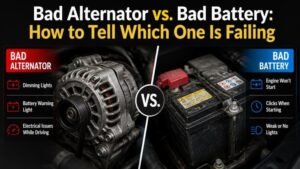
The battery stores energy for starting, while the alternator supplies power once the engine is running. A weak battery often causes slow cranking and repeated starting trouble, especially after the vehicle has been parked.
An alternator problem is more likely when you notice flickering lights, electrical accessories slowing down while driving, or a charging warning light. Because both components depend on each other, the entire system should be tested together.
How a Charging System Is Tested
A technician can inspect the battery, alternator, drive belt, cables, and electrical connections. Voltage testing with the engine off and running can help identify whether the alternator is providing adequate output.
A proper diagnosis may also include a load test, a check for voltage drop, and an inspection for loose, corroded, or damaged connections. These steps help prevent replacing a good alternator when the actual problem is a cable, belt, or battery.
Can You Drive With a Bad Alternator?
Driving with a failing alternator is risky because the vehicle may eventually run only on stored battery power. Once that power is exhausted, the engine can stall without warning, and electrical systems may stop working.
Short trips directly to a repair facility may be possible when symptoms are minor, but avoid unnecessary driving. If the lights are very dim, the engine is stalling, or a burning smell is present, arrange roadside assistance instead.
What to Do When You Notice the Symptoms
- Reduce unnecessary electrical demand, including heated accessories and audio equipment.
- Do not repeatedly restart the vehicle if the battery is becoming weak.
- Check whether the drive belt appears loose, damaged, or missing, without placing your hands near moving parts.
- Schedule a charging-system test as soon as possible.
- Stop driving and seek assistance if you notice smoke, a strong burning smell, severe overheating, or repeated stalling.
How to Help Prevent Charging-System Problems
Regular vehicle inspections can identify worn belts, corroded terminals, and loose connections before they cause a breakdown. Keep battery terminals clean and make sure the battery is properly secured.
Pay attention to new electrical symptoms rather than waiting for a complete failure. Early attention to warning lights, unusual noises, and starting changes can reduce the risk of being stranded.
Final Thoughts
Bad alternator symptoms often include a charging warning light, dim or flickering lights, slow accessories, repeated battery failure, unusual noises, and starting or stalling problems. These signs can overlap with battery and wiring faults, so accurate testing matters.
If your car shows several of these symptoms, arrange a professional diagnosis before the battery becomes fully depleted. Addressing a charging-system problem early can help protect essential electrical components and keep your vehicle dependable.