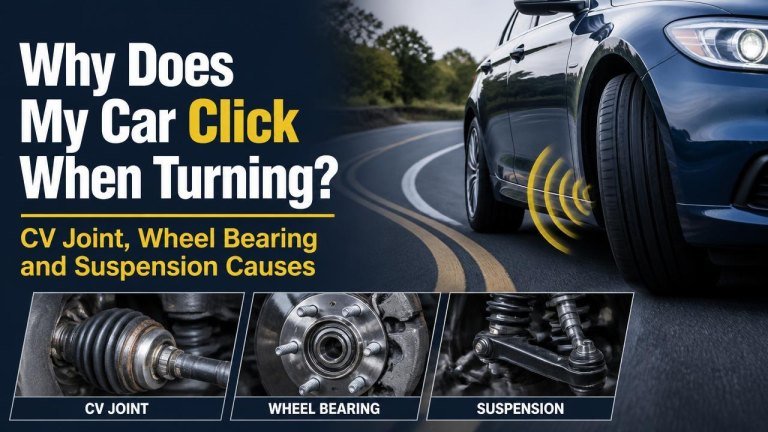
A clicking sound when turning is easy to ignore, especially if the car still drives normally. However, the noise can be an early warning of a worn CV joint, damaged suspension component, failing wheel bearing, or loose hardware.
The location, rhythm, and driving conditions that trigger the click can help narrow down the cause. A click that repeats with every wheel rotation is different from a single clunk when the steering direction changes. This guide explains the most common causes and the steps to take next.
What Does the Clicking Sound Usually Mean?
A clicking noise during a turn generally indicates movement between parts that should rotate, pivot, or remain firmly secured. The problem may become more noticeable when the car is accelerating through a turn, steering at full lock, or traveling over uneven pavement.
Pay attention to whether the sound comes from the front or rear, one side or both sides, and whether it changes with vehicle speed. These details can help a technician identify the source more efficiently.
Common Causes of Clicking When Turning
Worn or Damaged CV Joint
A worn outer CV joint is one of the most recognizable causes of a repeated clicking or popping noise while turning. CV joints transfer power from the transmission to the drive wheels while allowing the suspension and steering to move.
The noise is often loudest when the steering wheel is turned sharply and the vehicle is under light acceleration. A damaged joint may click repeatedly as the wheel rotates, particularly during tight parking-lot turns. You may also notice a torn CV boot or grease splattered around the inside of the wheel.
If the protective boot has split, dirt and moisture can enter while grease escapes. Continuing to drive can turn a relatively limited repair into a more serious drivetrain problem.
Failing Wheel Bearing
A wheel bearing commonly produces a humming, growling, or rumbling sound, but it can sometimes create a clicking or grinding noise when the vehicle turns. Turning shifts the car’s weight from one side to the other, which can make a worn bearing more noticeable.
Unlike a CV-joint click, a bearing noise usually changes with road speed rather than engine speed. It may become louder when turning toward the side opposite the damaged bearing. Other signs can include excessive play, vibration, or uneven tire wear.
A worn wheel bearing affects wheel stability and should not be dismissed, particularly if the sound is accompanied by looseness or a change in handling.
Loose or Worn Suspension Parts
Suspension components can click or clunk as they move during steering, braking, or travel over bumps. Possible sources include a worn ball joint, control-arm bushing, sway-bar link, or strut-mount bearing.
A loose ball joint is especially important because it helps connect the steering knuckle to the suspension. A damaged part may cause steering wander, uneven tire wear, or a feeling that the front end is unstable.
Suspension noises are often more noticeable when turning into a driveway, crossing a speed bump, or moving over an uneven surface. Because several parts can produce similar sounds, proper inspection is usually necessary.
Steering Components and Tie-Rod Ends
Worn tie-rod ends, steering joints, or other linkage components may produce a click or knock as the wheels change direction. The sound may occur when turning the steering wheel while stopped or when making slow maneuvers.
Look for symptoms such as excessive steering play, delayed response, uneven tire wear, or a steering wheel that no longer feels centered. A problem in the steering linkage can affect control, so it deserves prompt attention.

Loose Lug Nuts or Wheel Hardware
A loose lug nut or improperly secured wheel can create clicking, tapping, or knocking noises that vary with speed and direction. This is less common than a worn CV joint, but it is one of the most important possibilities to check.
If the noise began after a tire change, brake service, or wheel removal, stop driving and inspect the lug nuts and wheel seating as soon as it is safe. Do not rely on appearance alone; correct tightening requires the vehicle manufacturer’s specified procedure.
Brake Hardware or Dust Shield Contact
A bent brake dust shield, loose retaining clip, or small stone near the brake rotor can create a light clicking or scraping sound during a turn. The noise may change when braking or when the steering is moved slightly.
Brake-related sounds should be taken seriously if they occur with reduced braking performance, vibration, a warning light, or a hot wheel. A technician can check the rotor area and confirm whether the sound is harmless contact or a developing brake fault.
How to Tell Which Part May Be Causing the Noise
Start by observing the conditions that produce the sound. Make a note of whether it occurs during left turns, right turns, acceleration, braking, or bumps. Also record whether the clicking follows vehicle speed or happens only when the steering wheel moves.
- Repeated clicking during a tight turn: often points toward an outer CV joint.
- Humming or growling that changes during turns: may indicate a wheel bearing.
- Single clunk over bumps or when changing direction: may involve suspension or steering hardware.
- Noise after wheel service: requires checking lug nuts and wheel installation.
- Scraping near the rotor: may come from a brake shield, clip, or trapped debris.
These clues are useful but not conclusive. Several faults can sound alike, and a noise can travel through the vehicle structure, making its apparent location misleading.
Is It Safe to Drive With a Clicking Noise?
Safety depends on the cause and the severity of the symptoms. A minor brake-shield contact may not create an immediate handling risk, while a loose wheel, damaged ball joint, or severely worn bearing can become dangerous.
Stop driving and arrange an inspection if you notice steering looseness, strong vibration, pulling, wheel wobble, grinding, fluid or grease leakage, or a rapidly worsening sound. You should also stop if the vehicle feels unstable or if the noise began immediately after wheel or suspension work.
If the car remains stable and the sound is mild, drive only as far as necessary for a professional inspection. Avoid high speeds, sharp turns, heavy loads, and long trips until the cause is confirmed.
What a Mechanic Will Check
A technician will usually begin with a road test to reproduce the sound under controlled conditions. The inspection may then include the CV boots and joints, wheel bearings, steering linkage, ball joints, suspension bushings, brakes, and wheel fasteners.
The vehicle may be raised so the wheels and suspension can be checked for excessive movement or rough rotation. The mechanic may also inspect for grease leakage, damaged boots, unusual tire wear, rotor contact, and signs of previous repairs.
Do not replace parts based only on the location of the noise. A proper diagnosis can prevent unnecessary repairs and identify safety-critical wear before it becomes more severe.
How to Prevent Turning and Suspension Noises
Regular maintenance can reduce the chance of sudden clicking noises. Have the vehicle inspected when steering feels different, tires wear unevenly, or new sounds develop.
- Check CV boots for cracks, splits, or grease around the wheel area.
- Follow the recommended schedule for tire rotation and wheel inspection.
- Have suspension and steering parts checked after a significant pothole impact.
- Ensure wheel fasteners are installed and tightened correctly after service.
- Do not ignore small noises that become more frequent or louder.
Final Takeaway
A car that clicks when turning may have a worn CV joint, wheel bearing, suspension part, steering component, brake issue, or loose wheel hardware. The most useful clues are the sound’s timing, location, and connection to speed, acceleration, bumps, or steering angle.
Because some causes affect vehicle control, arrange an inspection rather than guessing or continuing to drive indefinitely. Early diagnosis can protect your safety and may prevent a small repair from becoming a major mechanical failure.