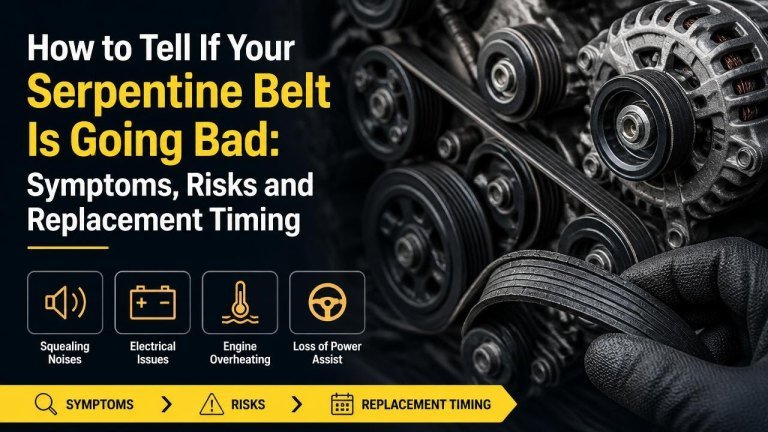
Your serpentine belt is a small but essential part of your vehicle’s accessory drive system. It transfers power from the engine’s crankshaft pulley to components such as the alternator, power steering pump, air-conditioning compressor, and sometimes the water pump.
Because one belt may drive several critical systems, recognizing the early signs of wear can help you avoid a breakdown and potentially expensive engine damage. Here is how to tell when your serpentine belt may be going bad and when it should be replaced.
What a Serpentine Belt Does
A serpentine belt is a long, continuous belt made from reinforced rubber and other materials. It follows a specific route around several pulleys and uses tension to transfer engine power. The belt’s condition affects the alternator, power steering, and air-conditioning system in many vehicles, depending on the belt design.
Some engines also rely on the serpentine belt to drive the water pump. In those vehicles, belt failure can cause the engine to overheat quickly. Because belt layouts vary, always check your owner’s manual or the belt-routing diagram under the hood before inspecting or replacing it.
Common Symptoms of a Bad Serpentine Belt
Several warning signs can indicate that a serpentine belt is worn, damaged, or losing proper tension. A single symptom does not always confirm belt failure, but multiple signs deserve prompt attention.
Squealing or Chirping Noises
A sharp squealing sound during startup or acceleration may indicate belt slipping. A repetitive chirping noise can be caused by misalignment, uneven wear, a damaged pulley, or incorrect belt tension. Noise that changes with engine speed should not be ignored.
Moisture can temporarily make a belt noisier, but persistent or recurring sounds should be inspected. Do not spray belt dressing onto the belt as a substitute for diagnosis; it may mask the problem without fixing the underlying cause.
Visible Cracks, Fraying, or Glazing
With the engine switched off and cool, inspect the visible ribs and outer surface of the belt. Look for deep cracks, frayed edges, and a shiny or glazed surface. Missing chunks, exposed reinforcing fibers, or splits between the ribs are signs that the belt needs immediate attention.
Modern belts may not develop obvious cracks before failing, so a belt that looks reasonably clean can still be worn. Check the ribs, edges, and entire belt path as far as safely possible.
Loss of Power Steering Assistance
If the serpentine belt drives the power steering pump, belt slippage or failure may make the steering wheel suddenly feel heavy, especially at low speeds. You may also hear a whining noise from the steering system.
Loss of steering assistance can make the vehicle more difficult to control. Pull over safely and have the vehicle inspected rather than continuing to drive normally.
Battery or Charging Warning
A failing belt may stop the alternator from turning correctly. This can trigger a battery warning light, cause dimming headlights, or create slow electrical accessories. The battery may eventually discharge, leaving the vehicle unable to restart.
These symptoms can also result from an alternator or electrical problem, so testing is needed. However, a belt inspection should be part of the diagnosis.
Engine Overheating
If the belt drives the water pump, a broken or slipping belt may lead to rapid overheating. A rising temperature gauge, steam, or an overheating warning requires immediate action.
Turn off the engine as soon as it is safe. Never remove a hot radiator cap, and do not continue driving an overheating vehicle, because severe engine damage may result.
Air-Conditioning Problems
A worn belt may slip when the air-conditioning compressor engages. You might notice weak cooling, a brief squeal, or vibration when the system turns on. An A/C problem can also come from low refrigerant or a compressor fault, but belt condition should still be checked.
What Happens If the Serpentine Belt Breaks?
A broken belt can disable several accessories at once. Depending on the vehicle, you could lose alternator output, power steering assistance, and coolant circulation. The engine may continue running briefly, but the vehicle can become unsafe or suffer serious damage.
A loose or damaged belt can also whip around the engine compartment and damage nearby wiring, hoses, or covers. If the belt breaks while driving, move to a safe location, shut off the engine, and arrange professional assistance.
How to Inspect a Serpentine Belt Safely
Inspection is usually straightforward, but safety comes first. Park on a level surface, engage the parking brake, switch off the engine, and allow hot components to cool. Keep hands, clothing, and tools away from moving parts.
- Look for cracks, fraying, glazing, contamination, or missing rib material.
- Check whether the belt appears misaligned on the pulleys.
- Look for oil or coolant contamination, which can weaken the belt.
- Listen for unusual noises only with the engine running from a safe distance; never reach into the engine bay.
- Have the tensioner and idler pulleys checked if the belt is noisy, loose, or unevenly worn.
Do not rely only on mileage or appearance. A technician can inspect belt tension, pulley bearings, alignment, and the complete accessory-drive system.
When Should a Serpentine Belt Be Replaced?
Replacement timing depends on the vehicle, belt design, operating conditions, and the manufacturer’s maintenance schedule. Some belts last for many years, while heat, oil leaks, dust, frequent short trips, or heavy accessory use can shorten their service life.
Replace the belt when it shows visible damage, makes persistent noise, has contamination, or fails an inspection. Follow the owner’s manual for preventive replacement guidance rather than waiting for a roadside failure.
Replace Related Components When Necessary
A new belt may not solve the problem if the tensioner, idler pulley, or another accessory is worn. A seized pulley can quickly damage a replacement belt, while weak tension can cause continued slipping.
When replacing the belt, ask whether the technician has inspected the complete system. Replacing a related part at the same time may be appropriate if it shows play, roughness, leakage, or other damage.
Can You Drive With a Bad Serpentine Belt?
Driving with clear belt damage or persistent belt noise is risky. A belt can fail without much additional warning, potentially causing loss of charging, overheating, or reduced steering assistance.
If you notice only a brief noise, arrange an inspection as soon as possible and avoid unnecessary driving. If the belt is visibly torn, slipping badly, or already broken, have the vehicle towed rather than attempting to reach a repair shop.
The Bottom Line
A serpentine belt should be treated as a critical maintenance item, not a cosmetic component. Squealing, visible wear, charging problems, heavy steering, A/C issues, and overheating can all point to a belt or pulley problem. Pay attention to early warning signs, follow the manufacturer’s schedule, and inspect the entire belt system when service is needed.
Prompt attention is usually safer and less costly than waiting for the belt to break.